Building Data Applications on Databricks in 20 Minutes
Learn to create data apps for non-technical users, enabling data-driven decisions. Explore rapid app development using Python frameworks, data access methods, security, governance, and production deployment on Databricks.
Ten-Times Easier Development Using Databricks Connect and Serverless Spark
Explore seamless Databricks integration with IDEs using Databricks Connect and serverless Spark. Learn to leverage instant, elastic infrastructure for efficient data application development.
Getting Started with Databricks Clean Rooms
Explore privacy-safe data collaboration using Databricks Clean Rooms. Learn to analyze shared data, train ML models, enforce privacy policies, and enable advanced use cases across platforms.
Building a Multimodal Data Lakehouse with the Daft Distributed Python Dataframe
Explore Daft, a next-gen distributed query engine for processing multimodal data at scale. Learn to build a multimodal data lakehouse using familiar dataframe interfaces on existing infrastructure.
Reducing Recruiting Costs Using Databricks Foundation Models
Explore how Databricks Foundation Models and multi-agent approach streamline technical candidate evaluation, reducing recruiting costs and improving efficiency in the hiring process.
Lightning-fast R and Python Library Loading for Databricks Clusters
Discover a productivity hack to load R packages and Python libraries in under 60 seconds when spinning up clusters, eliminating wait times and boosting efficiency in data science workflows.
Maximizing Productivity with Databricks Assistant - Key Strategies and Tips
Discover how Databricks Assistant enhances productivity through AI-powered code creation, optimization, and troubleshooting. Learn to leverage natural language for SQL, Python, and data visualization while ensuring privacy and security.

Tracking HTML5 Videos in Google Analytics with Google Tag Manager
Learn to track HTML5 video engagement metrics using Google Tag Manager and Google Analytics. Capture detailed data on video progress and completions to analyze performance and improve your website's video content strategy.

Exploring Datasets with Python and Pandas
Explore datasets using Python and pandas. Learn essential data analysis techniques for scientists, engineers, and analysts working with diverse datasets.
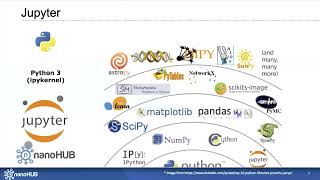
A Guided Tour of Interactive Jupyter Notebooks Powered by nanoHUB
Explore interactive Jupyter Notebooks on nanoHUB. Learn fundamentals, develop code, analyze data, create visualizations, and build GUIs using Jupyter widgets and nanohub-uidl library.
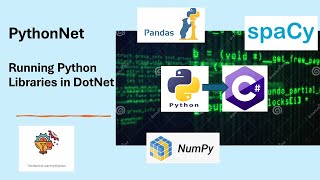
MLOps: Using Python Libraries in DotNet - Spacy, Numpy, Pandas
Integrate Python libraries like Spacy, NumPy, and Pandas into .NET applications using Pythonnet for enhanced machine learning and data science capabilities.
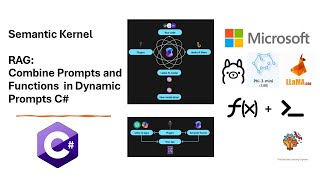
Microsoft AI: Semantic Kernel and RAG Dynamic Prompts with C# - Data Science and Machine Learning
Explore RAG component creation using Dynamic Prompts with Microsoft Semantic Kernel, utilizing Ollama Framework and Phi3 Mini model in C#.
Creating Synthetic Data with Langchain, OpenAI, and Faker
Generate synthetic data using Langchain, OpenAI, and Faker for data science and machine learning applications. Learn powerful techniques to create realistic datasets.

Langchain: How to Run Sequential and Parallel Chains
Explore sequential and parallel Langchain chains for advanced machine learning workflows. Master techniques to enhance data processing and model performance.

Kaggle Notebooks - Introduction to Cloud-Based Data Science Platforms
Explore Kaggle notebooks for seamless data access, free GPU usage, and efficient machine learning model development without complex local setups.

Robot Framework - Introduction and Demonstration
Learn Robot Framework's keyword-driven approach for easy test automation, suitable for beginners and experienced testers alike.
Scaling Business with Real-Time ML in Microsoft Fabric Real-Time Analytics
Leverage ML on real-time data to scale business operations using Microsoft Fabric Real-time Analytics. Deep-dive into technical aspects for optimizing performance and decision-making.
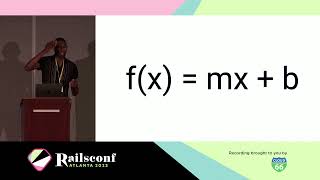
Forecasting the Future: An Introduction to Machine Learning for Weather Prediction in Native Ruby
Explore weather prediction using machine learning in Ruby. Learn to build, train, and deploy ML models natively, discovering accessible tools and libraries for Ruby-based AI projects.
Producing Apache Kafka Messages Using Apache Flink and Java
Learn to produce Apache Kafka messages using Apache Flink and Java in this comprehensive walkthrough. Covers Flink job setup, Kafka configuration, data generation, serialization, and execution verification.
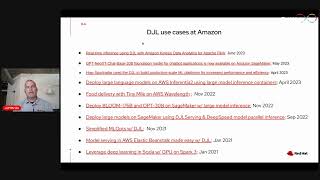
Supersonic Model Serving Using Apache Licensed Deep Java Library (DJL) and Quarkus
Explore supersonic model serving in cloud-native environments using Deep Java Library (DJL) embedded in Quarkus. Learn to bridge the gap between data scientists and DevOps teams for efficient model deployment.
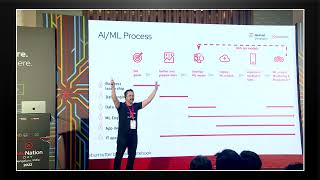
Real-Time Image Processing AI/ML with Jupyter Notebooks
Explore real-time image processing using AI/ML techniques with Jupiter notebooks, enhancing your skills in cutting-edge technology applications.