Building Trust in Open Networks - TLS Implementation Challenges
Explore challenges and solutions in implementing TLS authenticity for Erlang/OTP, focusing on privacy, integrity, and security in open networks.

Music: APL vs APS - Synthesizing Bach's Toccata and Fugue Using Array Programming
Explore music synthesis using APL, from WAV files to harmonics, chords, and reverberation. Create a full rendition of Bach's Toccata and Fugue with animated visualization.

Secure RDTs: Enforcing Access Control Policies for Offline Available JSON Data
Explore Secure RDTs for enforcing role-based access control on offline-available JSON data, enhancing security in applications with intermittent network connectivity.

A Case Study About Comparative Programming Languages' Energy Consumption
Explore comparative energy consumption of programming languages through experiments and case studies. Gain insights into eco-friendly coding practices and cost-saving strategies.

Security Under the BEAM - Building Trustworthy Isolation in Operating Systems
Explore the Kry10 Secure Platform, combining BEAM VM isolation, seL4 Microkernel, and formal methods to build trustworthy, fault-tolerant systems for IoT and next-gen software development.

Building and Growing the Elixir Community - Lessons from Kenya
Discover strategies for building and nurturing a thriving Elixir community, focusing on recruitment, training, and engagement. Learn from successes and challenges in expanding the ecosystem.

Mental Health Mentoring for Programming Language Students
Explore strategies for maintaining mental health as a programming language student, focusing on self-care, stress management, and seeking support.

Great Security Is One Question Away
Discover how asking the right security questions can transform your Python development practices and enhance overall project safety.

Protecting Sensitive Data and Machine Learning Models
Discover techniques for safeguarding sensitive data and ML models, enhancing privacy and security in Python-based AI applications.
Community Engagement and Security Initiatives: Examples from Python and Rust
Explore Python and Rust Foundations' security initiatives, focusing on community engagement, consensus building, transparent communication, and addressing pushback for better open-source security practices.

How to Setup Fingerprint Authentication in JavaScript
Learn to implement fingerprint and biometric authentication in JavaScript using WebAuthn APIs. Covers client and server-side setup for secure, third-party-free user registration and login.
Building a Robot Arm with .NET 8, Raspberry Pi, Blazor and SignalR
Learn to build and control a robot arm using .NET 8, Raspberry Pi, Blazor, and SignalR. Explore GPIO control, servo movement, remote operation via Blazor app, and VR interaction with Oculus Quest 2.

Open Source Robotics with Python - Learn Robotics with No Robot Required
Explore robotics simulation using Python, ROS 2, and Gazebo. Learn to develop robot code without hardware, leveraging open-source tools used by professionals in the field.

Coding Adventure: Sound and the Fourier Transform
Explore sound and the Fourier Transform through coding experiments, learning to break down signals into component frequencies and implementing the Discrete Fourier Transform.
Supply Chain Security with KubeClarity: Introduction and Implementation
Explore supply chain security fundamentals, historical attacks, and KubeClarity tool. Learn about SBOMs, their benefits, and see KubeClarity in action for enhanced software security.

Four Ways to Write a Pitch-Shifter
Explore approaches to pitch-shifting music and time-stretching, from simple overlap-add to FFT-based effects and frequency-domain techniques. Gain insights into designing a polyphonic pitch/time C++ library.
Point to Point Modeling: An Automatic Circuit Solving Library
Explore an automatic circuit solving library for simulating analog audio circuits. Learn to implement and analyze component-level circuits for real-time plugins and mobile apps.
Optimizing a Real-Time Audio Processing Library
Optimize real-time audio processing libraries with practical strategies, measurement techniques, and performance-enhancing tricks. Gain tools for confident code optimization across platforms.
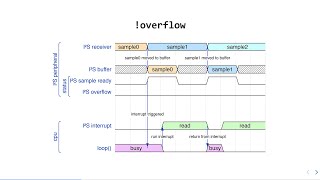
Reactive Embedded Programming for Real-Time and Audio Systems
Explore an alternative approach to embedded programming for real-time and audio systems using reactive structures and microcontroller hardware for predictable scheduling.
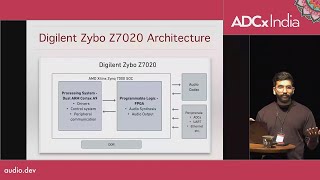
Modular Audio Synthesis on FPGAs With High Level Synthesis Development Flow
Explore modular audio synthesis on FPGAs using high-level synthesis tools. Learn about design approaches, optimization techniques, and interconnectable sound synthesis modules for enhanced audio processing capabilities.
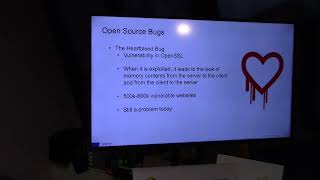
How Using Open Source Code Can Leave You Exposed to Hackers
Explore the security risks of open-source code, focusing on the Log4Shell vulnerability and its widespread impact on applications.