Dataflow Oriented Robotic AI Framework - dora-rs
Explore dora-rs, a Rust-based framework for AI-powered robotics. Learn how it integrates ML models, supports multiple languages, and enables rapid prototyping for research and education.
WebAssembly on the Server - Exploring Server-Side Applications and Integration
探讨WebAssembly在服务器端的应用,包括与容器工具的集成、用例分析,以及在LLM等领域的潜力,展示其作为安全高效的云原生技术的优势。
New Advances for Cross-Platform AI Applications in Docker
Explore innovative methods for enhancing cross-platform GPU/AI workloads in containers, focusing on Docker's WebGPU integration for flexible GPU utilization and portable LLM inference applications.
Java Me Smarter: Unleashing AI Power with Quarkus
Explore Quarkus for building AI-powered Java microservices. Learn to integrate cutting-edge AI capabilities, from machine learning to chatbots, enhancing your Java development skills and unlocking new possibilities.

Running LLMs in the Cloud - Approaches and Best Practices
探讨在云原生环境中部署大语言模型的最佳实践,比较Python、原生运行时和WebAssembly三种方法的优缺点,为开发者提供实用建议和清晰路线图。

Daisy UI and Future Feature Recommendations for React Applications
Explore Daisy UI components, implement video fetching and display, and discover SaaS product ideas using Cloudinary for enhanced UI development.
Log4JMX - The Vulnerability that Never Existed
Explore the intriguing case of Log4JMX, a supposed vulnerability that turned out to be non-existent, in this cybersecurity presentation at DefCamp Cluj-Napoca 2024.
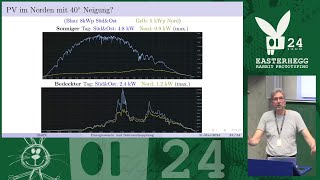
Energiewende und Sektorenkopplung - Hands-on Erfahrungsbericht
Erfahrungsbericht zur Energiewende: PV, Batteriespeicher, Hybridheizung, dynamische Stromtarife und selbstprogrammiertes EMS für mehr Autarkie und Netzdienlichkeit. Praxisnahe Einblicke für Eigenheimbesitzer und Balkonkraftwerk-Planer.
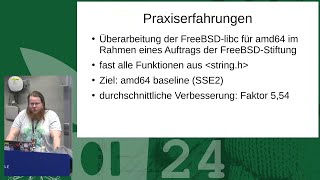
Textverarbeitung mit SIMD-Techniken - Effiziente Stringverarbeitung für moderne Anwendungen
Effiziente Textverarbeitung mit SIMD-Techniken: Beschleunigung von String-Operationen durch parallele Verarbeitung mehrerer Zeichen gleichzeitig, für optimierte Leistung in modernen Anwendungen.
Komischen Code schreiben der schnellen Code schreibt - Algorithmen-Varianten in High-Performance Anwendungen
Optimierung von Performance-kritischem Code: Vergleich von Algorithmen-Varianten, Zero-Cost Abstractions und innovative Lösungsansätze für High-Performance-Anwendungen in C++.
Application Programming Interface (API) Explained
Explore Application Programming Interfaces (APIs) and their role in software development. Learn how APIs enable communication between different systems and enhance functionality.
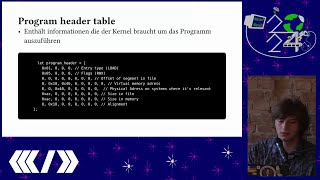
Linux "Hello World!" mit einem Hex Editor - Programmieren ohne Compiler
Entdecke, wie man ein "Hello World!"-Programm für Linux ohne Compiler erstellt, nur mit einem Hex-Editor. Lerne über ELF-Dateien und den direkten Umgang mit Maschinencode.

Introduction to CUDA Programming for Physicists - Lecture 1
Explore CUDA programming fundamentals for physicists, covering essential concepts and techniques to leverage GPU computing in scientific applications.
Instalación de Nvidia Cudnn y Primeros Pasos con NVCC en C++
Aprende a instalar Cudnn, la biblioteca de redes neuronales profundas de CUDA, y comienza a desarrollar aplicaciones de aprendizaje automático con soporte GPU en C++.
Neo4J: Knowledge Graph, Semantic Search, and Topic Extraction with Langchain and Phi3 - Part 1
Aprende a crear una base de conocimientos gráfica con Neo4J, extrayendo temas y palabras clave de textos mediante Langchain y el modelo Phi3 de Microsoft.
Como Crear un Dockerfile y Docker Compose - Ejemplo Práctico de Machine Learning
Aprende a crear Dockerfiles y Docker Compose Files con un ejemplo práctico de machine learning, desde la composición de contenedores hasta la infraestructura completa.
Inferencia Eficiente de LLMs en CPUs y GPUs Intel con Neural Speed
Optimiza la inferencia de LLMs en hardware Intel utilizando Neural Speed para mejorar el rendimiento en CPUs y GPUs.
ML and MLOps in Databricks: DButils Library - Spanish
Aprende a utilizar la librería DButils en Databricks para optimizar tus proyectos de Machine Learning y MLOps. Explora funcionalidades clave y mejora tu flujo de trabajo.
ML and MLOps with Databricks: LLMOps, MLFlow, OpenAI, and Databricks - Spanish
Aprende a utilizar OpenAI GPT-4 como revisor de código, encapsulándolo en un modelo Python de MLflow para implementarlo en una pipeline de Databricks.
MLOps MLFlow: Mlflow Projects with PySpark Docker Environment and MLflow
Aprende a utilizar MLflow Projects con entornos Pyspark y Docker para gestionar flujos de trabajo de aprendizaje automático de manera eficiente y reproducible.
ML y MLOPS Databricks - REST API v2 en Español
Domina la API REST v2 de Databricks para ML y MLOps. Aprende a automatizar tareas, gestionar clústeres y optimizar flujos de trabajo en ciencia de datos.