SPLADE - The First Search Model to Beat BM25
Explore SPLADE, a groundbreaking sparse embedding model for AI-powered search. Learn its advantages over traditional methods, implementation techniques, and potential future developments in vector search technology.

TensorFlow for JavaScript - TensorFlow at O’Reilly AI Conference, San Francisco '18
Explore TensorFlow.js: Learn to train, deploy, and perform transfer learning in browsers and Node.js. Includes live demos and practical insights for machine learning workflows.
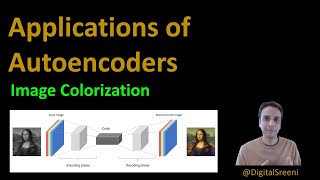
Application of Autoencoders - Image Colorization
Learn to artificially colorize black and white images using autoencoders in Python. Explore the process, implementation, and practical application of this advanced image processing technique.
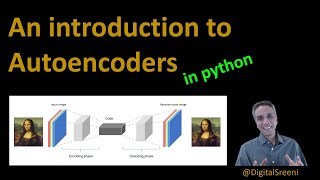
An Introduction to Autoencoders - In Python
Learn to build and implement autoencoders in Python for image compression, reconstruction, and various applications like denoising and anomaly detection.
How to Build a Docker With Your Code and Run It on APEER
Learn to create and deploy a Docker module on APEER for microscopy and image processing applications, enabling cloud-based workflows and easy integration with other modules.
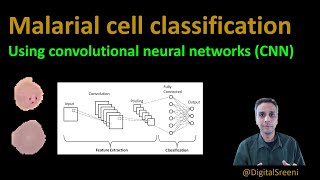
Malarial Cell Classification Using CNN
Learn to classify malarial cells using CNN in Python. Covers dataset acquisition, TensorFlow setup, network design, and result analysis for detecting parasitized and healthy cells.
How to Use Random Forest in Python
Learn to implement Random Forest in Python for data analysis, including data importing, feature engineering, and model fitting techniques.
Linear Regression Using Sci-Kit Learn in Python
Learn to implement linear regression using Sci-Kit Learn in Python, from data import to model creation, evaluation, and prediction. Hands-on coding with real-world data.
Introduction to Pandas - Data Reading and Handling
Learn to load, manipulate, and analyze data using Pandas in Python. Covers CSV file handling, data types, and basic operations for efficient data processing and analysis.

Grain Size Analysis in Python Using Watershed
Watershed-assisted segmentation in Python for analyzing grain size in microscope images, overcoming limitations of threshold-based methods for improved accuracy in feature separation.
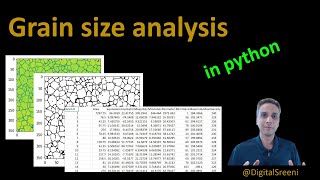
Grain Size Analysis in Python Using a Microscope Image
Automate grain analysis in metal alloys using Python and microscope images. Learn image processing techniques to generate summaries and CSV files for quality control and research.
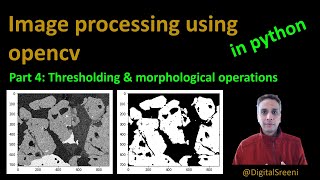
Thresholding and Morphological Operations Using OpenCV in Python
Learn to enhance image quality using OpenCV's thresholding and morphological operations for noise reduction and feature extraction in Python.

Denoising and Edge Detection Using OpenCV in Python
Learn OpenCV techniques for denoising microscope images and performing edge detection, with practical code examples for enhancing image quality without losing crucial information.
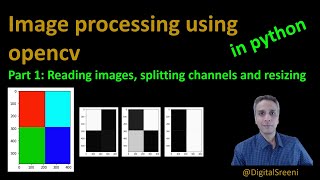
Reading Images, Splitting Channels, Resizing Using OpenCV in Python
Learn essential OpenCV operations for image processing: reading, resizing, and channel manipulation. Gain practical skills for computer vision and microscopy image analysis.
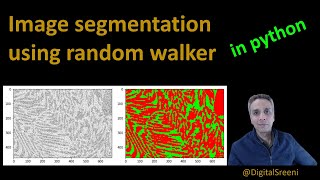
Random Walker Segmentation in Python
Explore Random Walker segmentation in Python for noisy BSE images, using markers and combining segments for effective alloy analysis.
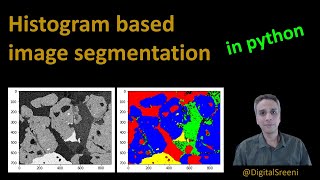
Histogram Based Image Segmentation in Python
Learn histogram-based image segmentation in Python for microscopy, covering thresholding techniques, feature extraction, and basic image processing operations to clean segmented regions.
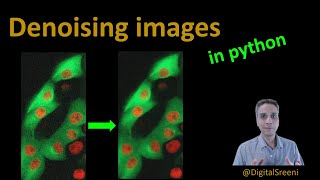
Denoising Microscope Images in Python
Learn techniques for denoising microscope images using Python, exploring algorithms from Scikit-image and NumPy libraries to extract relevant information and improve image quality.
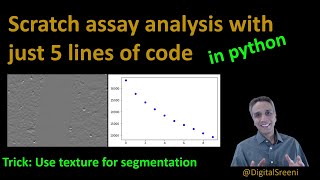
Scratch Assay Analysis With Just 5 Lines Code in Python
Learn to analyze scratch assays efficiently using Python, covering entropy filtering, Otsu thresholding, image processing, and result plotting in just 5 lines of code.
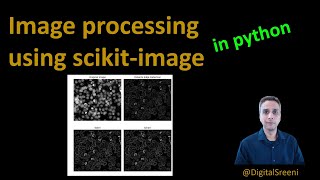
Introduction to Image Processing Using Scikit-Image in Python
Learn essential image processing techniques using scikit-image in Python, including resizing, edge detection, and segmentation for microscopy-based assays like wound healing.
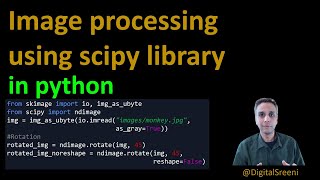
Image Processing Using Scipy in Python
Learn essential image processing techniques using SciPy in Python, including importing, pixel manipulation, filtering, and edge detection with Sobel filters.
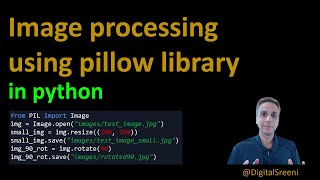
Image Processing Using Pillow in Python
Learn to manipulate images in Python using Pillow library. Covers resizing, cropping, rotating, flipping, and grayscale conversion with practical examples for multiple images.