Introduction to Causal Graphical Models - Graphs, D-Separation, Do-Calculus
Explore causal graphical models, d-separation, and do-calculus. Learn about graphs, Bayesian networks, and instrumental variables for understanding causality in complex systems.
Mind Over Data - The One Thing You Know and Machines Don't
Explore the intersection of human intuition and machine learning in causal reasoning, examining Bayesian networks, confounding factors, and real-world applications in AI and data analysis.
Bayesian Networks for Causal Reasoning by Tavpritesh Sethi
Explore advanced Bayesian network techniques for causal reasoning in healthcare, focusing on practical applications and bridging the gap between mathematical modeling and clinical problem-solving.
Bayesian Networks for Causal Reasoning - Lecture 1
Introduction to Bayesian networks for causal reasoning in healthcare, exploring their application in analyzing clinical data and inferring patterns to improve patient outcomes and medical decision-making.
Arbitrary Tensor Network Algorithm: Theory, Methods and Applications
Explore arbitrary tensor network algorithms for complex systems modeling, covering theory, methods, and applications in probabilistic graphical models and quantum circuit simulations.
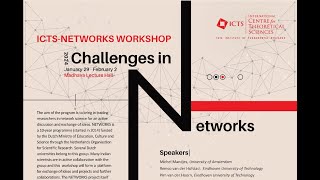
Some Problems Regarding Bayesian Networks
Exploration of challenges in Bayesian networks, discussing structural properties, dynamics, and applications in probability theory and network science.

Higher Order Bayesian Networks, Exactly - POPL 2024
Explore a higher-order programming language for Bayesian networks, combining advanced techniques from linear logic, intersection types, and rewriting theory for efficient probabilistic modeling and inference.
Turning Probabilistic Reasoning into Programming - 2003
Explore IBAL, a general-purpose probabilistic modeling language encompassing various representation methods for reasoning under uncertainty.
Statistical Deobfuscation of Android Applications
Learn techniques for statistically deobfuscating Android apps, including probabilistic graphical models and implementation strategies, to enhance app security and analysis.
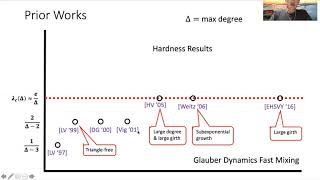
Spectral Independence in High-Dimensional Expanders and Applications to the Hardcore Model
Explore spectral independence in high-dimensional expanders and its application to the hardcore model, focusing on Glauber dynamics, complexity phase transitions, and future research directions.
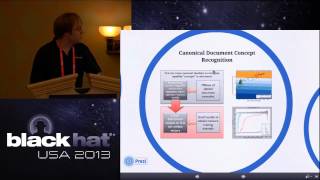
CrowdSource - Crowd Trained Machine Learning Model for Malware Capability Detection
Innovative machine learning tool for automated malware capability detection, trained on web technical documents. Provides probabilistic and traceable output for rapid reverse engineering of active malware variants.

Deep Probabilistic Modelling with Pyro
Explore deep probabilistic modeling with Pyro, combining probabilistic methods and neural networks for better uncertainty handling and decision-making in machine learning applications.

Vulnerability Assessment of Substation Using Bayesian Attack Graph
Explore advanced techniques for assessing substation vulnerabilities through Bayesian attack graphs, focusing on network security and risk analysis methodologies in power infrastructure.
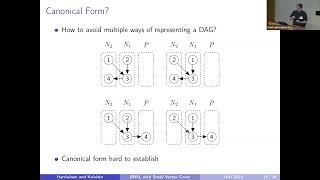
Revisiting Bayesian Network Learning with Small Vertex Cover
Explore Bayesian network structure learning with bounded vertex cover, analyzing complexity bounds and hardness results for optimization and counting problems.
Fast Inference for Probabilistic Graphical Models
Innovative system for efficient probabilistic graphical model inference, offering significant speedup through optimized memory management, parallelization, and flexible integration with sampling algorithms.
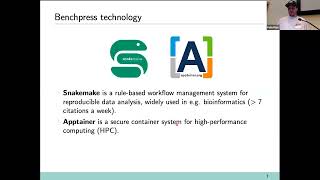
Structure Learning Using Benchpress - UAI 2023 Tutorial
Explore Benchpress, a scalable workflow for structure learning in probabilistic graphical models. Learn to run, develop, and benchmark algorithms for causal discovery and data-generating mechanisms.
Probabilistic Circuits - Lecture on Advanced AI Techniques
Explore probabilistic circuits with YooJung Choi, delving into advanced AI concepts at the intersection of symbolic methods and deep learning.

A View in Old and New Machine Learning
Explore old and new machine learning approaches, comparing hierarchical probabilistic models with deep neural networks and examining their unique capabilities and potential combinations.
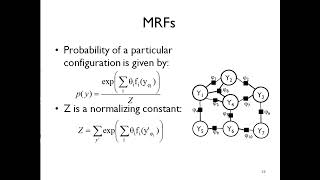
New Machine Learning Tools for Structured Prediction - 2012
Explore advanced machine learning techniques for structured prediction in NLP and social network analysis, focusing on Markov Random Fields and risk minimization approaches.
Probabilistic Models of Relational Domains
Explore probabilistic models for relational domains with Stanford's Daphne Koller, covering advanced techniques for representing and reasoning about complex, interconnected data structures.

Probabilistic Circuits
Explore probabilistic circuits with Antonio Vergari, covering foundational concepts and advanced applications in AI and machine learning.