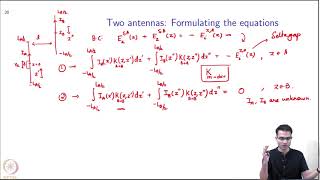
Applications of Computational Electromagnetics: Antennas - Mutual Coupling - Part 2
Explore advanced concepts in computational electromagnetics, focusing on antenna mutual coupling analysis and its applications in electromagnetic simulations.
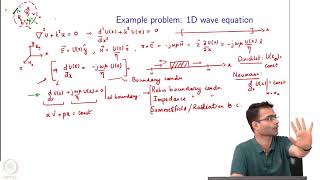
1D Finite Element Method - 1D Wave Equation: Boundary Conditions
Explore boundary conditions for 1D wave equation using finite element method. Gain insights into solving complex mathematical problems in engineering and physics.
Effective Mass in Semiconductors - Lecture 2.1
Explore the concept of effective mass in semiconductors and its significance in understanding electronic properties and behavior.

Channel Length Modulation Effect in Current Models - Lecture 2.1
Explore channel length modulation effect on current models, comparing long and short-channel approaches for enhanced understanding of MOSFET behavior.

Introduction to NMOS Transistor Working - Lecture 1.2
Explore NMOS transistor operation modes: accumulation, depletion, and inversion. Learn about current, threshold voltage, and carrier types.
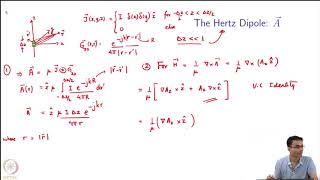
Applications of Computational Electromagnetics: Antennas - Hertz Dipole - Part 1
Explore computational electromagnetics applications for antennas, focusing on the Hertz dipole. Gain insights into fundamental concepts and practical implementations.
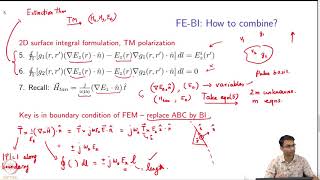
Applications of Computational Electromagnetics: Finite Element-Boundary Integral - Part 2
Explore advanced finite element-boundary integral techniques in computational electromagnetics, focusing on practical applications and problem-solving strategies.
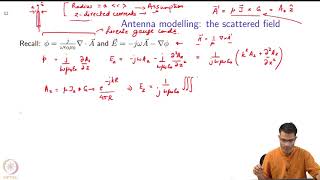
Applications of Computational Electromagnetics: Antennas - Pocklington's Integral Equation - Part 1
Explore Pocklington's Integral Equation for antenna analysis in computational electromagnetics. Learn key concepts and applications in this introductory segment.
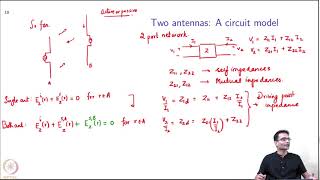
Applications of Computational Electromagnetics: Antennas - Mutual Coupling - Part 1
Explore computational electromagnetics applications in antenna mutual coupling. Gain insights into electromagnetic interactions between antenna elements.
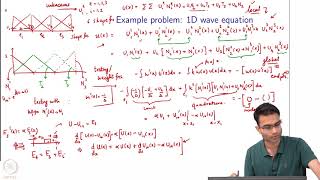
1D Finite Element Method: Matrix Assembly for 1D Wave Equation
Explore matrix assembly techniques for the 1D Finite Element Method applied to the 1D Wave Equation, enhancing understanding of numerical solutions in computational physics.
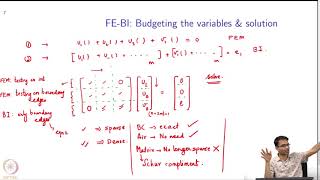
Applications of Computational Electromagnetics: Finite Element-Boundary Integral - Part 3
Explore advanced finite element-boundary integral techniques in computational electromagnetics, focusing on practical applications and problem-solving strategies.
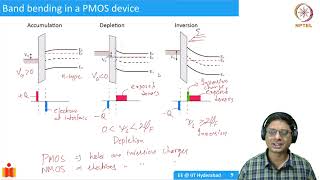
NMOSCAP in Inversion Mode - Lecture 7.3
Explore NMOSCAP operation in inversion mode, examining its characteristics and applications in semiconductor devices.
Make an Ammeter and a Voltmeter from a Galvanometer
Aprenda a transformar um galvanômetro em amperímetro e voltímetro medindo corrente máxima e resistência interna.
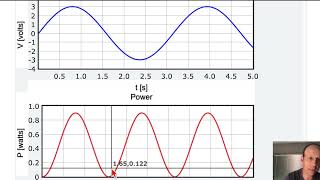
Why Does the RMS Voltage Have a Square Root of 2?
Explore the concept of RMS voltage, its relationship to the square root of 2, and the average of sin^2 using Python code examples.
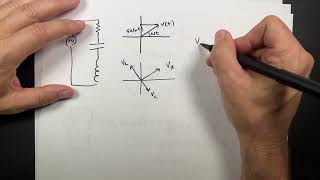
College Physics Chapter 21 Summary - Alternating Current
Explore key concepts of alternating current, including voltage, frequency, reactance, impedance, and RLC circuits. Gain insights into power calculations and resonance in electrical systems.

Calculating Energy Required to Put Hubble Space Telescope into Orbit
Explore the physics behind launching the Hubble Space Telescope, calculating its orbital speed, period, and energy requirements for deployment.
Stress, Strain, and Elasticity in Physics - Types and Concepts
Explore stress, strain, and elasticity concepts in physics, including types, relationships, and key laws for engineering and exam preparation.
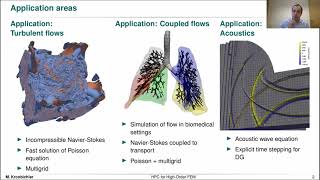
High-Performance Implementations for High-Order Finite-Element Discretizations of PDEs
Explore matrix-free finite-element algorithms for solving PDEs, focusing on high-performance implementations and recent developments in performance engineering for complex geometries.
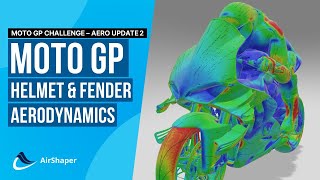
MotoGP Aerodynamics: Helmet, Fender, Mud Guards and Wings - Aero Update 2
Explore MotoGP aerodynamics improvements using CFD simulations. Analyze modifications to fairing, wings, and fender for enhanced performance and reduced drag in motorcycle racing.
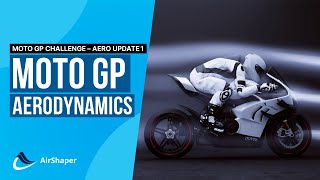
MotoGP Aerodynamics Design Challenge - Aero Update 1
Explore MotoGP aerodynamics improvements using CFD simulations. Analyze drag and downforce changes from design updates, including helmet, radiator, fairing, and wing modifications.
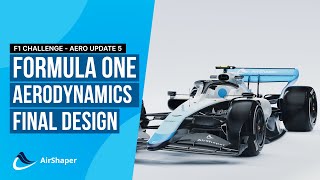
Formula One Aerodynamics - Rear Wing Design and Optimization
Explore Formula One rear wing redesign, comparing tandem and bi-plane configurations for enhanced downforce and compliance with FIA regulations. Gain insights into advanced aerodynamic principles.