Making New Particles One By One
Explores microfluidic devices for creating novel particles with unique properties, from complex structures to amorphous nanoparticles, discussing their potential for fundamental studies and technological applications.
Speaking Up for Human Rights of Scientists - From Andrei Sakharov to Present Day
Explore Andrei Sakharov's legacy and current human rights issues in science. Experts discuss nuclear disarmament, academic freedom, and strategies to protect scientists' rights globally.
Physics Matters in Bioarchaeology - Metals, Human Health and Beyond
Explore the impact of physics in bioarchaeology through synchrotron techniques. Discover how heavy metals in ancient human tissues reveal technological advances, cultural practices, and health implications in past societies.
Science Diplomacy - Using International Scientific Collaboration to Build Bridges Between Communities
Explore science diplomacy's role in advancing physics and fostering international collaboration. Learn how scientists can build bridges between communities through shared scientific interests.
Exciting New Features in nRF Connect SDK v2.5.0
Explore new features in nRF Connect SDK v2.5.0, including Wi-Fi enhancements, Software SIM support, and Matter bridge application, with live demos showcasing improved development tools and power management.
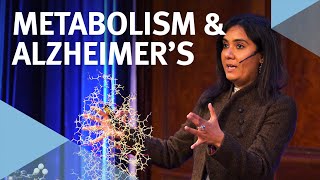
Metabolites: The Key to Treating Alzheimer's?
Explore the role of metabolites in aging, Alzheimer's, and long-COVID. Learn how these small molecules influence protein function and their potential in developing treatments for age-related neurodegenerative diseases.

The Issues We Face at the Nano Scale
Explore nanoscale biology, artificial structures, and machines, including applications in cancer treatment, antibiotics, and organ modification. Learn about interdisciplinary cooperation in nanotechnology's future.

Addressing Inequity in Physics and Astronomy - Why Now is the Time for SEA Change
Explore strategies for enhancing diversity, equity, and inclusion in physics and astronomy departments using the SEA Change self-assessment framework, despite pandemic-related challenges.
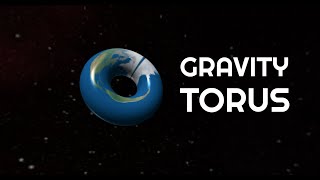
Gravity Torus - Simulating Orbits Around a Doughnut-Shaped Planet
Explore the unique gravitational effects of a doughnut-shaped planet through simulation, uncovering fascinating orbital dynamics and challenging conventional understanding of planetary physics.
Potential Research Areas for Undergraduate Physics Students
Explore diverse research areas in physics, aligning personal interests with academic pursuits. Expert panel guides students through topic selection, interdisciplinary opportunities, and available resources.
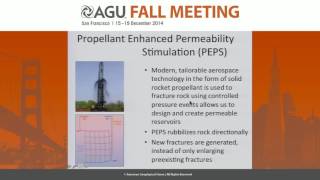
Radiator-Enhanced Geothermal System: A New Concept for Energy Extraction
Innovative geothermal energy extraction concept using a radiator-like design for enhanced performance and longevity in hot dry rock environments, with potential for commercial electricity production.

Oxford Calculus - Gradient and Divergence Explained
Comprehensive explanation of gradient vector and divergence in multivariable calculus, including formal definitions, visualizations, examples, and connections to other concepts. Includes free worksheet and app recommendations.
The Correlation Between Static and Dynamic Properties of Confluent Epithelial
Explore the correlation between static and dynamic properties in confluent epithelial systems, examining their impact on collective behavior and tissue mechanics.
The Discovery and Uses of Nuclear Energy
Explore nuclear energy's discovery, science, and applications with expert insights on fission, fusion, reactors, benefits, risks, and future prospects in this comprehensive overview.
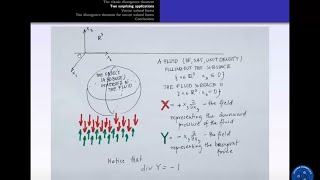
The Divergence Theorem for Vector Fields - Applications and Generalizations
Explore the divergence theorem's applications in PDEs, geometry, physics, and engineering, including proofs of Archimedean principle and multidimensional Pythagorean theorem.
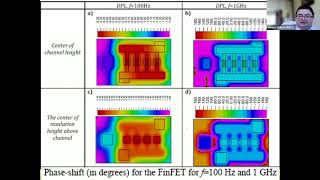
Application of Scattering Parameters to DPL Time-Lag Parameter Estimation Using MEMS Structures
Explore MEMS test structures for DPL model parameter estimation in nanoscale IC materials using scattering parameters and the 2-omega method.
Classical and New Perspectives on Resurgence Theory
Explore classical and modern approaches to resurgence theory, gaining insights into its mathematical foundations and recent developments.
Metasurface Fabrication for Exoplanet Exploration
Explore advanced techniques for metasurface fabrication in space exploration, presented by NASA JPL expert Tobias Wenger at Caltech's Keck Institute.
The Increasing Danger of Nuclear Weapons - How Physicists Can Help Reduce the Threat
Exploring nuclear weapons risks, quantum tech impacts, Earth observation advancements, and physicists' role in threat reduction through expert presentations and grassroots efforts.
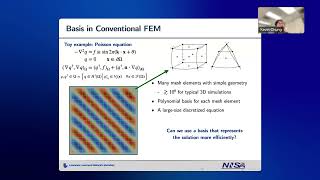
Data-Driven Discontinuous Galerkin FEM via Reduced Order Modeling and Domain Decomposition
Explore scalable component reduced order modeling for efficient large-scale simulations, combining Discontinuous Galerkin Domain Decomposition and proper orthogonal decomposition to accelerate scientific technology transition.
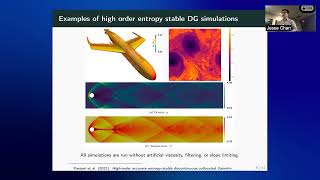
High Order Positivity-Preserving Entropy Stable Discontinuous Galerkin Discretizations
Explore high order discontinuous Galerkin methods for nonlinear conservation laws, focusing on entropy stability and positivity preservation in numerical solutions.