Entanglement in Quantum Computing - Lesson 71
Explore quantum entanglement: unravel the concept of unentangled qubits to understand entanglement in quantum computing. Gain insights into this fundamental principle for advanced quantum programming.
Operations on Separate Qubits: Order Doesn't Matter - Lesson 72
Explore how operations on separate qubits can be performed in any order, demonstrating the independence of quantum operations across different qubit sets.
Quantum Teleportation: Part 2 - Lesson 74
Concludes explanation of quantum teleportation, exploring advanced concepts and applications in quantum computing and information transfer.
The CHSH Game - Quantum Computer Programming - Lesson 77
Explore the CHSH Game, a cooperative challenge for separated players using colored coins, in this quantum computing lesson.
Classical Win Probability of CHSH Game - Quantum Computer Programming Lesson 78
Explore the classical win probability limit of 75% in the CHSH Game, a key concept in quantum computing and information theory.
Rotation Estimation in Superposition - Quantum Computer Programming Lesson 95
Explore rotation estimation in quantum superposition states, advancing your understanding of quantum computer programming techniques and applications.
Quantum Teleportation: Overview and Algorithm - Lesson 73
High-level overview of quantum teleportation algorithm, exploring its principles and applications in quantum computing.
The Key Property of EPR Entangled Pair State - Quantum Computer Programming - Lesson 75
Explore the fundamental property of entangled pair states in quantum computing, focusing on rotations and reflections between Alice and Bob's qubits.
How Alice and Bob Mutually Rotate EPR State - Quantum Computer Programming Lesson 76
Explore the "steering wheel" metaphor for |EPR〉 state rotation by Alice and Bob in quantum computing, using clear visual analogies.
Quantum Win Probability of CHSH is 85% - Lesson 79
Explore quantum advantage in the CHSH Game, demonstrating an 85% win probability for quantum players Alice and Bob in this advanced quantum computing lesson.

Simulating the Magnus Effect in Football Free Kicks Using SCILAB
Explore the physics behind curved football kicks through SCILAB simulation. Learn about Magnus effect, projectile motion, and programming to visualize unpredictable ball trajectories.
Can AI Solve Physics Problems? ChatGPT Takes on Physics Challenges
Explore ChatGPT's ability to tackle physics problems, from projectile motion to quantum mechanics. Witness AI's potential and limitations in comprehending and solving complex scientific questions.

Nuclear Fusion: From Basic Principles to Future Energy Frontiers
Explore nuclear fusion fundamentals, current industry developments, and future frontiers through an expert's perspective on harnessing this revolutionary clean energy technology.
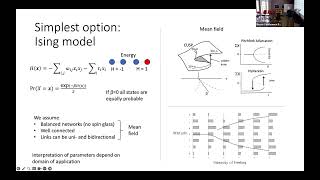
Modeling Psychological Systems with Ternary Spin Models
Explore how ternary spin models enhance psychological research by extending binary network models to include neutral states, offering richer dynamics for analyzing depression, intelligence, and attitude changes.
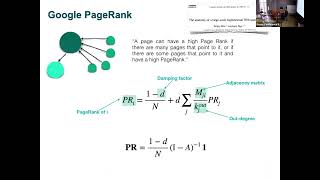
From Centrality Measures to Nanowire Networks - Disordered Systems Methods to the Rescue
Explore advanced network analysis techniques, from centrality measures to nanowire networks, using disordered systems methods to understand complex network dynamics and neuromorphic computing applications.
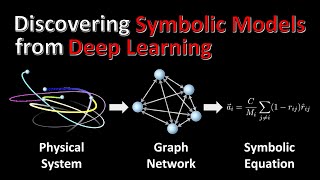
Discovering Symbolic Models from Deep Learning with Inductive Biases
Exploring how Graph Neural Networks and symbolic regression can derive accurate symbolic equations from observational data, combining deep learning with physics-inspired inductive biases.
The Bizarre Quantum World with Q# and Azure Quantum
Explore quantum mechanics' bizarre concepts through Q# programming and Azure Quantum, delving into superposition, entanglement, and wave-particle duality in this mind-bending talk.
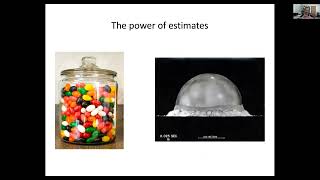
Incorporating Biological Physics into Undergraduate Physics Curricula
Explore strategies for integrating biological physics into undergraduate physics curricula, including examples, course adaptations, and interdisciplinary majors.
Modelling Magma Movement: Unexpected Journeys in the Field and Lab
Explore magma movement through field observations and lab experiments. Uncover unexpected insights into dyke geometry, fluid dynamics, and complex magma rheology using innovative modeling techniques.

CO2 Geological Storage Modeling with Machine Learning
Explore machine learning-based CO2 geological storage modeling, offering real-time insights and significant speedups compared to traditional simulations for efficient decarbonization strategies.
Spectral Properties of Soft Quantum Waveguides
Explore spectral properties of soft quantum waveguides, focusing on Schrödinger operators with attractive potentials along curved channels. Analyze discrete spectrum conditions and ground state optimization.