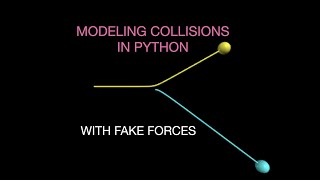
Modeling 2D Collisions in Python with Fake Forces
Simulate 2D collisions using Python and fake forces. Learn a simplified approach to modeling object interactions in programming.
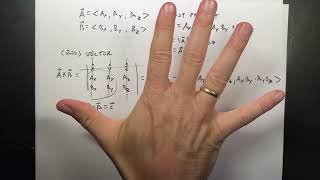
Angular Momentum in Physics - Lecture Chapter 11
Explore angular momentum principles, torque, cross products, and related concepts in physics through clear explanations and examples.
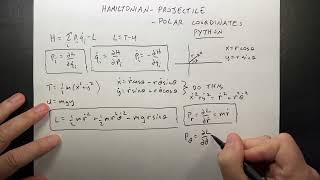
Hamiltonian Mechanics for Projectile Motion in Polar Coordinates
Explore Hamiltonian mechanics for projectile motion using polar coordinates, with Python code implementation for practical understanding.
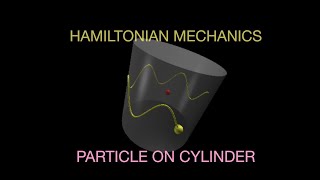
Hamiltonian: Particle on a Frictionless Cylinder with a Force
Explore particle motion on a frictionless cylinder under external force using Hamilton's equations and Python simulation.
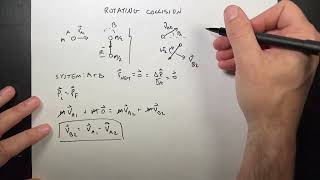
Collision Between a Mass and a Rod: Conservation of Momentum and Angular Momentum
Analyze collisions between masses and rods using conservation of momentum and angular momentum principles. Develop problem-solving skills in physics.
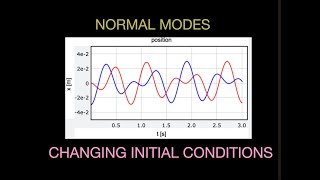
Finding Normal Modes for Coupled Oscillators with Rotating Vectors
Explore coupled oscillator normal modes using rotating vectors, with hands-on Python code for interactive learning and visualization.
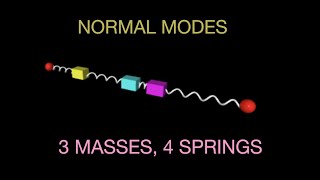
Normal Modes - 3 Masses, 4 Springs
Explore oscillation patterns of three masses connected by four springs in one dimension, including visual modeling techniques.
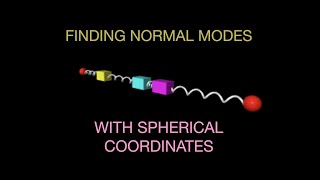
Finding Normal Modes of Oscillation with a Varying Vector
Explore oscillation normal modes using varying vectors, with code examples and animations to visualize complex physical concepts.
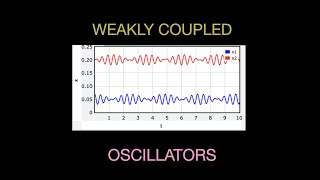
Weakly Coupled Oscillators: Analysis and Behavior
Explore weakly coupled oscillators, their behavior when normal mode frequencies are similar, and analyze the system using provided code and related concepts.
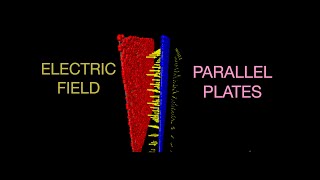
Modeling the Electric Field Due to Parallel Plates Using Python
Model electric fields between parallel plates using Python and 20,000 points, avoiding calculus for a clear visualization.
College Physics: Electric Current and Circuits - Chapter 18 Summary
Explore electric current, circuits, resistance, and power concepts. Master loop and junction rules, resistor configurations, and capacitor applications in electrical systems.

Physics Practice: 4 Atwood Machine Problems
Solve four challenging Atwood machine problems to enhance your understanding of physics principles and problem-solving skills.
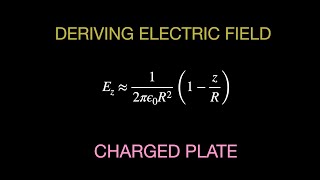
Finding the Electric Field Due to a Charged Plate and a Parallel Capacitor - All Steps
Derive the electric field for charged plates and parallel capacitors through step-by-step explanations and calculations.
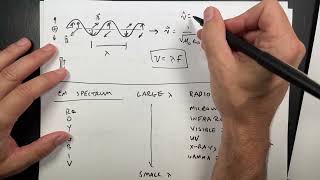
College Physics Chapter 22 Summary - Electromagnetic Waves
Explore electromagnetic waves, Maxwell's equations, wave properties, spectrum, refraction, energy, light intensity, polarization, and Doppler effect.
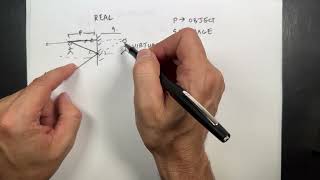
College Physics: Reflection and Refraction of Light - Chapter 23 Summary
Explore key concepts of light behavior including reflection, refraction, and mirror types. Learn to analyze light ray diagrams and understand optical phenomena.
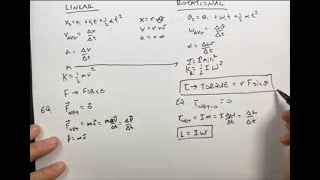
College Physics Chapter 8 Summary - Torque and Angular Momentum
Explore rotational dynamics, including kinetic energy, moment of inertia, torque, and angular momentum principles in physics.
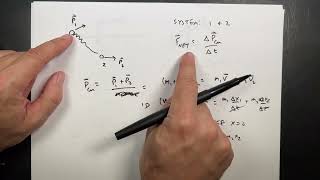
Using Torque to Derive the Center of Mass and Gravity
Derive the center of mass using torque and equilibrium principles in physics. Gain insights into fundamental concepts of mechanics and force analysis.
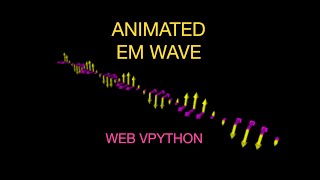
Animated Electromagnetic Wave in Web VPython
Create an animated electromagnetic wave visualization using Web VPython, enhancing understanding of EM field behavior through interactive coding.
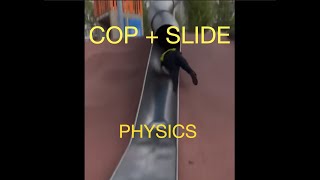
Boston Cop Slide Calculation - Physics Analysis of Viral Video
Analyze a viral video of a cop's high-speed slide exit, calculating final velocity and friction coefficient using physics principles.
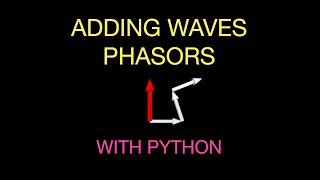
Phasor Addition of Waves with Python
Animate wave interference using phasors and Python, exploring amplitude addition through rotating vectors.
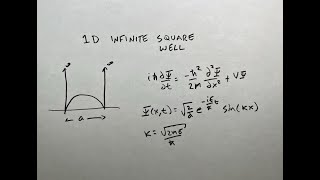
Solution for the 1D Infinite Square Well in Quantum Mechanics
Solve the Schrödinger equation for a one-dimensional infinite square well, exploring quantum mechanics fundamentals and wave function behavior.