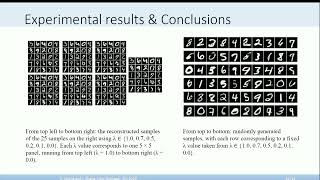
Deformed Evidence Lower Bound (λ-ELBO) Using Rényi and Tsallis Divergence
Explore advanced variational inference techniques using Rényi and Tsallis divergences to optimize the Deformed Evidence Lower Bound (λ-ELBO) for improved probabilistic modeling.
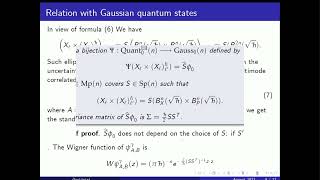
Geometric Quantum States and Lagrangian Polar Duality - Quantum Mechanics without Wavefunctions
Explore geometric formulation of quantum states using Lagrangian polar duality, challenging traditional uncertainty principle interpretations and quantum mechanics concepts.
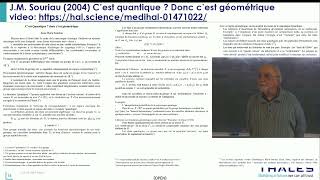
Souriau's Geometric Principles for Quantum Mechanics
Explore geometric principles bridging classical and quantum mechanics, examining symmetries, Planck's constant, and prequantization to determine quantum states through inequalities.
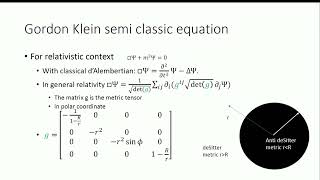
Unitarity Excess in Schwarzschild Metric
Explore eigenvalues in Gordon Klein equation with Schwarzschild metric, examining implications for black hole information paradox and eternal black holes.
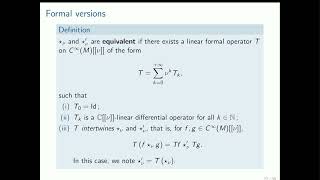
A Non-Formal Formula for the Rankin Cohen Deformation Quantization
Explore the Rankin-Cohen deformation quantization, its connections to modular forms and foliations, and discover a new oscillatory integral formula for Zagier's UDF.
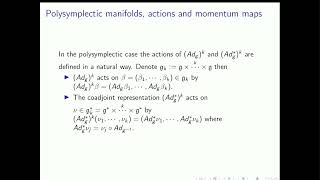
Polysymplectic Souriau Lie Group Thermodynamics and the Geometric Structure of Its Coadjoint Orbits
Explore advanced geometric thermodynamics, focusing on polysymplectic Souriau Lie group theory and coadjoint orbit structures in mathematical physics.
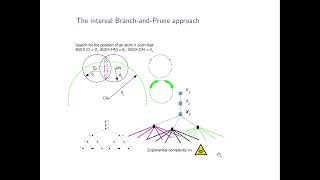
Exploration of Conformations for an Intrinsically Disordered Protein
Explore conformations of intrinsically disordered proteins, delving into their unique structural characteristics and functional implications in biological systems.
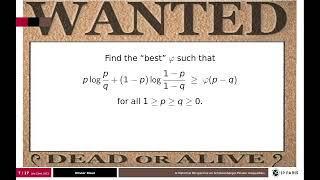
A Historical Perspective on Schützenberger-Pinsker Inequalities
Explore the historical development and significance of Schützenberger-Pinsker inequalities in information theory and probability theory.
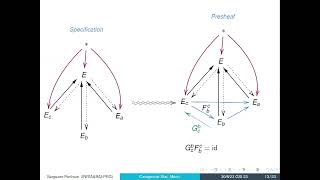
A Categorical Approach to Statistical Mechanics
Explore statistical mechanics through a categorical lens, gaining insights into complex systems and thermodynamic principles.
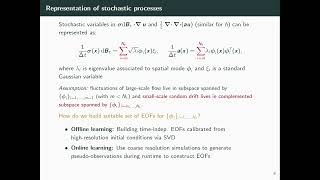
Casimir Dissipation Stabilized Stochastic Rotating Shallow Water Equations on the Sphere
Explore stochastic rotating shallow water equations on the sphere, focusing on Casimir dissipation stabilization techniques and their applications in geophysical fluid dynamics.
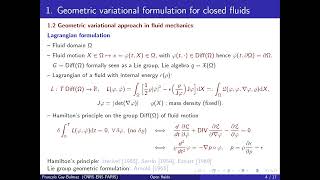
Variational Geometric Description for Fluids with Permeable Boundaries
Explore variational geometric methods for modeling fluid dynamics with permeable boundaries, enhancing understanding of complex fluid systems and their interactions.
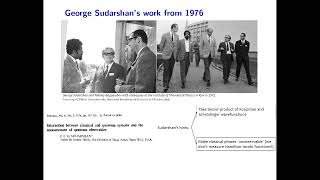
Lagrangian Trajectories and Closure Models in Quantum Classical Dynamics
Explore Lagrangian trajectories and closure models in quantum classical dynamics, gaining insights into advanced theoretical physics concepts.
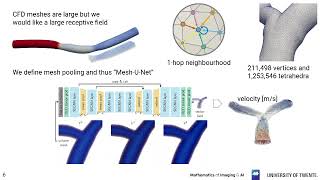
SE3 Equivariant Hemodynamic Field Estimation in 3D Artery Models via Graph Neural Networks
Estimate hemodynamic fields in 3D artery models using SE3 equivariant graph neural networks, enhancing accuracy and efficiency in cardiovascular research.
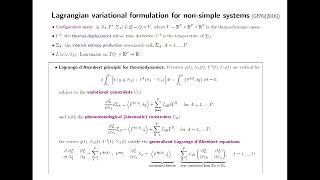
Hamiltonian Variational Formulation for Non-Simple Thermodynamic Systems
Explore Hamiltonian variational formulation for complex thermodynamic systems, gaining insights into advanced mathematical approaches in physics and engineering.
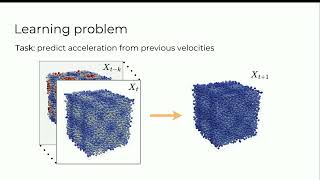
Learning Lagrangian Fluid Mechanics with E3 Equivariant Graph Neural Networks
Explore Lagrangian fluid mechanics using advanced E3 equivariant graph neural networks for innovative computational modeling approaches.
A Variational Principle of Minimum for Navier-Stokes Equation Based on the Symplectic Formalism
Explore a variational principle of minimum for Navier-Stokes equations using symplectic formalism, advancing understanding of fluid dynamics and mathematical physics.
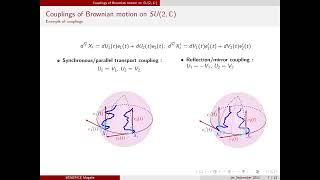
Couplings of Brownian Motions on SU2 and C
Explore couplings of Brownian motions on SU2 and C, delving into advanced mathematical concepts and their applications in stochastic processes.
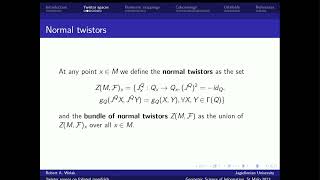
Twistor Spaces on Foliated Manifolds - Geometric Science of Information
Explore twistor spaces on foliated manifolds and their applications in geometric information science. Delve into advanced mathematical concepts and their relevance to information theory.
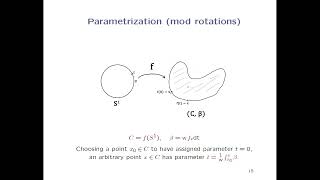
A Discrete Version for Vortex Loops in 2D Fluids
Explore a discrete model for vortex loops in two-dimensional fluid dynamics, examining mathematical concepts and computational applications.

Riemann's Theta Function: From Algebraic Geometry to Water Wave Physics
Explore Riemann's theta function's role in mathematics, from geometry to cryptography, and its connection to water wave physics through the KP equation.

Mathematical General Relativity to Quantum Field and Information Theory - Research Overview
Explore core research in Mathematical General Relativity, Quantum Field Theory, and Information Theory, with connections to various mathematical areas.