Deep Learning and Numerical Methods Intersections for Improving Molecular and Fluid Dynamics
Explore intersections of deep learning and numerical methods to enhance molecular and fluid dynamics simulations, improving accuracy and efficiency in scientific computations.
Machine Learning Gradients in Molecular Simulations
Explore ML gradients in molecular simulations, including surrogate functions, active learning, and differentiable programming for enhanced scientific modeling and optimization.
From Entropy to Artistry: Thermodynamics and Generative AI
Explore connections between diffusion models and physics, focusing on non-equilibrium thermodynamics and its applications in image/video generation and climate modeling.
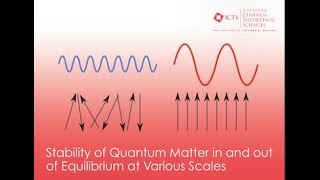
Solvable Entanglement Dynamics in Quantum Circuits with Generalized Dual Unitarity
Explores solvable entanglement dynamics in quantum circuits using generalized dual unitarity, advancing understanding of quantum matter stability and non-equilibrium physics.
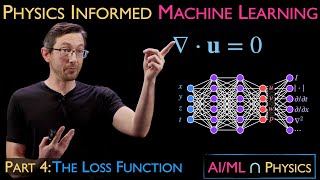
Crafting a Physics-Informed Loss Function for AI/ML in Physics - Part 4
Explores designing physics-informed loss functions in AI/ML, including case studies on fluid dynamics, sparse modeling, and equivariant loss, to enhance model performance and incorporate physical constraints.
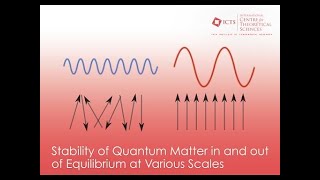
Quantum Information Phases in Space-time: Measurement-induced Entanglement and Dynamics
Explore quantum information phases in space-time, focusing on measurement-induced entanglement and related phenomena. Gain insights into cutting-edge research in quantum many-body systems and their stability.
Tutorial on Bosonic Codes
Explore bosonic codes in quantum computing with Victor Albert, covering advances in quantum coding theory and their applications in error correction.
Panel Discussion on Neutral Atoms
Explore the cutting-edge field of neutral atom technology in this insightful panel discussion featuring leading experts in quantum computing and atomic physics.
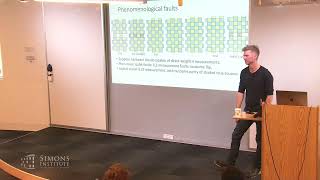
Fault Tolerance of Stabilizer Channels
Explore quantum error correction and fault tolerance in stabilizer channels, focusing on recent advancements and their implications for quantum computing systems.

Quantum Computing: Untangling the Hype
Experts discuss quantum computing's potential, workings, and impact on fields like cryptography and molecular modeling, separating hype from reality in this comprehensive exploration.
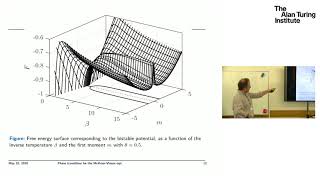
Phase Transitions for Mean Field Limits of Noisy Interacting Agents
Explore phase transitions in mean field limits of noisy interacting agents, examining complex systems modeling and statistical approaches for accurate predictions in various scientific fields.
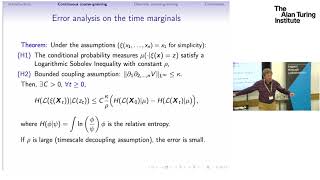
Coarse-Graining Stochastic Dynamics
Explore techniques for simplifying complex stochastic systems through coarse-graining, enabling practical computation and accurate prediction in various scientific fields.
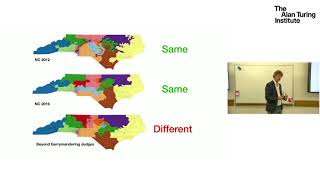
Understanding the Geopolitical Structure of the USA
Explore statistical approaches for analyzing geopolitical structures in the USA, combining data analysis with complex systems modeling to uncover crucial features and patterns.
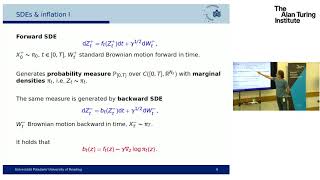
Learning Models by Making Them Interact
Explore new approaches to data-driven modeling of complex systems, combining statistical inference, high-throughput computation, and physical laws for more accurate predictions in various scientific fields.
The Complexity of Fermions in Quantum Information and Beyond
Exploring fermion simulation challenges in quantum computing, highlighting new data structures and complexity results for ground state problems in chemistry, physics, and computer science.
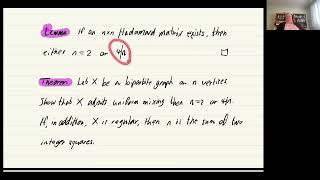
Algebraic Graph Theory and Quantum Computing - Lecture 11
Explore the intersection of algebraic graph theory and quantum computing, delving into advanced mathematical concepts and their applications in quantum information science.
Synergy Between Quantum Circuits and Tensor Networks - IPAM at UCLA
Explore synergies between parametrized quantum circuits and tensor networks, addressing optimization challenges and enhancing performance in quantum computing applications.
Quantum Phases in Space-Time - Entanglement & Teleportation on a Quantum Processor
Explore quantum dynamics, phase transitions, and experimental realizations in monitored systems. Discover novel phenomena in entanglement, teleportation, and quantum information reconstruction.
Searching for Valuable Applications of Fault-Tolerant Quantum Computers in Chemistry
Exploring potential applications of fault-tolerant quantum computing in chemistry, including electronic structure, quantum dynamics, and molecular vibrations simulation.
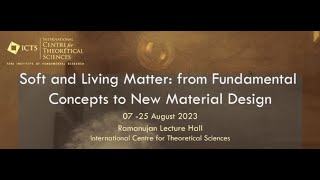
Reinforcement Learning in Action - Lecture 3
Explore advanced reinforcement learning concepts and applications in this lecture by Massimo Vergassola, part of a comprehensive series on soft and living matter physics.
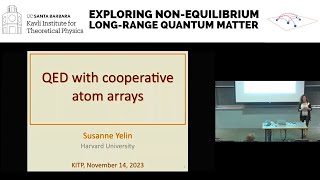
QED with Cooperative Atom Arrays and Applications - Susanne Yelin
Explore quantum electrodynamics with cooperative atom arrays, focusing on applications and recent advancements in quantum many-body systems with long-range interactions.