Measuring Speed of Sound With HC-SR04 Sensor
Learn to measure the speed of sound using an Arduino and HC-SR04 sensor. Practice dimensional analysis, unit conversion, and apply math skills in a practical, hands-on project.

Understanding Photoresistors and Photo Detectors
Learn to use photoresistors with Arduino, exploring their physics and creating a light-sensitive LED project. Gain practical skills in circuit building and programming for real-world applications.
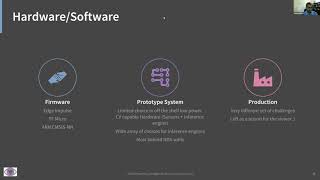
Low Power CV Meets the Real World
Explore practical considerations for implementing computer vision in low-power IoT devices, covering hardware accelerators, algorithms, optics, and real-world challenges.
Sending Data with Sound Using Wave-share
Explore data transmission using sound waves with Wave-share, an out-of-band technique utilizing built-in microphones and speakers in smartphones and computers.
Interpretable and Generalizable Machine Learning for Fluid Dynamics - Steven Brunton
Explore interpretable and generalizable machine learning techniques for fluid dynamics, focusing on sparse identification of nonlinear dynamics and incorporating physical constraints for improved accuracy.
Physics-Guided Deep Learning for Fluid Dynamics - Rose Yu
Explores physics-guided deep learning for fluid dynamics, focusing on accelerating turbulence simulations and incorporating symmetry for generalization in ocean current forecasting.
Non-Unitary Dynamics - Dissipative to Monitored - Vedika Khemani
Explore non-unitary dynamics in quantum systems, from dissipative to monitored, covering analytical approaches, entanglement scaling, and spacetime duality in quantum circuits and many-body physics.
Measurement Induced Entanglement Transitions in Quantum Circuits with Decoherence - Ehud Altman
Explores measurement-induced entanglement transitions in quantum circuits, focusing on characterization methods, dynamical symmetry, and connections to classical models. Discusses implications for non-equilibrium many-body physics.
Axioms of Quantum Computing - Lecture 9b of CS Theory Toolkit
Explore fundamental axioms of quantum mechanics for quantum computing, covering unitary matrices, qubit gates, and quantum circuits in this graduate-level lecture from Carnegie Mellon University.
Understanding and Measuring One Qubit - Lecture 3 of Quantum Computation and Information at CMU
Explore quantum mechanics fundamentals, focusing on understanding and measuring one qubit. Learn about measuring devices, inner products, and quantum notation.
Suppressing Quantum Errors by Scaling a Surface Code Logical Qubit - Kevin Satzinger - Google
Explore quantum error correction through surface code logical qubits, focusing on scaling strategies and performance improvements for practical applications in quantum computing.
Spacetime Topological Defect Networks and Floquet Codes - Dominic Williamson
Explores topological defect networks and Floquet codes in quantum systems, covering anyons, toric code, TQFT dynamics, and spacetime defects. Provides insights for researchers in integrable models and quantum physics.
To Learn and Cancel Quantum Noise - Zlatko Minev (IBM)
Explore quantum noise cancellation using probabilistic error correction and sparse Pauli-Lindblad models on noisy quantum processors, with insights on implementing and generalizing this approach.
Black Holes and Quantum Information - Thomas Hartman
Explores connections between black holes and quantum information, discussing Hawking radiation, island effect, and replica wormholes. Addresses key questions in quantum gravity and implications for cosmology.
Classical and Quantum Simulations of Nuclear Dynamics - Sofia Quaglioni
Explore nuclear dynamics through classical and quantum simulations, combining chiral effective field theory with ab initio methods for accurate S-factor evaluations and quantum computing applications in scattering theory.
Kubernetes as a Substrate for ATLAS Compute
Exploring Kubernetes' potential for ATLAS experiment computing, including batch processing, GPU resource management, and interactive analysis clusters for high-energy physics research.
Modeling Flow and Transport in Fractured Rock Using Machine Learning
Integrating computational physics, machine learning, and graph theory to model flow and transport in fractured rock systems, offering a paradigm shift from high-fidelity models to efficient coarse-scale graphs.
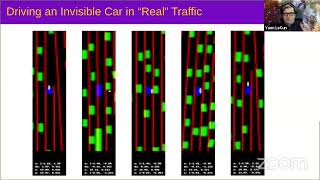
The Deep Learning - Applied Math Connection
Explore the intersection of deep learning and applied mathematics, focusing on advancements in signal processing, optimization, and self-supervised learning for predictive modeling.
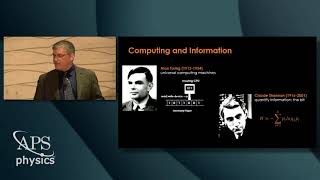
Quantum Information Science
Explore quantum information science with a distinguished professor, covering key concepts and recent advancements in this cutting-edge field of physics.
Machine Learning Applications in Particle Physics, Astronomy, and Cosmology
Explore machine learning applications in cosmology and astronomy with NYU's Kyle Cranmer, featuring insights from the 2018 Machine Learning Physics Next workshop.
Machine Learning for Analysis of High-Dimensional Spatiotemporal Chaotic Dynamical Systems
Discover how machine learning techniques can analyze and predict complex chaotic systems, with insights from cutting-edge research in physics and data science.