Deep Learning Optimization: Stochastic Gradient Descent and Momentum - Lecture 3
Dive into advanced optimization techniques for deep learning, covering stochastic gradient descent, mini-batches, momentum, and Stein's unbiased risk estimator.
Potential and Limitations of Near-Term Quantum Computing
Explore the current landscape of quantum computing, examining both promising applications and key limitations in intermediate-scale quantum devices, with focus on error mitigation and practical implementations.
Feasibility of Wireless Energy Transfer Using Intelligent Reflecting Surface in Next Generation IoT Networks
Explore wireless energy transfer technology in IoT networks, focusing on intelligent reflecting surface implementation, challenges, and solutions for efficient power transmission and harvesting.
Five Ways to Understand Kubernetes Networking for Performance-Intensive Workloads
Explore Kubernetes networking innovations for high-performance workloads. Compare CNI implementations using real-world benchmarks to analyze performance in scientific computing and machine learning.
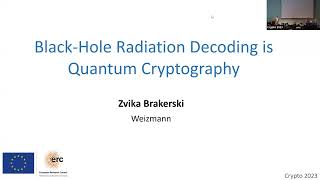
Quantum Cryptography - Session 1
Explore cutting-edge quantum cryptography concepts and advancements presented at Crypto 2023, offering insights into the future of secure communication and data protection.
Meta-Learning Dynamics Forecasting Using Task Inference
Explore meta-learning dynamics forecasting using task inference to improve generalization across heterogeneous domains in deep learning models for predicting complex systems.
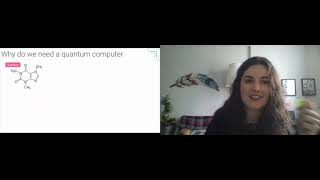
The Quest for the Final Quantum Computer
Explore quantum computing basics, cutting-edge algorithms, and future prospects in experimental quantum computers with insights from a postdoctoral researcher.
Quantum Computing: Technological and Social Revolution
Explore quantum computing's transformative impact on technology and society, delving into its revolutionary potential and far-reaching implications.
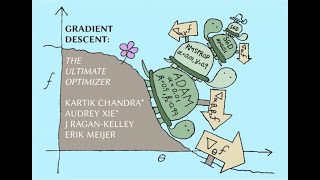
Gradient Descent: The Ultimate Optimizer - Automating Hyperparameter Optimization
Discover how to automatically optimize hyperparameters in gradient-based ML algorithms through an elegant modification to backpropagation, making optimizer tuning more efficient and less sensitive to initial choices.
Fixing "Goldfish Memory" With GPT-3 and External Sources of Information in a Chatbot
Explore advanced chatbot development techniques, including external information integration, cognitive architecture, and debugging. Learn about particle physics concepts through AI-powered conversations.
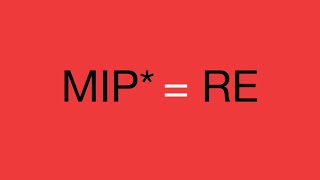
MIP* = RE
Explore the intersection of physics, mathematics, and computer science through a two-player game, delving into quantum mechanics, operator algebras, and interactive proofs.
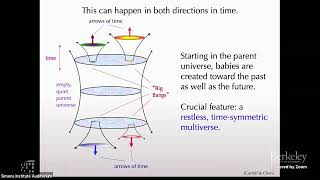
The Arrow of Time in Causal Networks
Explore the macroscopic arrow of time, causal networks, and their relation to fundamental physics. Delve into entropy, complexity, and the nature of causality in our universe.
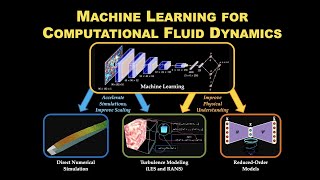
Machine Learning for Computational Fluid Dynamics
Explore machine learning's potential to enhance computational fluid dynamics, covering applications in simulations, turbulence modeling, and reduced-order models while emphasizing physics-informed approaches.
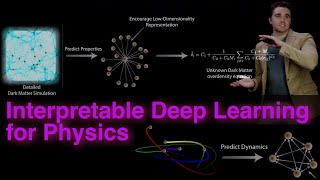
Interpretable Deep Learning for New Physics Discovery
Explore a novel method combining deep learning and symbolic regression to uncover physical laws from data, with applications in physics and cosmology.
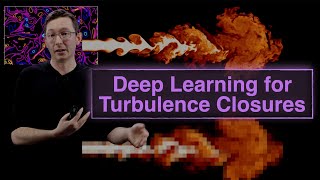
Deep Learning for Turbulence Closure Modeling
Explore how deep learning revolutionizes turbulence modeling in fluid dynamics, focusing on RANS equations and large eddy simulations for advanced computational techniques.
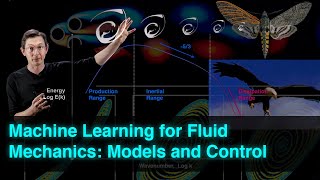
Machine Learning for Fluid Dynamics: Models and Control
Explore machine learning applications in fluid dynamics modeling and control, covering patterns, complexity, RANS closure models, SINDY, and deep MPC for flow control.
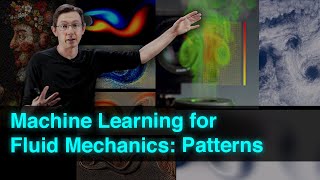
Machine Learning for Fluid Dynamics - Patterns
Explore machine learning applications in fluid dynamics, focusing on pattern extraction and coherent structure identification in high-dimensional systems.
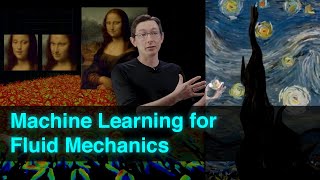
Machine Learning for Fluid Mechanics
Overview of machine learning applications in fluid mechanics, exploring historical context, pattern recognition, reduced-order modeling, and flow control, with insights on AI's impact on this data-rich field.
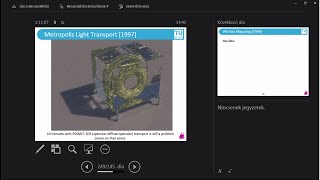
TU Wien Rendering - Metropolis Light Transport
Explore Metropolis Light Transport, an advanced rendering technique that outperforms Bidirectional Path Tracing in difficult scenes, offering optimal importance sampling and improved convergence for caustics.
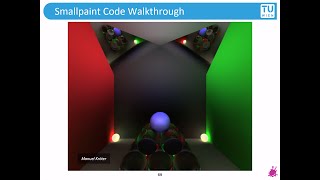
Rendering - Path Tracing Implementation & Code Walkthrough
Comprehensive walkthrough of implementing a path tracer in C++, covering key concepts like vector class, object representation, camera setup, sampling, and rendering techniques.
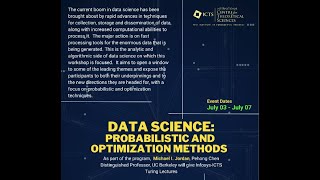
Particle Methods for Optimization Over Measures - Lecture 3
Explore particle methods for measure optimization in this advanced lecture, covering theoretical foundations and practical applications in data science and machine learning.