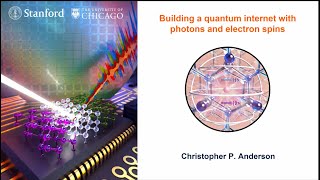
Building a Quantum Internet with Photons and Electron Spins
Explore groundbreaking research on quantum internet development using photons and electron spins in silicon carbide, featuring advances in spin coherence and single photon emission for long-distance quantum communication.
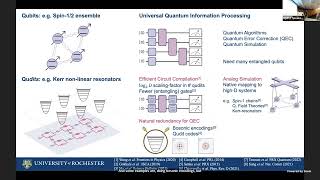
Beyond Binary Quantum Information: Controlling the Excited States of Artificial Atoms in Superconducting Circuits
Explore advanced quantum information processing through higher energy levels of transmon circuits, focusing on qu-trit systems, Fock states, and non-Gaussian operations in superconducting quantum computing.
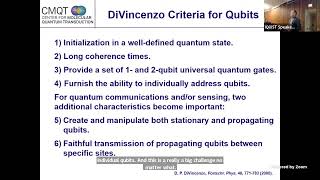
Photogeneration of Electron Spin Qubit Pairs in Molecular Materials for Quantum Information Applications
Explore groundbreaking research on photogenerated electron spin pairs in molecular materials, their applications in quantum computing, and the impact of chirality-induced spin selectivity on quantum information systems.
Materials Science Simulations on Quantum Computers
Explore quantum computing applications in materials science, focusing on electronic-structure simulations, quantum defect embedding theory, and noise mitigation strategies for IBM quantum hardware.
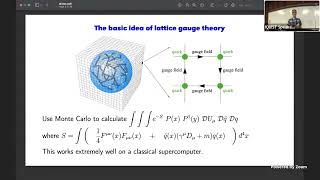
Implementing Quarks and Gauge Fields on Noisy Quantum Computers
Explore lattice gauge theory calculations on quantum computers, focusing on quark and gauge field mapping techniques plus practical error mitigation strategies for IBM quantum systems.

The Theory of Quantum Information - Channels, Capacities, and Communication Resources
Delve into quantum information theory's core concepts, exploring communication channels, entanglement, and quantum capabilities while discovering new perspectives on quantum theory fundamentals.
Quantum Information Science with Spins, Photons, Magnons, and Superconductors
Explore groundbreaking experiments in quantum platforms, examining hybrid quantum magnonic devices and newly discovered spin defects in GaN for advanced quantum sensing and networking applications.
Open Quantum Dynamics and Spontaneous Symmetry Breaking
Explore the fundamental principles of open quantum systems and spontaneous symmetry breaking, examining information-theoretic phase transitions and their applications in quantum dynamics.
Full-Stack Quantum Resource Estimation for Materials Science and Quantum Chemistry
Explore quantum resource estimation for materials science applications, from corrosion studies to protein binding, examining computational requirements and challenges in achieving utility-scale quantum computing.
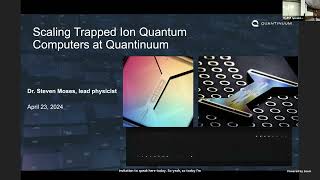
Scaling Trapped-Ion Quantum Computers - From 32 to 56 Qubits
Delve into advanced trapped-ion quantum computing technology, exploring Quantinuum's H2 system architecture, scalability challenges, and benchmarking results for 32 and 56 qubit implementations.
Local Hamiltonians and Quantum Cuts: Exploring the Quantum Heisenberg Model
Delve into quantum Heisenberg models and their connection to Max-Cut problems, exploring theoretical frameworks and approximation algorithms for Quantum Max-d-Cut Hamiltonians in computational physics.
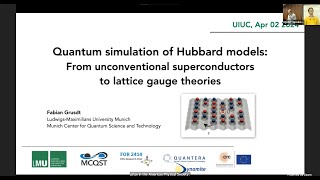
Quantum Simulation of Hubbard Models - From Unconventional Superconductors to Lattice Gauge Theories
Delve into quantum simulation advances exploring Hubbard models, unconventional superconductivity, and lattice gauge theories through microscopic studies of strongly correlated quantum matter.
Quantum Pseudorandomness - Constructions and Applications
Explore quantum pseudorandomness and its applications in cryptography, tomography, and black hole physics, focusing on construction methods and theoretical foundations of quantum states.
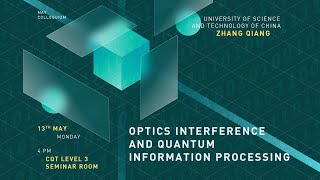
Optics Interference and Quantum Information Processing - From Theory to Applications
Explore quantum interference technology and its applications in quantum key distribution, imaging, and network development through cutting-edge experimental insights.
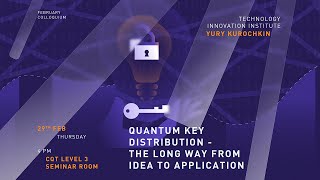
Quantum Key Distribution - From Theoretical Concept to Practical Applications
Explore the evolution, challenges, and practical implementation of quantum key distribution, from theoretical concepts to real-world network applications and security considerations.
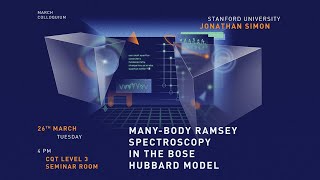
Many-body Ramsey Spectroscopy in the Bose Hubbard Model
Explore quantum physics research on building and probing many-body states of light, focusing on Hubbard physics, crystals of light, and innovative protocols for quantum matter investigation.
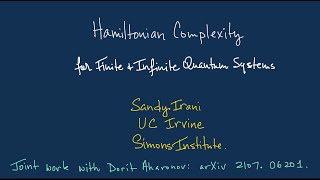
Computational Complexity of Quantum Systems - From Theory to Ground State Analysis
Delve into quantum systems' computational complexity, exploring ground states, quantum computing challenges, and algorithmic approaches for simulating quantum phenomena.
Reinforcement Learning for Quantum Technologies
Discover how reinforcement learning techniques can revolutionize quantum devices, from state preparation to error correction, with insights from theoretical proposals and real-time quantum feedback experiments.
Demonstration of Algorithmic Quantum Speedup in Modern Computing Systems
Explore groundbreaking experimental demonstrations of quantum computing speedups using IBM's superconducting computers and D-Wave quantum annealers, with focus on error suppression methods and scaling advantages.
Quantum Simulation - Engineering and Understanding Quantum Systems Atom by Atom
Explore quantum simulation using neutral atoms in optical arrays to study topological phases and quantum system thermalization, with insights into cutting-edge experimental techniques.
Using Deep Learning Artificial Neural Networks for Optimizations of Optical Alignment and Magneto-Optical Trap
Discover how deep learning neural networks optimize optical alignment and magneto-optical traps, enhancing efficiency in quantum experiments and cold atomic ensemble manipulation.