Methods and Techniques in Non-Perturbative QFT - Lecture 7
Explore advanced concepts in non-perturbative quantum field theory, focusing on methods and techniques for analyzing complex quantum systems beyond traditional perturbation theory.
Methods and Techniques in Non-Perturbative QFT - Lecture 6
Explore advanced non-perturbative techniques in quantum field theory, focusing on methods for analyzing strongly coupled systems and extracting physical insights beyond traditional perturbative approaches.
Holography and Quantum Gravity - Lecture 6
Explore holography and quantum gravity concepts in this advanced physics lecture, delving into cutting-edge theories and their implications for our understanding of spacetime.
Methods and Techniques in Non-Perturbative QFT - Lecture 5
Explore advanced non-perturbative techniques in Quantum Field Theory, focusing on methods for analyzing strongly coupled systems and extracting physical insights beyond traditional perturbation theory.
Two-Dimensional Conformal Field Theory - Lecture 3
Explore advanced concepts in two-dimensional conformal field theory, including complex analysis applications and operator product expansions, with Professor Gaberdiel.
Two-Dimensional Conformal Field Theory - Lecture 4
Explore advanced concepts in two-dimensional conformal field theory, focusing on key principles and applications in theoretical physics and string theory.

A Mirror in the Sky - The Hubble Space Telescope and Its Impact on Astronomy
Explore the Hubble Space Telescope's impact on astronomy, from its challenging beginnings to revolutionary discoveries about stars and the distant Universe.

Wild Echoes - Eco-Acoustic Monitoring and Ecological Mapping
Explore eco-acoustic monitoring for mapping ecological changes. Learn about automated recording devices, machine learning analyses, and real-world applications in forest fragmentation and avian community studies.
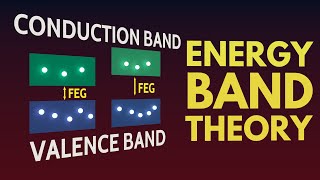
Energy Band Theory - Valence Band, Conduction Band, and Forbidden Energy Gap
Explore energy band theory, including valence and conduction bands, forbidden energy gaps, and differences between insulators, semiconductors, and conductors through graphs and animations.
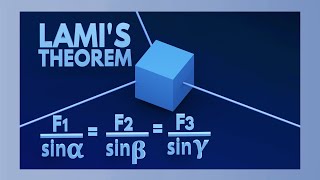
Lami's Theorem - Equilibrium of Concurrent Forces in Physics
Explore Lami's Theorem for equilibrium of concurrent forces through practical applications and numerical problems. Master angle calculations and tension analysis in physics.
Shear Modulus and Modulus of Rigidity in Elasticity - Physics
Explore shear modulus in physics through animations and numerical examples. Learn about shear force, stress, strain, and formulas to solve practical problems.

Archimedes Principle in Fluid Mechanics - Physics Animation and Numerical Examples
Explore Archimedes Principle through animations and numerical problems. Learn about weight in air and water, density, and the principle of floatation in fluid mechanics.
Conductors in Electrostatic Equilibrium - General Physics
Explore the four key rules of conductors in electrostatic equilibrium, including charge distribution and electric field behavior, with a practical problem-solving example.
Charge, Conductors, and Insulators - Introduction to Electric Forces and Fields
Explore fundamental concepts of electric charge, conductors, and insulators. Learn about charge interactions, SI units, and charging methods. Solve problems demonstrating charge conservation.
Doppler Effect in Physics - Sound and Light Applications
Explore the Doppler Effect in sound and light, learn its equation, and solve examples with moving observers and sources. Gain a comprehensive understanding of this physics phenomenon.
Sound Intensity Level and the Decibel Scale - General Physics
Explore sound intensity levels, decibel scales, and their relationship to distance. Learn to calculate sound intensity and understand its logarithmic nature for practical applications in physics.

Sound Waves - Introduction and Speed in Different Mediums - Lecture 14.1
Explore sound waves, their properties, and speed in various mediums. Learn equations for calculating sound velocity in solids, liquids, gases, and air, with practical examples.
Waves in Physics - Transverse, Longitudinal, and Interference
Explore wave types, speed equations, and interference patterns in physics. Master key concepts like transverse and longitudinal waves, wave speed calculations, and constructive/destructive interference.
Springs and Trigonometry Review for Simple Harmonic Motion - General Physics
Review springs, Hooke's Law, and trigonometry concepts essential for understanding simple harmonic motion. Explore relationships between force, energy, displacement, and periodic functions.
Moment of Inertia and Rotational Dynamics - General Physics
Explore moment of inertia and rotational dynamics, covering Newton's laws, derivations, comparisons, and practical applications in physics problems.
Center of Mass and Center of Gravity - Lesson 8.2
Explore center of mass and gravity concepts, learn to determine irregular object centers, and solve point mass calculations for enhanced physics understanding.