Python Tutorial 3 - Graphing for Computational Physics - Absolute Beginners
Learn to create graphs for computational physics using Python, ideal for undergraduate assignments and beginners in scientific data visualization.
Python Tutorial 1 - Computations and Variables for Computational Physics Beginners
Learn essential Python basics for computational physics, including computations and variables, tailored for undergraduate-level assignments in this beginner-friendly tutorial.
Pendulum Simulation with Jupyter - Fun with Lagrangians - Part 1
Explore pendulum motion using Jupyter and Lagrangian mechanics. Create graphs to visualize equations of motion and gain insights into classical physics analysis.
Pendulum Analysis Using Tracker and Lagrangian Mechanics
Explore pendulum motion through experimental analysis and Lagrangian mechanics, uncovering surprising insights into classical physics principles.
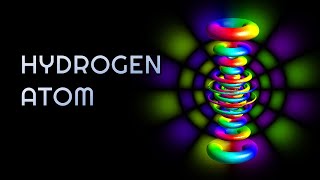
The Hydrogen Atom - A Journey through Modern Physics
Explore quantum mechanics and the hydrogen atom through computational modeling, gaining insights into early 20th-century physics discoveries that revolutionized our understanding of the universe.
Compton Scattering - A Journey through Modern Physics
Explore Compton scattering through computational modeling, challenging the wave model of light and introducing particle behavior in this journey through modern physics concepts.
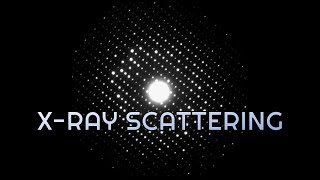
X-Ray Scattering - A Journey through Modern Physics
Explore x-ray diffraction to understand atomic structures in solids. Computational modeling demonstrates this key concept in modern physics, revolutionizing our understanding of materials.
Velocity Transformation - A Journey through Modern Physics - Lecture 2
Explore velocity transformation near light speed through computational modeling, revealing how physics prevents exceeding light speed in this modern physics journey.
Length Contraction and Time Dilation - A Journey Through Modern Physics - Lecture 1
Explore relativity through computational modeling, examining length contraction and time dilation as key concepts in modern physics. Gain insights into early 20th-century discoveries that revolutionized our understanding of the universe.
Pendulum Simulation: Differing Lengths and Poincare Maps - Part 7
Explore double pendulum dynamics with Poincaré maps, analyzing different length ratios and their impact on chaotic behavior using VPython simulations.
Pendulum Simulation: Double Pendulum Dynamics - Part 4
Explore the challenges of simulating a double pendulum system, including unexpected results and troubleshooting techniques in VPython.
Wave Function Evolver - Lennard-Jones Potential Energy Study - Episode 9
Explore the Lennard-Jones potential energy in quantum mechanics, examining interesting results and questions raised through computational physics simulations.
Wave Function Evolver: Two Electrons Confined to a Wire - Episode 8
Explore the simulation of two electrons confined to a wire using a wave function evolver, tackling a real-world quantum physics problem with VPython code.
Wave Function Evolver for 2D Harmonic Oscillator - Episode 7
Explore a working wave function evolver for a Gaussian wave in a 2-D harmonic oscillator potential, with debugging and tweaks demonstrated in VPython.
Achieving the Ultimate Quantum Timing Resolution
Explore cutting-edge research on quantum timing resolution with experts as they discuss their groundbreaking paper, offering insights into advanced quantum physics concepts and potential applications.
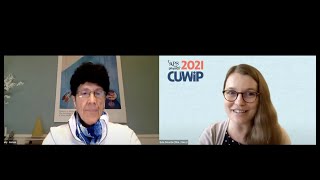
Overcoming Barriers in Physics: Dr. Mary James' Journey and Advocacy
Inspiring journey of Dr. Mary James, from challenging beginnings to becoming a physics professor and diversity advocate. Highlights her efforts to make physics more inclusive and supportive for underrepresented groups.
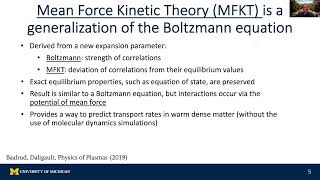
Physics Slam - Rapid-Fire Talks from Early-Career Scientists
Rapid-fire physics talks showcasing cutting-edge research by emerging scientists across diverse fields, from fluid dynamics to particle physics and plasma physics.
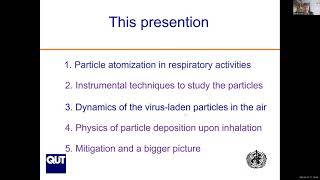
Physics of Respiratory Infections: Do We Understand It? - CRRG Webinar
Explore the physics of respiratory infections, focusing on airborne transmission, risk management, and economic impact. Learn about flow physics in virus-laden particle generation and detection.
Two-Qubit Spectroscopy of Spatiotemporally Correlated Quantum Noise in Superconducting Qubits
Explore spatiotemporal correlations in quantum noise using two-qubit spectroscopy techniques for superconducting qubits, advancing understanding of quantum system behavior and decoherence mechanisms.
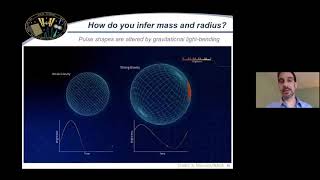
NICER Mission: Exploring Neutron Star Physics and Astrophysics from the ISS
Exploring neutron stars with NASA's NICER mission: probing extreme physics, dense matter, and strong gravity from the International Space Station through soft X-ray observations of celestial sources.
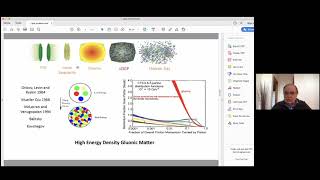
20 Years of RHIC and Beyond - Frontiers of Discovery in Quark Gluon Plasma
Exploring Quark Gluon Plasma discoveries at RHIC, their implications, and future research directions in high-energy nuclear physics and astrophysics.