Growth of Respiratory Droplets in Cold and Humid Air
Explores how respiratory droplets grow in cold, humid air, challenging previous assumptions and discussing implications for airborne disease transmission.
Impact of Research Security Concerns Regarding China on the Physics Community
Explores the impact of US-China tensions on scientific collaboration, addressing visa restrictions, disclosure requirements, and racial profiling concerns in physics research.

Sakharov-100 - Physics, Peace, Human Rights
Explore Andrei Sakharov's legacy in physics, peace, and human rights through expert discussions commemorating his centennial birth anniversary.
Physics Matters - Fluid Dynamics of Wildfires
Explore the fluid dynamics of wildfires, their environmental impact, and how Computational Fluid Dynamics can model and potentially prevent these destructive natural phenomena.
Soft and Living Matter Physics - Millie Dresselhaus CUWiP Keynote Lecture
Theoretical physicist Andrea Liu discusses soft and living matter physics, sharing insights from her distinguished career and contributions to the field of physics.
Advancing an Inclusive Community in Science - 2021 April Meeting Plenary
Experts discuss strategies to combat systemic oppression, support underrepresented communities, and implement inclusive practices in physics education and research.
Capturing a Supermassive Black Hole - 2021 Kavli Foundation Keynote Plenary
Explore groundbreaking research on supermassive black holes with Nobel laureate Andrea Ghez as she discusses her team's revolutionary observations at the center of our galaxy.
Fundamental Lessons from Black Hole Physics - 2021 Kavli Foundation Keynote Plenary
Explore fundamental lessons from black hole physics with Nobel laureate Roger Penrose, delving into groundbreaking concepts and their implications for our understanding of the universe.
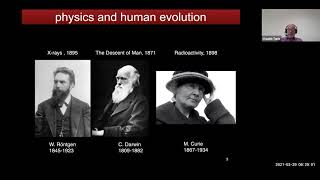
How Physics Can Measure Human Evolution
Explore how physics techniques like radioactive dating, X-ray microscopy, and ion microprobes revolutionize our understanding of human evolution by analyzing fossils and artifacts.
Aspect Ratio Affects Iceberg Melting - Physical Review Journal Club
Explore how iceberg shape influences melting rates in this insightful discussion with researchers, featuring presentation of results and audience Q&A.
Introduction to the SESAME Project - Physics Matters 2021
Explore the SESAME project, a synchrotron-light facility in the Middle East, through this introduction featuring insights from Christine Darve and Andrea Lausi on its scientific impact and international collaboration.
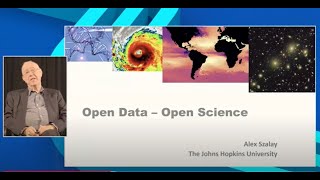
Open Science Plenary - Advancing Data-Driven Discovery
Explore the future of open science with Alexander Szalay's plenary address at AGU22, discussing innovative approaches and advancements in scientific collaboration and data sharing.

The Influence of Multiple Scales in Fractured Media on Flow and Transport Properties
Explore how fracture geometry and network structure in low-permeability media affect fluid flow and solute transport using discrete fracture network models and high-fidelity simulations.
Pore to Darcy to Field Scale: Challenges in Upscaling Porous Media Models
Explore multiscale modeling in porous media, from nanometers to kilometers. Discuss upscaling challenges, theoretical advances, and practical applications in geosciences, with insights on physics and data integration.

Landau Damping and Related Effects in Kinetic Models of Plasma Physics
Explore asymptotic stability in plasma physics, covering Landau damping, plasma echoes, and collision-enhanced dissipation. Gain insights into recent progress and open directions in collisionless and weakly collisional plasmas.
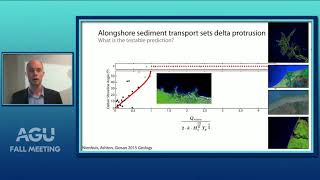
Testing Morphodynamic Theories by Comparing and Contrasting River Deltas
Explore coastal dynamics and river delta morphology, examining the impact of waves, tides, and fluvial forces on delta formation and future changes due to human activities and sea-level rise.
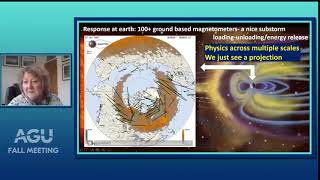
Multiscale Nonlinear Space Physics: From Fundamental Physics to Quantifying Risk - Ed Lorenz Lecture
Introduction to nonlinearity, complexity, and scaling in earth science processes, focusing on solar system plasmas. Explores challenges and progress in applying nonlinear physics concepts to space weather and magnetospheric dynamics.
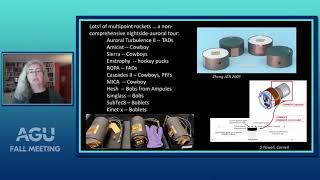
Exploring Near Earth Space with Sounding Rockets - Marcel Nicolet Lecture
Exploring near-Earth space using sounding rockets: innovative techniques, multi-payload campaigns, and groundbreaking discoveries in auroral ionospheric research, fostering new perspectives on Earth's environment.
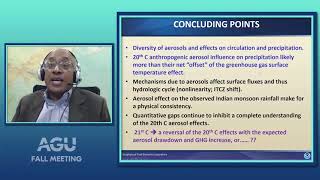
Aerosols and Their Gaming of the Climate System: Microscale Presence to Macroscopic Impacts
Exploring aerosols' impact on climate: from microscopic presence to macroscopic effects. Delves into how these tiny particles influence global climate systems and atmospheric dynamics.
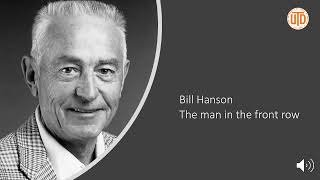
William B. Hanson and SPA Award Lectures 2020
Innovative space science lectures covering ionospheric dynamics, plasma turbulence, and shock waves. Highlights research contributions from early-career scientists and public outreach efforts in space physics.
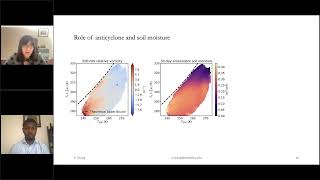
Early-Career Science Seminar Series - Physics and Dynamics
Explore cutting-edge physics and dynamics research in this seminar series designed for early-career scientists, featuring expert presentations and discussions on current topics.