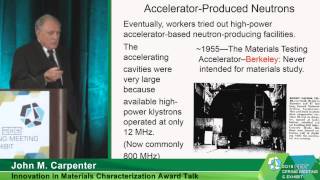
History, Development and Applications of Neutron Sources
Explores neutron discovery, spallation production, and research sources. Discusses slow-neutron scattering in materials science and modern applications of spallation neutron sources.
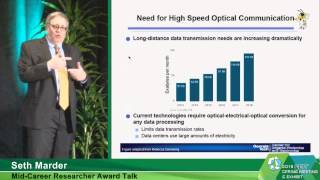
The Design of Organic Molecules and Materials for Nonlinear Optical Applications
Explores design strategies for organic molecules with enhanced nonlinear optical properties, focusing on two-photon absorption and third-order susceptibility for advanced applications.
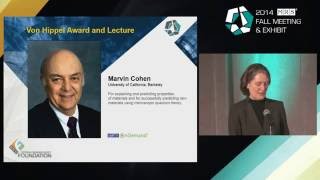
Explaining and Predicting the Properties of Materials Using Quantum Theory
Explore the evolution of quantum theory in materials science, from atomic spectra to modern applications in semiconductors, superconductors, and nanostructures, highlighting its role in explaining and predicting material properties.
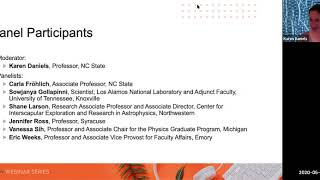
Adjusting Lab Practices for Physics Research During a Pandemic
Explore best practices for physics research groups adapting to COVID-19, including social distancing, remote research, and effective communication strategies.
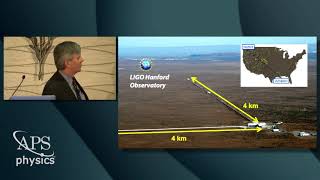
Detection of Gravitational Waves - Role of Large International Collaborations
Explore the groundbreaking detection of gravitational waves and the crucial role of international scientific collaboration in this insightful presentation by LIGO Laboratory's Executive Director.
The River that Runs Through it All - Burton Forum Award Speech
Dr. Shirley Ann Jackson discusses her groundbreaking career spanning physics research, public policy, and academic leadership, highlighting the intersection of science and society and its impact on global challenges.
Recent Advances in Neutrino Physics - Understanding the Physics Behind Neutrino Masses
Explore recent advances in neutrino physics, focusing on the mechanisms behind neutrino masses and their implications for physics beyond the Standard Model.
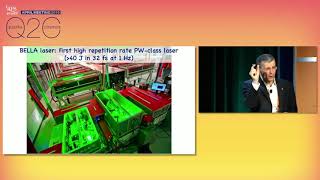
Laser-Powered Plasma-Based Particle Accelerators - Progress and Challenges
Exploring laser-powered plasma accelerators: Compact technology enabling electrons to reach high energies over short distances, with potential applications in particle physics and medical cancer therapy.
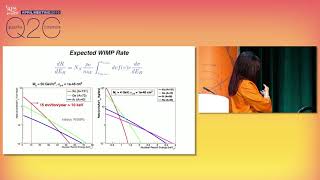
The Search for Dark Matter in Underground Laboratories - Plenary Session
Exploration of Dark Matter detection methods, focusing on underground experiments using liquid xenon detectors. Reviews global efforts and highlights the potential for groundbreaking discoveries in physics and cosmology.
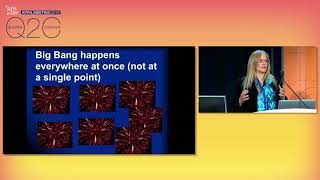
Dark Matter in the Universe
Explore the cosmic cocktail of the universe with Dr. Katherine Freese as she recounts the hunt for dark matter, discusses evidence for its existence, and explains why solving this mystery is crucial for understanding our universe.
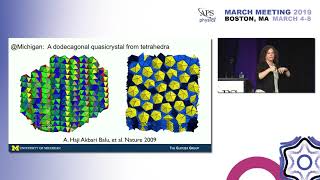
Colloidal Crystals, Quasicrystals and the Entropic Bond
Explore the surprising role of entropy in creating complex ordered structures in colloidal systems, challenging traditional views on order and disorder in materials science.
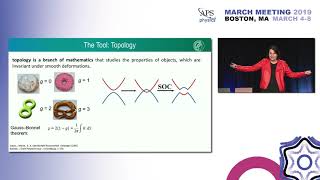
The Heusler System: Building Desired Material States
Explore the versatile Heusler system for designing materials with diverse properties, from magnets to topological insulators. Learn how to combine elements to achieve desired electronic structures and predict material behaviors.
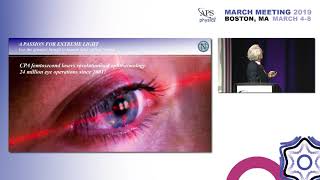
Passion Extreme Light - Exploring High Energy Physics and Laser Technology
Nobel laureate Gérard Mourou explores extreme-light lasers as universal sources for high-energy radiation, particles, and extreme conditions, discussing their potential to address fundamental physics questions and advance laser-matter interactions.
From Physics to Machine Learning and Back
Explore the fascinating intersection of physics and machine learning, uncovering how these fields influence and enhance each other's methodologies and discoveries.
Deep Generative Modeling for HEP, Cosmology and Fluid Dynamics
Explore deep generative modeling applications in high-energy physics, cosmology, and fluid dynamics with insights from NERSC expert Karthik Kashinath.
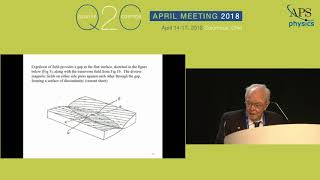
APS Medal and Nobel Prize Winners in Physics - Plenary Session III
Explore groundbreaking physics research with talks on magnetic dissipation, field-line topology, and gravitational waves from renowned scientists at the APS April Meeting 2018.
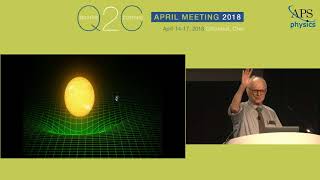
Exploring the Universe with Gravitational Waves
Discover the fascinating world of gravitational waves with Nobel laureate Rainer Weiss, exploring key concepts, detection methods, and recent breakthroughs in this cutting-edge field of physics.
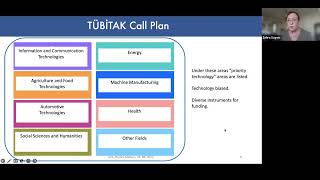
Turkey's Role in SESAME - Middle East Synchrotron Radiation Laboratory
Explore Turkey's role in SESAME, a Middle Eastern synchrotron radiation lab, and its impact on regional scientific cooperation. Learn about molecular biophysicist Prof. Zehra Sayers' research using synchrotron X-ray analysis.
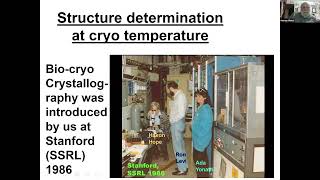
The Origin of SESAME and Beyond - Physics Matters Forum
Explore the groundbreaking SESAME project, fostering scientific cooperation in conflict-torn regions, with insights from Nobel laureate Ada Yonath and former CERN Directors-General.
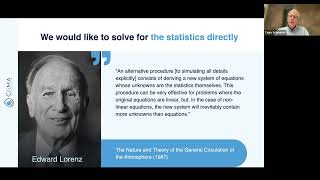
Turbulence: The Great Unsolved Problem of Classical and Climate Physics
Explore turbulence as a critical unsolved problem in classical and climate physics with Professor Tapio Schneider, delving into its impact on our understanding of climate variability.
Life at a PUI - Networking with Biophysics Faculty from Undergraduate Institutions
Experienced biophysics faculty share insights on grant writing, lab setup, and balancing teaching with research at undergraduate institutions. Networking opportunity for biophysicists working with undergraduates.