Deriving Classical from Quantum Physics - Ehrenfest's Theorem
Brian Greene explores Ehrenfest's Theorem, revealing how classical physics emerges from quantum mechanics through mathematical derivation, bridging two fundamental descriptions of reality.
At the Core of Fundamental Physics - The Principle of Least Action
Brian Greene explores the Principle of Least Action, a fundamental concept in physics, explaining its significance and demonstrating how it leads to Newton's laws of motion through simple examples and mathematical insights.

Quantum Entanglement or Einstein's Spooky Action
Explore quantum entanglement's bizarre nature with Brian Greene. Discover its visual concepts and essential equations, gaining new insights into the universe's fundamental workings.

Armchair Astrophysics, Volume 2
Explore everyday physics concepts and their cosmic connections in this engaging talk. Discover parallels between familiar phenomena and astrophysical observations, bridging the gap between our daily lives and the universe.

The Darkest Secrets of the Universe
Explore cosmic mysteries with Dr. GuhaThakurta: dark matter, galaxy cannibalism, black holes, and gravitational phenomena. Uncover hidden connections in the universe and contemplate the fragility of human life.

Sailing Across the Local Universe with ULLYSES
Explore stellar spectroscopy and the ULLYSES program, uncovering the secrets of young stars through Hubble's ultraviolet observations in our galaxy and beyond.

The Astronomer’s Toolkit
Explore modern astronomical tools and methods, from telescopes to digital detectors, and learn how to analyze authentic NASA data in this engaging lecture on recent discoveries in space science.

Our Colorful Universe: Translating Cosmic Light
Explore the art and science of transforming cosmic data into stunning images, from understanding light beyond the visible spectrum to creating multi-wavelength masterpieces of our colorful universe.

The Deaths and Afterlives of Massive Stars
Explore the powerful impact of massive star deaths on the universe, from exotic remnants to heavy element production, and learn about cutting-edge research using multi-messenger astronomy.

Gravitational Wave Astronomy
Explore gravitational wave astronomy, its revolutionary impact on studying the universe, and groundbreaking discoveries about black holes and neutron stars with expert insights.

Olbers' Paradox and Gravitational Light Deflection
Explore cosmic mysteries: Olbers' Paradox and gravitational light deflection. Uncover why the night sky is dark and how gravity bends starlight, offering insights into the universe's nature and structure.
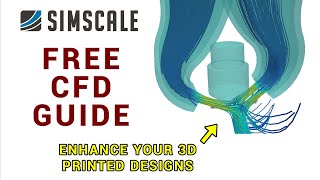
Use CFD to Take Your 3D Printed Designs to the Next Level
Learn to optimize 3D printed designs using free cloud-based CFD software. Discover how to create, simulate, and analyze airflow for improved part cooling fan ducts and other 3D printing applications.
Mechanics and the Solar System - Math History - NJ Wildberger
Explore the historical development of planetary motion theories, from Earth-centered models to Newton's laws, highlighting key figures and their contributions to our understanding of the solar system.
Introduction to Matter
Explore Matter, a unifying standard for smart home devices. Learn about its features, underlying technologies, and compatibility across ecosystems. Discover Nordic Semiconductor's hardware and software solutions for Matter implementation.

How Deaerators Work - Engineering
Explore the inner workings of deaerators, including spray and tray types, components, operating conditions, and designs. Learn how these devices remove dissolved gases from boiler feedwater to prevent corrosion.
Projectile Motion Visualization - Adding Rulers
Enhance projectile motion visualization with rulers, colors, and loops in VPython. Learn to create dynamic physics simulations for better understanding and analysis.
Wave Function Evolver - Calculating Expectation Values - Episode 3
Explore wave function calculations, expectation values, and quantum mechanics concepts through interactive coding and visualization techniques.
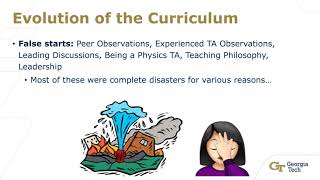
Transforming the Preparation of Physics GTAs - Dr. Emily Alicea-Muñoz
Comprehensive GTA preparation program enhancing teaching skills, professional development, and learner-centered approaches for physics graduate students, with proven effectiveness through assessment.
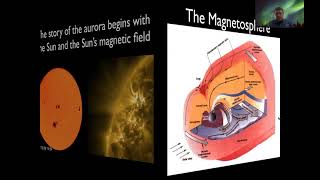
Auroral Currents
Explore the science behind auroral currents, from solar magnetic fields to Earth's magnetosphere, and their impact on navigation and technology. Gain insights from historical discoveries to modern space missions.
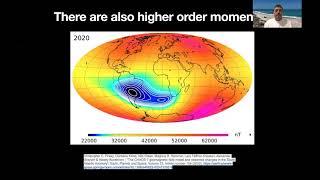
Planetary Magnetism Science
Explore planetary magnetism, dipole fields, Earth's magnetic structure, and other planets' magnetic properties in this concise lecture by Dr. Ramón López.
Breaking Out of the Physics Silo
Exploring interdisciplinary approaches to physics education, emphasizing risk-taking and personal growth for teachers to enhance their effectiveness and student engagement.