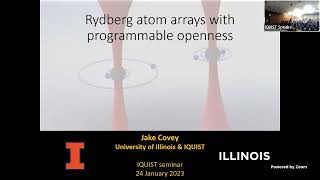
Rydberg Atom Arrays with Programmable Openness - Quantum Many-Body Systems
Delve into quantum computing advancements through Rydberg atom arrays, exploring programmable openness for quantum error correction and remote entanglement generation using ytterbium-171 atoms.
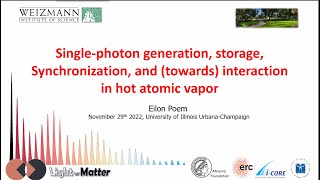
Single-Photon Generation, Storage, Synchronization, and Interaction in Hot Atomic Vapor
Explore quantum light states generation through atomic vapor cells, covering photon sources, quantum memory implementation, and synchronization techniques for advancing quantum technology applications.
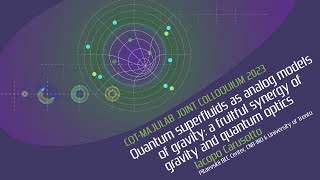
Quantum Superfluids as Analog Models of Gravity - A Synergy of Gravity and Quantum Optics
Explore quantum field theories in curved spacetime through analog models using superfluids and optical systems, from Hawking radiation to false vacuum decay in atomic condensates.
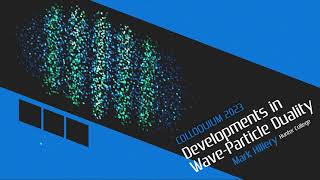
Developments in Wave-Particle Duality - Quantum Mechanics and Coherence Theory
Explore the latest advances in wave-particle duality, quantum coherence measures, and their operational implications through game theory and measurement limitations in quantum mechanics.
Natural Orbitals - From Classical Concepts to Modern Developments
Explore the evolution and mathematical foundations of natural orbitals in quantum mechanics, from basic principles to recent breakthroughs in asymptotic formalism and computational applications.
Energy-Efficient and Sustainable Quantum Technologies - The Quantum Energy Initiative
Explore the critical intersection of quantum technologies and energy efficiency, examining sustainable development strategies and the potential for quantum energy advantages in future applications.
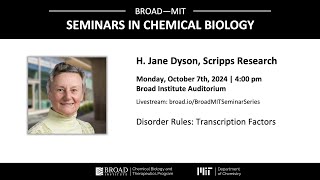
Disorder Rules: Transcription Factors and Intrinsically Disordered Proteins
Delve into the molecular mechanisms of intrinsically disordered proteins in gene transcription, focusing on CREB and p53 transcription factors and their functional interactions.
Optics and Neural Networks: Applications in Experimental Physics
Explore the synergy between optics and machine learning through experimental demonstrations of optical neural networks, robotic alignment, and super-resolution imaging applications.
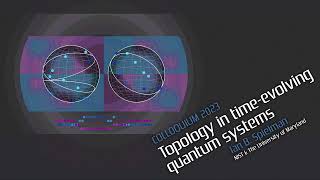
Topology in Time-Evolving Quantum Systems
Delve into quantum topology's dynamic nature, exploring how symmetry changes affect topological invariants in non-equilibrium systems through experimental studies with ultracold atomic BEC in 1D lattices.
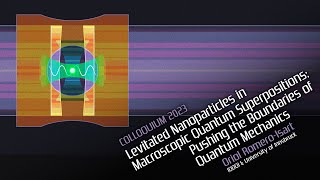
Levitated Nanoparticles in Macroscopic Quantum Superpositions - Pushing the Boundaries of Quantum Mechanics
Explore groundbreaking research on quantum superposition states in optically levitated nanoparticles, examining experimental approaches, decoherence challenges, and implications for quantum mechanics testing.
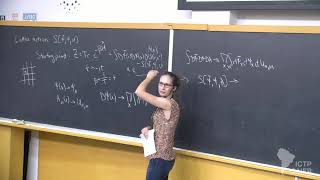
Lattice QCD - Class 3
Delve into advanced Lattice QCD concepts and computational methods for nuclear physics, exploring quantum chromodynamics applications in few-body systems and nuclear structure calculations.
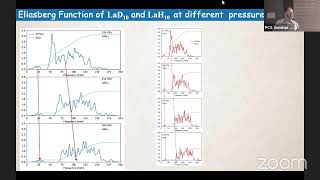
Room Temperature Superconductivity - Current Progress and Future Prospects
Explore the fascinating potential of room temperature superconductivity and its scientific implications through expert insights and cutting-edge research developments.
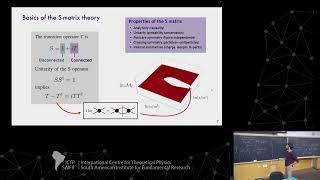
Progress in the Understanding of Three-Body Scattering of Hadrons
Delve into advanced concepts of three-body hadron scattering, exploring quantum chromodynamics principles and recent developments in few-body nuclear physics research.
Finite-Volume Physics - Class 3
Dive into advanced concepts of finite-volume physics, exploring quantum chromodynamics applications in nuclear physics with leading experts from William & Mary and UC Berkeley.
Effective Field Theory - Class 4
Delve into advanced concepts of Effective Field Theory in nuclear physics, exploring the connection between Quantum Chromodynamics and few-body nuclear systems.
Effective Field Theory - Class 3
Delve into advanced concepts of Effective Field Theory in nuclear physics, exploring the connection between Quantum Chromodynamics and few-body nuclear systems.
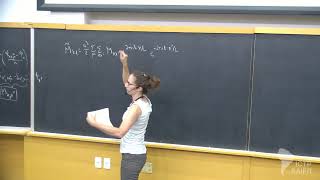
Lattice QCD - Class 4
Delve into advanced Lattice QCD concepts with expert Amy Nicholson, exploring quantum chromodynamics applications in nuclear physics and few-body systems through computational methods.
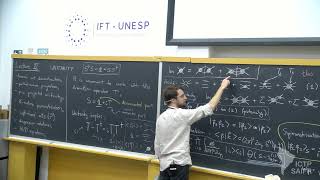
Relativistic Scattering Theory - Class 4
Delve into relativistic scattering theory fundamentals, exploring advanced concepts in nuclear physics and quantum chromodynamics through expert insights and theoretical frameworks.
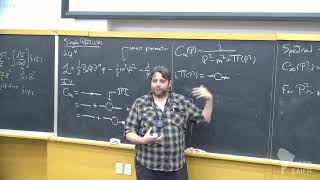
Finite-Volume Physics - Class 2
Delve into advanced concepts of finite-volume physics through expert discussions on nuclear physics, quantum chromodynamics, and few-body systems in theoretical particle physics.
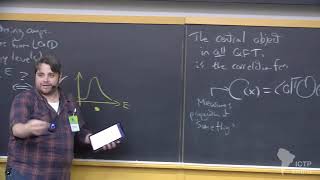
Finite-Volume Physics - Class 1
Dive into fundamental concepts of finite-volume physics and its applications in nuclear physics, exploring connections between quantum chromodynamics and few-body systems.
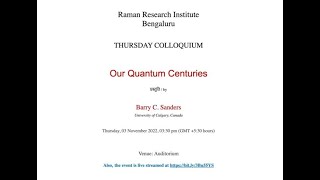
Our Quantum Centuries - From 20th Century Breakthroughs to 21st Century Applications
Explore quantum technology's evolution from 20th-century breakthroughs to 21st-century innovations in sensing, communication, and computing with insights from quantum physics expert Barry Sanders.