
How to Help Your Boss Help You
Strategies for managing your manager, building a productive relationship, and steering your career. Explores communication, inclusivity, and finding common ground to achieve professional goals.

Remote Right - How to Thrive in a Post-Office World
Strategies for thriving in remote work: building effective team structures, establishing handbooks, avoiding chat-based work, fostering trust, and adapting to changes while maintaining company values and community.

What Do You Wish You Had Known When You Started as a Developer
Experienced developers share invaluable insights and lessons learned throughout their careers, offering guidance and wisdom to aspiring programmers in this enlightening panel discussion.

Incident Analysis Before Chaos Engineering
Explore incident analysis in chaos engineering with real-world stories, learn its benefits, and discover how to implement it effectively for improved system resilience and reliability.

How Team Structure Influences Code Quality
Explore how team dynamics and structure impact code quality, covering remote work, psychological safety, and effective team management for better software development outcomes.
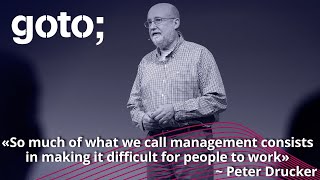
Let's Make It Easy
Explore strategies for simplifying work processes, challenging management practices, and fostering a culture of continuous improvement to enhance productivity and human interaction in the workplace.
Combining Chaos, Observability & Resilience to Get Chaos Engineering
Explore chaos engineering, observability, and resilience in software development. Learn key concepts, best practices, and real-world examples to enhance system reliability and performance.

Dungeons, Dragons & Developers
Explore parallels between Dungeons & Dragons and software development, uncovering valuable lessons for team collaboration, problem-solving, and project management in the tech industry.

A Path to Better Programming
Explore best practices in programming with Uncle Bob and Allen Holub. Gain insights on architectural thinking, learning strategies, remote work, and ethical considerations for software developers.

Leveraging Our Brains in Software Development
Explore psychological biases in software development, discussing their impact on teamwork, project management, and problem-solving. Learn strategies to overcome cognitive challenges and improve collaboration.

The Path to Becoming a Senior Engineering Manager
Insights into becoming a senior engineering manager at GitHub, covering persuasive writing, glue work, conference speaking, and decision-making for career advancement in tech leadership.

Is Software Engineering Still an Oxymoron?
Alan Kay explores the evolution of software engineering, discussing progress, pitfalls, and the future of the field. He shares insights on effective development approaches and the importance of understanding human factors in technology.

Team Meetings That Don't Suck - Avoid Retrospectives Antipatterns
Learn to identify and avoid common pitfalls in team retrospectives, improving meeting productivity and team dynamics through practical strategies and real-world examples.

Adopting an Experimental Mindset
Discover six core elements for fostering an experimental mindset in organizations, enhancing adaptability and cultural change. Learn practical steps for leaders to implement within 1-3 months to create a more agile company.

Once Upon a Time in Agile
Explore how individual journeys to self-acceptance and alignment are key to supporting agile teams. Learn to create lasting change, help teams own their process, and tell their story for continuous realignment.

Service Meshes - Istio, Linkerd - or No Mesh at All?
Explore service meshes like Istio and Linkerd, their benefits for microservices, and potential drawbacks. Learn when to use them and how they impact observability, routing, resilience, and security in distributed systems.

Dungeons, Dragons and Developers
Explore parallels between Dungeons & Dragons and software development, learning team balance, project management, and leveraging past experiences for better outcomes in real-world development challenges.

Balancing Choreography and Orchestration
Explore the balance between choreography and orchestration in service architecture, debunking myths and showcasing scenarios where each approach excels in reducing coupling and improving system design.
Tips & Tricks to Manage Stress as a Developer
Explore stress management techniques for developers, including mindfulness practices, environmental factors, and team engagement strategies to improve well-being and productivity.
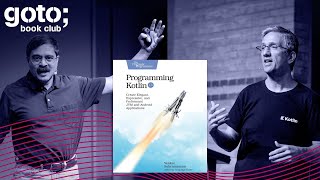
Programming Kotlin - Why, How & Its Future
Explore Kotlin's appeal, features, and future with experts Venkat Subramaniam and Hadi Hariri. Learn why developers love this elegant, expressive language for JVM and Android applications.

People First Leadership
Discover key leadership principles for tech teams, focusing on empowering developers, fostering inclusivity, and prioritizing people-first approaches to drive success and innovation.