Scientific Uses of Automatic Differentiation - DDPS
Explore automatic differentiation's scientific applications beyond machine learning. Discover innovative approaches in PDEs, self-assembly, fluid dynamics, and protein modeling using large-scale optimization.
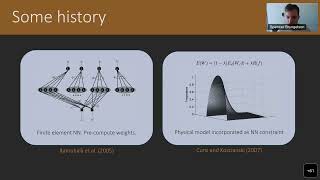
Competitive Physics Informed Networks - Overcoming Limitations in PDE Solutions
Explore competitive physics-informed neural networks for solving PDEs with unprecedented accuracy. Learn about adversarial approaches and zero-sum games to achieve single-precision accuracy in numerical simulations.
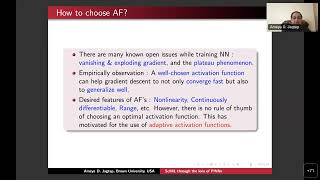
Scientific Machine Learning through the Lens of Physics-Informed Neural Networks
Explore physics-informed neural networks (PINNs) as an alternative to traditional scientific computation, addressing limitations and showcasing applications in solving complex physical problems.
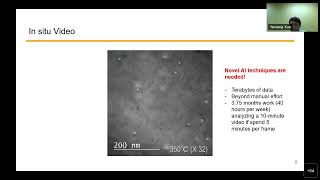
Scaling Up AI: Embedding Physics Modeling into End-to-end Learning and Harnessing Random Projection
Explore AI-driven scientific discovery through embedding physics models in end-to-end learning and utilizing random projection for efficient simulation and gradient propagation in PDE-based systems.
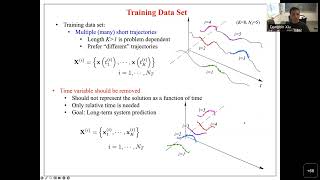
Data-Driven Modeling of Unknown Systems with Deep Neural Networks
Explore data-driven modeling of unknown systems using deep neural networks. Learn to discover and approximate evolution operators for predictive analysis across various problem domains.
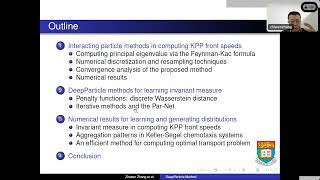
DeepParticle: Learning Invariant Measure by Deep Neural Network Minimizing Wasserstein Distance
Explore DeepParticle: an integrated approach combining deep learning, optimal transport, and interacting particles to solve high-dimensional PDEs, demonstrated through Fisher-Kolmogorov-Petrovsky-Piskunov front speeds in incompressible flows.
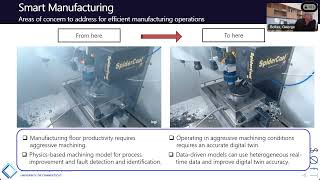
Physics Informed Machine Learning through Symbolic Regression
Explore symbolic regression for identifying PDE models from scarce, noisy data. Compare with Physics-Informed Neural Networks and discuss applications in fault detection and system health prognostics.
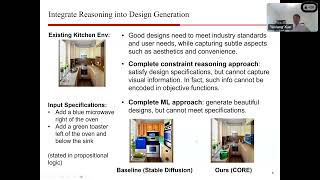
Vertical Reasoning Enhanced Learning, Generation and Scientific Discovery
Explore vertical reasoning's impact on AI, enhancing image generation, symbolic regression, and PDE learning. Discover innovative approaches to integrating reasoning and learning for advanced AI applications.
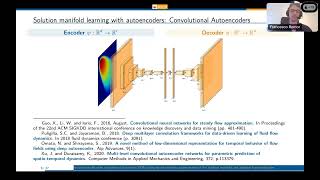
Intrusive Model Order Reduction Using Neural Network Approximants
Explore innovative neural network-based techniques for efficient reduced-order modeling of complex parametric partial differential equations, focusing on intrusive and interpretable methodologies.
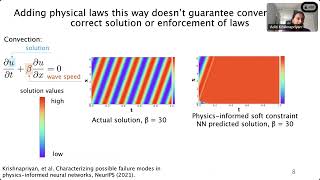
Bridging Numerical Methods and Deep Learning with Physics-Constrained Differentiable Solvers
Explore machine learning strategies for neural PDE solvers, focusing on self-supervised learning and simulation-in-the-loop approaches to enhance spatiotemporal modeling across various systems.
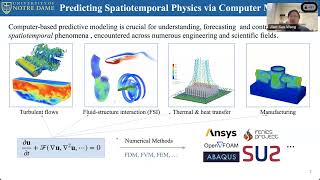
Neural Differentiable Physics: Unifying Numerical PDEs and Deep Learning for Data-Augmented Computational Physics
Explore Neural Differentiable Physics, unifying numerical PDEs and deep learning for enhanced computational modeling of complex physical systems. Learn innovative SciML approaches integrating physics principles with AI.

Finite Time Singularities in Fluids
Explorez les singularités en temps fini dans les fluides, en examinant les résultats récents et classiques, les preuves assistées par ordinateur et les applications de l'apprentissage automatique.
Wavelet-inspired Nash's Iteration - Lecture 4
Explore wavelet-inspired Nash's iteration in fluid dynamics, focusing on advanced mathematical techniques for analyzing Euler and Navier-Stokes equations.
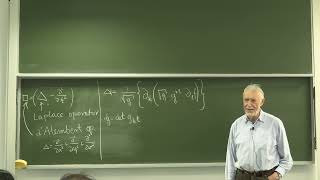
Wave Equation in 4D Spacetime - Introduction to Electrodynamics and Theory of Relativity
Explore wave equations in 4D spacetime, delving into electrodynamics and relativity theory with Professor Jerzy Kijowski's advanced physics lecture.
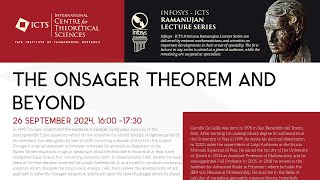
The Euler Equations as a Differential Inclusion - Lecture 2
Explore advanced mathematical techniques for analyzing Euler equations in fluid dynamics, focusing on differential inclusions and the Onsager conjecture.
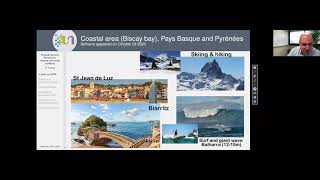
Particle Methods for Pore-Scale Modeling of Reactive Flows
Explore particle methods for modeling reactive flows in complex geometries, focusing on pore-scale applications in rock matrices and evolving fluid-solid interfaces.
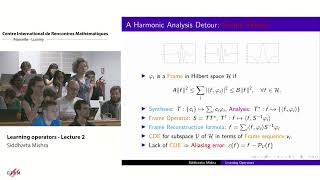
Learning Operators - Lecture 2
Explore advanced concepts in operator learning, focusing on mathematical techniques and applications in scientific machine learning.
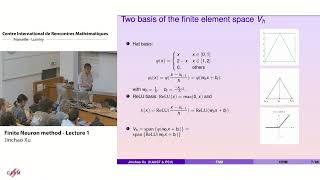
Finite Neuron Method - Lecture 1
Explore finite neuron method fundamentals, covering finite element method, neural networks, and adaptive PD. Gain insights into mathematical concepts and their applications.
Mean Field Results in Fluid Mechanics - Lecture 2
Explore advanced mean field techniques in fluid mechanics, focusing on stochastic and deterministic analysis for irregular models in mathematics.
Mean Field Results in Fluid Mechanics - Lecture 3
Explore advanced mean field techniques in fluid mechanics, focusing on stochastic and deterministic analysis for irregular models in mathematics.
Wasserstein Gradient Flows and Applications to Sampling in Machine Learning - Lecture 1
Explore Wasserstein gradient flows and their applications to sampling in machine learning through an in-depth lecture by Anna Korba.