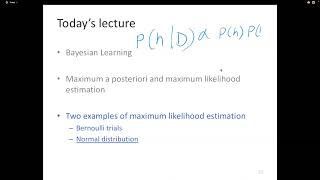
Maximum Likelihood Estimation for Regression in Machine Learning - Lecture 24
Dive into maximum likelihood estimation for regression through practical examples and explore its connection to loss minimization in Bayesian learning frameworks.
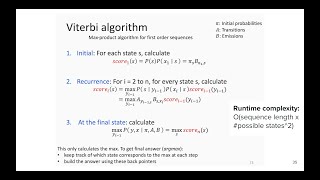
Hidden Markov Models - Parameter Estimation and Efficient Inference
Master parameter estimation and efficient inference techniques for Hidden Markov Models, exploring key algorithms and mathematical foundations for probabilistic sequence modeling and pattern recognition.
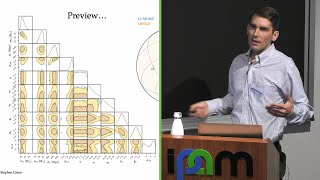
Real-Time Gravitational-Wave Parameter Estimation Using Machine Learning
Explore machine learning for real-time gravitational-wave parameter estimation, covering Bayesian inference, neural networks, and simulation-based techniques to enhance speed and accuracy in astrophysical data analysis.
Online and Hybrid System Identification Directly From Raw Sensory Signals
Explores neural networks with physical model biases for efficient system identification from sensory data, applicable to robotics, molecular modeling, and X-ray scattering inversion.
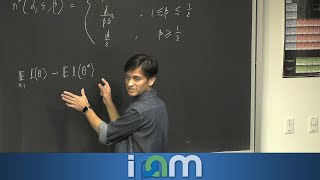
Sample Complexity of Estimation in Logistic Regression - Lecture
Explore sample complexity in logistic regression, examining parameter estimation across temperature regimes. Gain insights into non-asymptotic analysis and critical points in the complexity curve.
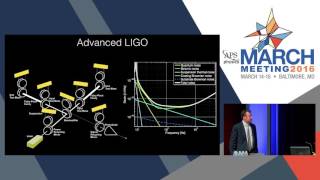
The Observation of Gravitational Waves from a Binary Black Hole Merger
Explore the groundbreaking detection of gravitational waves from binary black hole merger, its implications for general relativity, and the future of gravitational-wave astronomy.
Tight Cramër-Rao Type Bounds for Multiparameter Quantum Metrology Through Conic Programming
Delve into advanced quantum metrology concepts, focusing on Cramër-Rao bounds and conic programming for optimal measurement strategies in estimating incompatible parameters with maximum precision.
Offline Bayesian Estimation - MATLAB Demo
Explore offline Bayesian estimation techniques through hands-on MATLAB demonstrations and practical applications.
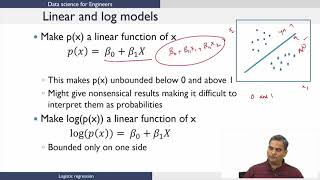
Logistic Regression: Introduction to Binary Classification and Linear Classifiers
Master logistic regression for binary classification, covering linear classifiers, sigmoid functions, parameter estimation, and log-likelihood functions.
PEtab.jl - Efficient Parameter Estimation for Dynamic Models
Explore efficient parameter estimation for dynamic models in biology using PEtab.jl. Learn to import problems, set up estimations, and choose optimal gradient computation methods.
Mean Estimation in High-Dimensional Binary Markov Gaussian Mixture Models
Delve into high-dimensional mean estimation in binary Markov Gaussian mixture models, exploring how memory in data affects estimation error and the interplay between sample size, dimension, and signal strength.
Identification of Building Thermal Model Using Data Science Tools
Discover how to create building thermal models using data science tools instead of complex mathematical approaches, streamlining the process for efficient control algorithm implementation.
Kalman-Bucy Informed Neural Networks for System Identification
Combining physics-informed neural networks and Kalman filters to identify parameters in continuous-time systems with noisy measurements, improving model precision for complex systems.
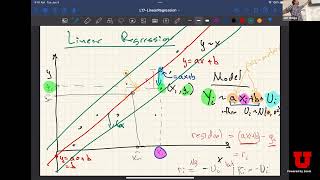
Linear Regression and Parameter Estimation in R - Lecture 17
Master linear regression techniques in R while exploring parameter estimation and random variable estimators through hands-on statistical analysis and practical applications.

Statistical Analysis in Cosmology - Part 1
Explore Bayesian statistics, likelihood sampling, chi-square, and covariance matrix in cosmology. Learn parameter estimations in 2-point statistics and Markov Chain Monte Carlo.