
Rust - Hack Without Fear
Explore Rust's ownership concept, memory safety, and parallelism advantages. Learn how Rust combines low-level control with high-level programming, ensuring thread safety and efficient abstractions.
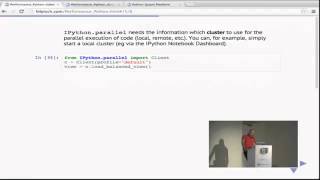
Performance Python for Numerical Algorithms
Explore techniques for optimizing numerical algorithms in Python, including vectorization, multi-threading, parallelization, and dynamic compiling. Practical examples using NumPy, Numba, and other libraries.
Asynchronous Network Requests in a Web Application
Explore techniques for implementing asynchronous network requests in web applications, including Twisted event loops, coroutines, and asyncio, and their compatibility with WSGI server parallelization models.
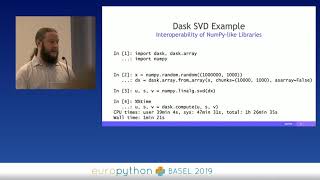
Distributed Multi-GPU Computing with Dask, CuPy and RAPIDS
Explore distributed multi-GPU computing using Dask, CuPy, and RAPIDS. Learn to leverage GPU acceleration and distributed systems for faster, more efficient data processing and analysis.
Optimizing Your CI Pipelines
Discover techniques to enhance CI pipelines: parallelization, caching, early failure detection, and conditional runs for faster, more efficient builds and improved development workflows.
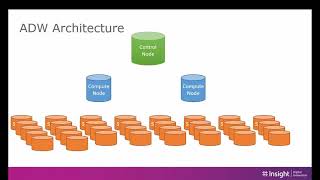
Designing for Azure Data Warehouse Performance - Cloud
Learn Azure Data Warehouse design principles for optimal performance, covering architecture, data modeling, and practical considerations to balance current and future needs.
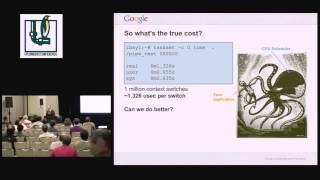
User-Level Threads with Threads
Explore efficient multi-threaded programming using user-level threads, covering new kernel interfaces and primitives for cooperative threading with sub-200ns context-switch times across various languages.
Speed Up - Incremental Compilation with Nx
Explore Nx's incremental compilation feature for faster builds in large-scale Angular projects. Learn about dependency graphs, parallelization, and computation caching to enhance development speed and productivity.
Akka Streams for High Throughput Data Processing
Explore high-throughput data processing with Akka Streams, comparing it to Akka Actors. Learn best practices, optimization techniques, and when to switch to Streams for improved performance in large-scale data transfer systems.
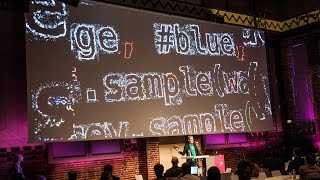
Beyond HTML and CSS - Fusing Javascript and Shaders
Explore OneJS, a JS superset with shader GLSL and reactive programming syntax, enabling GPU-powered UI design for enhanced performance and creative possibilities beyond traditional web technologies.

Dungeons, Dragons and Functions
Explore domain modeling in F# through the lens of Dungeons & Dragons rules, learning functional programming concepts and practical tips for taming complex systems.
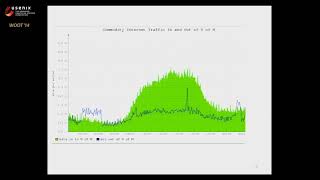
Zippier ZMap - Internet-Wide Scanning at 10 Gbps
Optimizations to ZMap network scanner achieving 10-fold increase in scan rate, enabling comprehensive TCP port scanning across IPv4 address space in 4.5 minutes. Discusses implications and potential applications.
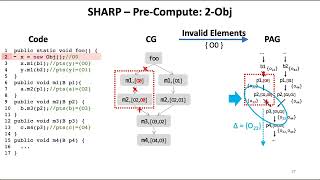
SHARP: Fast Incremental Context-Sensitive Pointer Analysis for Java
Explore SHARP, a groundbreaking incremental context-sensitive pointer analysis algorithm for Java, offering improved performance and scalability for large-scale programs.
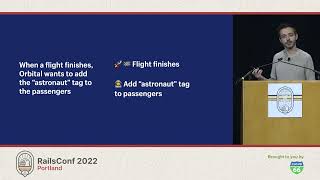
GraphQL and Rails Beyond HTTP APIs
Explore GraphQL's versatility in Rails projects beyond HTTP APIs, including real-time data, webhooks, WebAssembly integration, and efficient data export.
Choreography vs Orchestration in Serverless Microservices
Explore microservice interaction patterns: choreography vs orchestration. Learn pros, cons, and tools for each approach, with demos and a case study on combining both methods.
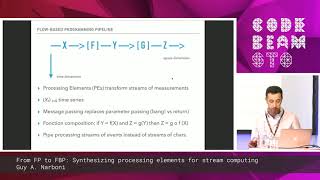
From FP to FBP: Synthesizing Processing Elements for Stream Computing
Explore Flow-Based Programming in Erlang, learning to design dataflow graphs and generate code for stream computing. Synthesize processing elements from functional blocks for efficient parallel data processing.
QEMU Live Migration Device State Transfer Parallelization via Multifd Channels
Parallelize QEMU live migration device state transfer using multifd channels to improve performance and reduce downtime for VMs with large device states.
Innovative Gen AI Applications: Beyond Text - MLOps Mini Summit 5
Explore innovative Gen AI applications beyond text, focusing on molecule discovery and call center optimization. Learn about chemical language models, RAG use cases, and efficient pipeline architectures.
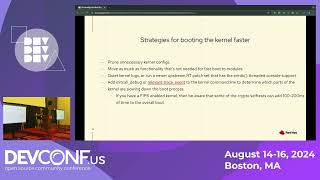
Accelerating Linux Boot Time: Techniques and Strategies for Optimal Performance - Lecture
Explore strategies to accelerate Linux boot time, from measuring performance to optimizing systemd, kernel, and filesystem configurations. Gain comprehensive understanding of achieving faster boot times.
Thinking Functionally in C++ - Applying Functional Programming Concepts
Explore functional programming techniques in C++, enhancing code performance, reusability, and security. Learn to apply functional thinking to existing codebases using views, lambdas, and ranges.
Efficient AI: From Supercomputers to Smartphones
Explore techniques for efficient AI training and inference, from data ingestion to model compression, enabling powerful models on supercomputers and smartphones.