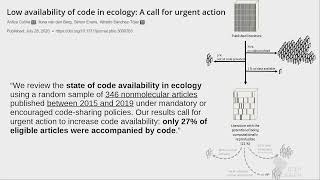
Quantitative Foundations of Ecological and Evolutionary Research - Class 11
Explore quantitative foundations of ecology and evolution, covering code publishing, best practices, GitHub usage, and scientific publishing processes.
Locked Up Science
Exploring strategies to break down paywalls in scholarly communication and promote open access to scientific knowledge, including recent developments and collaborative efforts.
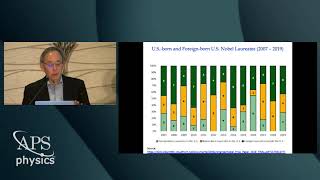
Rising Above the Gathering Storm - Open Science and Intellectual Property
Explore open science, intellectual property, and global innovation challenges with Nobel laureate Steven Chu. Gain insights on balancing scientific collaboration and national security in a changing world.
Human Cell Atlas - AAAS Annual Meeting
Explore the Human Cell Atlas project, its mission, global collaboration efforts, and impact on understanding human diversity through cutting-edge technologies and open science.
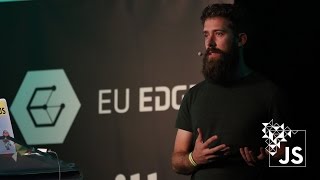
Science in the Browser - Orchestrating and Visualising Neural Simulations
Explore real-time 3D visualizations of brain cell electrical activity using cloud computing and JavaScript, bridging neuroscience with web development for accessible open-science research.
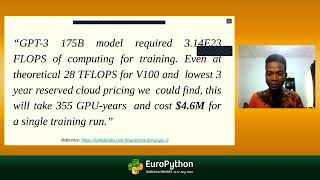
Open Science - Building Models Like We Build Open-Source Software
Explore the concept of developing pre-trained models collaboratively, applying open-source software principles to machine learning for wider participation and continuous improvement.
Hunting for New Particles Leveraging Legacy Infrastructure with Kubernetes
Explore how CERN leverages Kubernetes to analyze particle collisions, integrating legacy batch systems with modern cloud-native workflows for efficient physics research.
How to Measure Success for Open Data in Academia
Explore methods for evaluating open data success in academic settings, focusing on key metrics and impact assessment strategies.
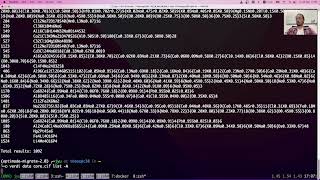
AiiDA Tutorial - Introduction to OPTIMADE Project and Usage
Explore the OPTIMADE project and learn how to effectively utilize its features for materials science research.
Applying Do No Harm Principle to Enhance Open Source Sustainability
Explore the application of the Do No Harm principle to enhance open source sustainability with Malvika Sharan from OpenUK.
cadCAD.jl - A Modeling Library for Generalized Dynamical Systems
Explore generalized dynamical systems modeling with cadCAD.jl. Learn to simulate complex systems, evolve data structures, and gain iterative insights for enhanced system engineering and data science workflows.
Model Openness Framework: The Path to Openness, Transparency and Collaboration in Machine Learning Models
Explore the Model Openness Framework for machine learning, promoting transparency and collaboration. Learn about its classification system, implementation tools, and benefits for AI ecosystem development.
Model Openness Framework: The Path to Openness, Transparency and Collaboration in Machine Learning Models
Explore the Model Openness Framework, a system for rating machine learning models based on openness and completeness, promoting transparency and collaboration in AI development.
What is Open Work? - Understanding the Expanded Definition of Open Collaboration
Explore the concept of Open Work, encompassing various open initiatives like Open Source, Data, Hardware, Science, Research, and Government.
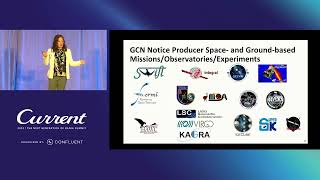
General Coordinates Network: Harnessing Kafka for Real-Time Open Astronomy at NASA
Explore NASA's use of Kafka for real-time astronomy data sharing, including architectural choices and OAuth2 implementation for public access in the General Coordinates Network.
Data Sharing Policy in Epidemiological Research - Lecture 7
Explore data sharing policies in research, focusing on ethical considerations, legal requirements, and best practices for responsible data management and dissemination.
Reproducible Data Science - Challenges and Best Practices
Explore challenges and best practices in reproducible data science with experts from The Alan Turing Institute, discussing its importance and initiatives to promote scientific integrity.
Insights and Lessons from Mapping the Open Source Science Landscape
Discover how mapping open source science ecosystems reveals interconnections, enhances tool discovery, and drives innovation through data-driven insights about projects, patents, funding, and collaboration networks.

Co má společného věda, ženy a komunikace? | Pavla Hubálková | TEDxPragueWomen
Proč je důležité, aby bylo více žen ve vědě? Co můžeme mít společného s vědeckými novináři? Původně si myslela, že bude neurovědkyní. Během Fulbrightovy stáže v USA, ale zjistila, že místo bádání v laboratoři se chce více věnovat komunikaci vědy. Nyní působí jako vědecká novinářka na volné noze, nej