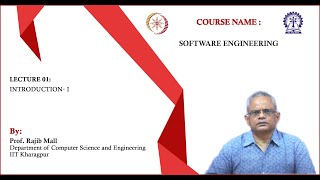
Software Engineering
Comprehensive exploration of software engineering principles, methodologies, and practices, covering life cycle models, requirements analysis, design techniques, and various testing strategies.

Software Engineering
Explore software engineering fundamentals, from development cycles to object-oriented design, using UML diagrams and test-driven approaches for effective system creation.
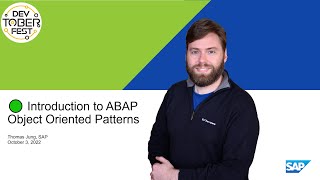
Introduction to ABAP Object Oriented Patterns
Explore ABAP object-oriented patterns including Factory, Singleton, and Composite. Learn implementation techniques and best practices through interactive demonstrations and practical examples.
Object Oriented Design: GRASP Principles - Part 10
Learn GRASP principles for effective object-oriented design, including Creator, Expert, Coupling, Controller, and High Cohesion, with code examples and diagrams for practical application.
Object-Oriented Design: Converting Sequence Diagrams to Code - Part 8
Learn to convert a Sequence Diagram into functional code, bridging the gap between design and implementation in object-oriented programming.
Object-Oriented Design: Converting Sequence Diagrams to Class Diagrams - Part 7
Learn to convert sequence diagrams into class diagrams, preparing for implementation in code. Step-by-step process covers account creation, banking systems, and transaction verification.
Object-Oriented Design: Creating Sequence Diagrams for ATM Software - Part 6
Learn to create and improve sequence diagrams for software design through a simulated group process, focusing on ATM software as an example.
Object Oriented Design - Creating Sequence Diagrams for ATM Software
Learn to create sequence diagrams for ATM software using Object Oriented Design principles, building upon previous diagrams and concepts.
Object Oriented Design - Elaboration Phase and Domain Modeling - Part 4
Comprehensive guide on creating a Domain Model from a Usage Case, covering conceptual classes, associations, and attributes in Object Oriented Design.

Data Context Interaction in ASP.NET Core C# - Implementation and Examples
Explore Data Context Interaction in ASP.NET Core C#. Learn implementation techniques through practical examples like money transfers and TicTacToe, enhancing your architectural skills for robust application design.

Entities and Components in Game Engine Development
Learn about entity-component systems in game development, exploring their implementation and benefits for creating flexible and efficient game architectures.
Modern C++ - Lecture & Tutorials, 2020, Vizzo & Stachniss
Comprehensive introduction to Modern C++, covering core concepts, STL, OOP, memory management, and templates. Includes practical tutorials on development setup and tools.

State Design Pattern Tutorial - ATM Machine Simulation
Learn to implement the State Design Pattern by simulating an ATM machine, covering state identification, interface design, and method implementation for each state class.
Observer Design Pattern Tutorial
Learn to implement the Observer pattern, including its use with threads, to efficiently manage and notify dependent objects of state changes.

The Four Pegs of Requirements Engineering with Bertrand Meyer
Explore the four pillars of requirements engineering with Bertrand Meyer, covering concepts, definitions, and practical guidelines to improve software project outcomes.
Threat Modeling With Architectural Risk Patterns
Explore efficient threat modeling using architectural risk patterns, emphasizing software-centric methods to enhance speed and consistency in identifying security risks across enterprise environments.

Teaching Ruby to Count
Explore advanced Ruby techniques for iteration, data series, and custom object generation. Learn to leverage Enumerable, Enumerators, and Ranges to create joyful interfaces for your teammates.
Angular vs React Smackdown
Comparative analysis of Angular and React, showcasing their similarities, differences, and unique features through live demonstrations and expert insights.
How to Develop Your Project from an Idea to Architecture Design in 50 Minutes
Learn to transform ideas into well-structured software projects using Object-Oriented Analysis and Design principles. Gain insights on creating clean, extendable architectures and making informed decisions about project development.
The Silver Bullet Syndrome
Explores the pitfalls of chasing 'silver bullet' solutions in tech, questioning the constant pursuit of new technologies and their true cost and value to businesses and developers.

From Dependency Injection to Dependency Rejection
Exploring functional programming's simpler approach to decoupling, eliminating dependency injection and mocks in unit testing. Compares OO and functional design patterns.