Attribute-Based Encryption, Function Encryption, and Obfuscation in Non-Traditional Models - Session 4
Explore advanced cryptographic concepts including Function Encryption, PostQuantum Secure IO, and Attribute Encryption. Delve into disappearing cryptography and direct hardness.
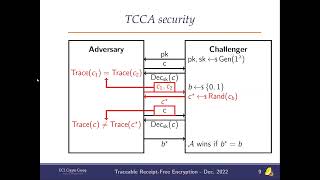
Advanced Encryption Techniques - Session 1
Advanced encryption session exploring voting systems, CPA encryption, and witness encryption, with focus on security properties and novel constructions.
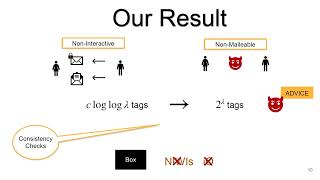
Non-malleable Commitments and Obfuscation - Eurocrypt 2023 Session
Explore cutting-edge cryptographic techniques in non-malleable commitments and obfuscation, advancing the field of secure communication and data protection.

Hacking Toshiba Laptops
Unveiling Toshiba laptop vulnerabilities: BIOS password recovery exploitation and EC firmware signing key extraction, enabling stealth rootkit implantation. Implications for newer models discussed.
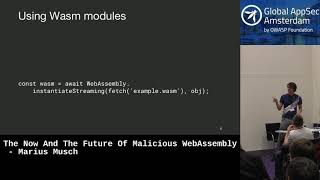
The Now and the Future of Malicious WebAssembly
Explore WebAssembly's evolution, performance, and security implications, including its use in cryptojacking and potential future developments in web-based attacks.
A Framework for Prototyping Applications Using Multilinear Maps and Matrix Branching Programs
Explore a novel framework for prototyping applications using multilinear maps and matrix branching programs, focusing on optimizations, cryptographic techniques, and performance improvements in program obfuscation.
XOM-Switch - Hiding Your Code from Advanced Code Reuse Attacks in One Shot
Discover XOM-switch, a security tool enabling XOM on Linux applications using PKU. Learn about its end-to-end approach for protecting deployed apps without source code or heavy binary rewriting.
Pushing Security Left by Mutating Byte Code
Explore techniques for building secure software through bytecode mutation, including obfuscation, encryption, and cross-compilation to protect against reverse engineering and enhance product security.
Malicious Documents Emerging Trends - A Gmail Perspective
Comprehensive analysis of malicious document trends targeting Gmail users, exploring attacker tactics and Google's defensive strategies using AI detection and traditional antivirus methods.
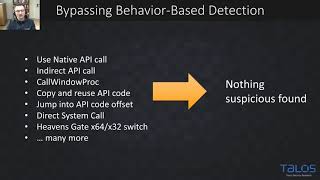
Analyzing Recent Evolutions in Malware Loaders
Análisis detallado de la evolución reciente de los cargadores de malware, sus técnicas de evasión y distribución, y métodos para detectarlos y analizarlos en entornos corporativos.
Defining a Data Masking Framework at Scale
Explore tokenization and obfuscation as data security techniques, addressing challenges in implementing large-scale frameworks alongside conventional encryption methods.
Defeating Machine Learning - Systemic Deficiencies for Detecting Malware
Explore systemic vulnerabilities in machine learning for malware detection, covering sandbox evasion, model problems, and potential solutions for improved cybersecurity.
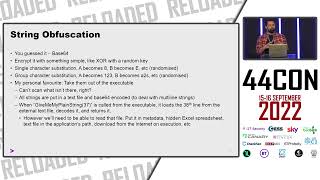
Codecepticon – Building an Obfuscator to Bypass Modern EDR and AV
Explore Codecepticon, an offensive security obfuscator for C#, PowerShell, and VBA. Learn its development process, effectiveness against modern EDR and AV, and real-world applications in Red and Purple Team engagements.
Obfuscation in Javascript
Explore techniques for obfuscating JavaScript code to protect intellectual property and enhance security in web applications.
State of Web Exploit Toolkits
Deep dive into popular web exploit toolkits, analyzing construction, shellcodes, obfuscations, and exploits. Explore trends, data harvesting methods, and emerging players in cybercriminal landscape.
Malware Armor
Explore malware analysis techniques, including dynamic and static analysis, anti-virtualization detection, anti-debugging, and obfuscation methods. Learn to use various tools for effective malware armor analysis.
Unbillable - Exploiting Android In-App Purchases
Explore Android in-app purchase vulnerabilities, exploitation techniques, and common flaws. Learn about client-side trust issues and methods to secure mobile applications against potential exploits.
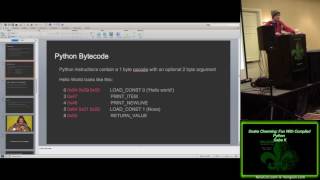
Snake Charming Fun With Compiled Python
Explore Python obfuscation techniques, bytecode manipulation, and advanced coding practices to enhance your programming skills and understanding of the language's inner workings.

On the Implausibility of Differing-Inputs Obfuscation and Extractable Witness Encryption with Auxiliary Input
Explore cryptographic challenges in differing-inputs obfuscation and extractable witness encryption with auxiliary input, presented by experts at Crypto 2014.

Constant Round MPC with Fairness and Guarantee of Output Delivery
Explore advanced cryptographic protocols for secure multi-party computation, focusing on fairness and guaranteed output delivery in constant rounds.
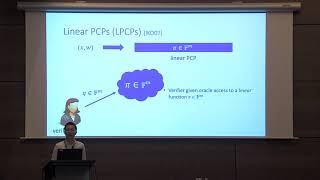
Lattice Based SNARGs and Their Application to More Efficient Obfuscation
Explore lattice-based SNARGs and their role in enhancing obfuscation efficiency. Learn about multilinear maps, bootstrapping, and linear PCPs in cryptography.