Minimizing Chest Pain - The Advanced EM Boot Camp
Advanced strategies for evaluating and managing chest pain in emergency medicine, focusing on risk assessment tools, troponin interpretation, and evidence-based protocols to optimize patient care and resource utilization.
Emerging Issues in Anticoagulation - The EM & Acute Care Course
Explore emerging anticoagulation issues, outpatient VTE management, DOACs vs. warfarin, and bleeding risk assessment in emergency medicine. Gain insights on prescribing practices and industry controversies.
Resuscitation of the Critically Ill Patient - The Advanced EM Boot Camp
Comprehensive guide to managing critically ill patients, covering advanced topics in emergency medicine including NIPPV, high-flow oxygen, intubation, and DKA management.

The Febrile Infant - The Advanced EM Boot Camp
Comprehensive guide on managing febrile infants, covering assessment, risk factors, and treatment approaches. Equips emergency physicians with advanced knowledge for optimal pediatric care.
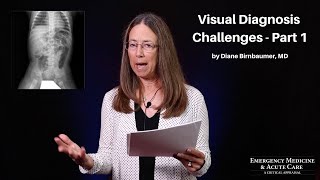
Visual Diagnosis Challenges - Part 1 - The 2020 EM & Acute Care Course
Enhance visual diagnosis skills through challenging case studies, improving ability to interpret CT scans, MRIs, and other imaging modalities for accurate emergency medicine assessments.
Myths in Emergency Medicine - The 2020 EM & Acute Care Course
Debunks common misconceptions in emergency medicine, covering topics like diverticulitis management, lumbar puncture headaches, laryngoscopy techniques, and the interpretation of oxygen saturation readings.
Soft Tissue Injuries, Optimizing Care - The EM Boot Camp Course
Optimize care for soft tissue injuries in emergency settings. Learn laceration management, wound care, local anesthesia techniques, and suturing methods for various injury types.

Concussion and Sequelae of Minor Head Trauma - 32nd Annual EM & Acute Care Course
Explore concussion diagnosis, treatment, and guidelines, focusing on new and controversial aspects in emergency care. Learn about brain effects and CT recommendations for different age groups.

Optimizing ED Operations - 32nd Annual EM & Acute Care Course
Strategies for optimizing emergency department operations, covering staffing, patient flow, psychiatric care, and interdepartmental collaboration to enhance efficiency and patient care.

Cervical Spine Physical Exam vs X-Rays vs CT Scan – 32nd Annual EM & Acute Care Course
Explore cervical spine injury assessment, comparing physical exams, X-rays, and CT scans. Learn about radiation risks, cost considerations, and diagnostic accuracy to improve emergency care decision-making.

ED Crowding - Cause, Consequence, Fixes - 32nd Annual EM & Acute Care Course
ED crowding: causes, consequences, and solutions. Explore impacts on patient care, mortality, and finances. Learn strategies to address overcrowding in emergency departments for improved outcomes.

Wrist, Hand and Finger Potpourri Part I – Annual EM & Acute Care Course
Comprehensive review of wrist, hand, and finger injuries, focusing on fracture detection, management, and advanced imaging techniques for emergency care professionals.

Assessment & Treatment of ED Agitation - 32nd Annual EM & Acute Care Course
Explore strategies for managing agitation in emergency settings, covering causes, treatment options, and specific syndromes like anticholinergic and GHB withdrawal.

Sepsis 2013 – 32nd Annual EM & Acute Care Course
Comprehensive overview of sepsis management, covering new research, controversies, and practical recommendations for emergency care professionals.
Emergency Medicine Gadgets & Gizmos - EM & Acute Care Course
Explore cutting-edge gadgets and innovative tools revolutionizing emergency medicine practice. Gain insights into their applications, benefits, and impact on patient care and clinical efficiency.
Head Trauma in the Coagulated Patient - EM & Acute Care Course
Explore head trauma management in anticoagulated patients, covering imaging, new drugs, reversal agents, and treatment strategies for improved emergency care outcomes.
Helium and Oxygen in the ED - EM & Acute Care Course
Explore the use of helium and oxygen in emergency care, focusing on COPD, neonatal resuscitation, and capnography. Learn evidence-based recommendations for diagnosis and therapy in acute settings.
Blood - The Liquid Tissue Transplant - EM & Acute Care Course
Explore the latest evidence-based insights on blood transfusion in emergency care, including controversies, recommendations, and key considerations for optimal patient outcomes.
Fever in the Returned Traveler - EM & Acute Care Course
Explore evidence-based approaches to diagnosing and treating fever in travelers, focusing on key infectious diseases and their management in emergency care settings.
Avoiding Diagnostic Error in the ED - EM & Acute Care Course
Learn strategies to reduce diagnostic errors in emergency departments, focusing on critical thinking, effective communication, and evidence-based approaches to improve patient outcomes and safety.
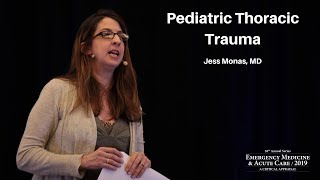
Pediatric Thoracic Trauma
Comprehensive overview of pediatric thoracic trauma management, covering imaging, transfer decisions, clinical tools, and associated injury identification for emergency care providers.