Numerical Integration Methods in Jupyter Notebook - Development Vlog 4
Explore numerical integration methods using Jupyter Notebook, comparing results and enhancing computational skills for physics research and problem-solving.

Jupyter Notebook Assignment - Runge-Kutta Method Development - Vlog 3
Explore the Runge-Kutta Method in computational physics, comparing it with Euler-Cromer. Develop skills in numerical analysis and scientific computing using Jupyter Notebooks.
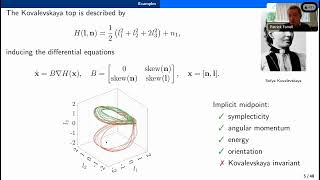
Designing Conservative and Accurately Dissipative Numerical Integrators in Time
Explore innovative framework for structure-preserving time steppers using finite elements and auxiliary variables. Discover applications in Kepler, Kovalevskaya, Navier-Stokes, and Benjamin-Bona-Mahony problems.

Numerical Integration: Simple Numerical Integration
Learn simple numerical integration techniques for approximating definite integrals, enhancing computational skills in mathematical analysis.
Method of Lines for Hyperbolic PDEs
Explore the Method of Lines technique for solving hyperbolic partial differential equations, enhancing your understanding of numerical methods in applied mathematics.
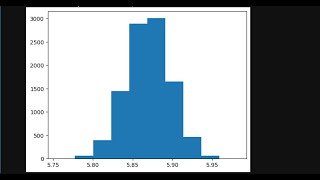
Integration by Monte Carlo Method Using Python in Jupyter Notebook
Explore Monte Carlo integration using Python in Jupyter Notebook. Learn to apply this powerful numerical technique for solving complex integrals.
Integration Algorithms
Master integration algorithms for solving complex mathematical problems and enhancing computational skills.
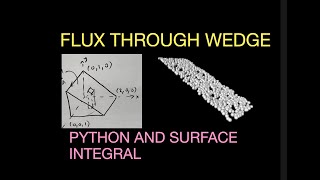
Calculate the Flux Through the Surface of a Wedge - Two Methods
Learn to calculate flux through a wedge surface using traditional integration and Python-based random number methods, enhancing your vector calculus and computational skills.

ME3255 - Verifying Implicit and Explicit Integration Methods for Tsiolkovsky Solution
Verify implicit and explicit integration methods for Tsiolkovsky solution, enhancing understanding of numerical techniques in aerospace applications.

ME3255 - Working on Rocket Problems with Solve_IVP
Explore rocket problem-solving using solve_ivp in Python. Learn to model and analyze rocket dynamics for advanced engineering applications.

Numerical Integration, Root Finding, and Computational Thinking - ME3255
Explore numerical integration, root finding techniques, and computational thinking principles for solving complex engineering problems.

ME3255 - Rocket Equations and Verifying Numerical Integration
Explore rocket equations and verify numerical integration techniques for aerospace applications. Enhance understanding of propulsion systems and computational methods.

Measuring Convergence of Integration Methods: Heun and Runge-Kutta Comparison - Homework 3
Comparez les taux de convergence des méthodes de Heun et Runge-Kutta pour l'intégration numérique, avec des résultats surprenants.

Convergence of Integration Methods and Root Finding with SymPy - ME3255
Explore integration methods and root finding using Sympy, focusing on convergence analysis for enhanced numerical problem-solving skills.

Numerical Integration for Forensic DNA Evidence Evaluation
Explore numerical integration for forensic DNA evidence evaluation, focusing on a novel approach to multi-variable integration that addresses shortcomings in existing methods.
Electric Potential Calculation Using Double Integral - Part 1
Explore numerical integration to calculate electric potential of charged shapes using Scilab, with code examples and practical applications in physics.
Calculating Expectation Values - A Journey through Modern Physics
Explore computational modeling of early 20th-century physics discoveries, focusing on wave functions and expectation values in quantum mechanics through practical examples and numerical integration.
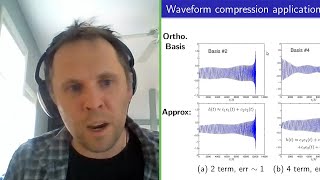
Gravitational Wave Parameter Estimation with Compressed Likelihood Evaluations
Explore advanced techniques for efficient gravitational wave parameter estimation, focusing on Reduced Order Quadratures (ROQs) to accelerate likelihood evaluations and improve Bayesian inference in GW astronomy.
Rope Simulator - Building a Simple Rope Model - Episode 1
Explore the physics of ropes in video games by building a simple rope simulator using three atoms and two springs. Learn about the Euler-Cromer Method and VPython programming.
Jupyter Notebook Assignment - Euler-Cromer Method Development - Part 2
Explore the Euler-Cromer Method for computational physics through a guided Jupyter notebook project. Learn to implement and analyze this numerical integration technique for solving differential equations.
Potential Integrator 5 - Fun with Shapes: Exploring Electric Potential of Various Charged Objects
Explore electric potential of various charged shapes through numerical integration. Hands-on coding with Scilab to visualize and analyze electrostatic phenomena beyond simple rectangles.