Potential Integrator - Checking Multipoles Against Electric Potential Code - Part 3
Explore numerical integration for electric potential of charged objects, comparing results with multipole expansion to verify accuracy.
Graphing Electric Potential vs Distance - Potential Integrator Series Part 2
Visualize electric potential through numerical integration, exploring various charged object shapes. Learn to graph V vs x using Scilab in this physics coding tutorial.
Calculating Expectation Values in Computational Quantum Mechanics - Lecture 6
Explore computational methods for calculating quantum expectation values, visualizing wave functions, and understanding the connection between quantum and classical mechanics.
Building Wave Functions with Fourier - Computational Quantum Mechanics Lecture 5
Learn to construct and deconstruct wave functions using Fourier's method in computational quantum mechanics. Visualize quantum behaviors through computer animations with VPython.
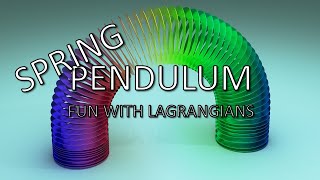
Spring Pendulum Simulation Using Jupyter - Fun With Lagrangians
Explore spring pendulum dynamics using Jupyter, focusing on energy conservation and competing forces. Includes GlowScript and Jupyter implementations for rich phase space visualization.
Integrated Catchment and Receiving Water Modelling: Environmental Management Solutions
Explore integrated catchment and receiving water modeling techniques, including rain-on-grid hydrology and 3D water quality simulations, to address environmental management challenges in water resources.
Modern Numerical Methods in Computational Relativity - Lecture 4
Explore advanced numerical techniques in computational relativity, focusing on solving Einstein's field equations for gravitational-wave astronomy and astrophysical phenomena modeling.
Observations of Localized Submesoscale Kinetic Energy Fluxes
Explores submesoscale kinetic energy fluxes in geophysical fluid dynamics using observational data, contributing to understanding of multi-scale energy transfers in Earth's climate system.
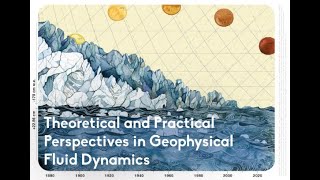
A Spectral Framework for Constraining Anisotropic Eddy Viscosity - Lecture 2
Explores a spectral framework for constraining anisotropic eddy viscosity in geophysical fluid dynamics, focusing on advanced modeling techniques and their applications in understanding complex oceanic and atmospheric processes.
Quantum Spin Liquid and Spin-Liquid Physics in Doped t-J Model
Explore quantum spin liquids and their physics in doped t-J models with Donna Sheng. Gain insights into cutting-edge research on strongly correlated gapless quantum many-body systems.
SO(5) Multicriticality in Two-Dimensional J-Q Models
Exploration of SO(5) multicriticality in 2D J-Q models, discussing deconfined quantum critical points, quantum spin liquids, and related phenomena in strongly correlated gapless quantum systems.
Protected Gaplessness in a Deformed Ising Model
Explore protected gaplessness in deformed Ising models with Carolyn Zhang. Discover insights on quantum many-body systems, critical points, and symmetries in condensed matter physics.
Tunable Quantum Criticality in Multi-Component Rydberg Atoms
Explore tunable quantum criticality in multi-component Rydberg atoms with Natalia Chepiga. Delve into cutting-edge research on strongly correlated gapless quantum many-body systems and their implications.
Kinetic Modelling of Colonies of Myxobacteria
Explore kinetic modeling of myxobacteria colonies, examining cell-cell interactions and emergent behaviors through Boltzmann-type equations, mathematical analysis, and numerical simulations.
Projection Methods for Neurobiological Networks
Explore projection techniques for analyzing complex neurobiological networks, focusing on applications in neuroscience research and computational modeling.

Numerical Integration of Loop Amplitudes in Momentum Space
Explore numerical integration techniques for loop amplitudes in momentum space, focusing on singularities, thresholds, and local cancellation methods.
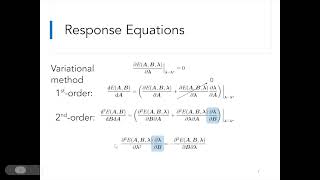
Calculating NMR Shielding with GIAO - Q-Chem Webinar 70
Explore numerical finite difference approach for NMR shielding calculations using gauge-including atomic orbitals. Learn theory, implementation, and results with κ-MP2 and MP2.X methods in Q-Chem software.

Numerically Solving the Schrodinger Equation in Scilab - Harmonic Oscillator and Infinite Square Well
Learn to numerically solve the Schrödinger equation using Scilab, covering finite difference methods and applications to harmonic oscillator and infinite square well potentials.
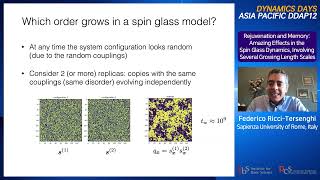
Rejuvenation and Memory: Amazing Effects in Spin Glass Dynamics
Explore spin glass dynamics, rejuvenation, and memory effects through large-scale numerical simulations, uncovering multiple growing length scales in disordered magnets.
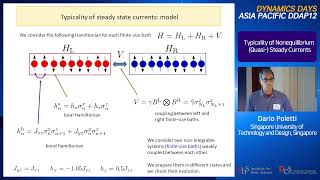
Typicality of Nonequilibrium Quasi-Steady Currents
Explore nonequilibrium steady currents in coupled nonintegrable systems through perturbative analysis and numerical simulations, uncovering prethermalization mechanisms.
A Closed-Form Mathematical Framework for Modeling Turbulent Fluids
Explore a groundbreaking mathematical framework for turbulent fluid motion, covering energy spectra, instability mechanisms, and analytical solutions for turbulence in confined spaces.