
TensorFlow Binary and Multi-class Classification Tutorial
Learn TensorFlow for binary and multi-class classification, covering data handling, model building, optimization, and evaluation techniques for effective machine learning implementations.

CS480-680 Lecture 19 - Attention and Transformer Networks
Explore attention mechanisms, transformer networks, and their applications in machine learning, including multihead attention and normalization techniques.
Database Fundamentals for Beginners - Database Tutorial
Comprehensive introduction to database concepts, covering normalization, relational databases, SQL, and administration fundamentals. Ideal for beginners preparing for Microsoft certification.

Unicode: The Hero or Villain? Input Validation of Free-Form Unicode Text in Web Applications
Explore Unicode's complexities in web application input validation, debunking myths and showcasing its potential as a powerful tool for robust security measures in multi-language text fields.
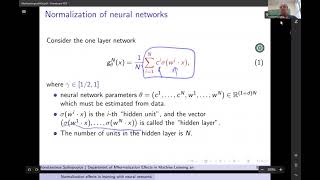
Normalization Effects on Neural Networks: Generalization and High-Dimensional Applications - SIAM FME Talk
Exploring neural network performance, normalization effects, and high-dimensional PDE solving using deep learning. Insights on generalization properties and applications in mathematical finance.
Unicode Vulnerabilities That Could Byte You
Explore Unicode vulnerabilities in web applications, including normalization, capitalization misuse, and encoding conversion risks. Learn about HostSplit, HostBond attacks, and Punycode exploitation.
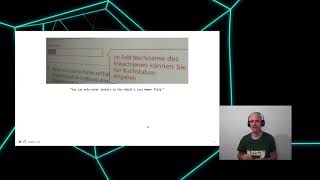
Your Name Is Invalid! - RC3 - 2020
Explore challenges in handling personal names in software, covering encoding, case sensitivity, sorting, and localization issues for more inclusive and robust applications.
CSP is Dead, Long Live CSP! - On the Insecurity of Whitelists and the Future of the Content Security Policy
Explore the evolution and challenges of Content Security Policy, analyzing its effectiveness, vulnerabilities, and future directions in web security.
Alternative Implementations of Secure Real Numbers
Explore alternative implementations of secure real numbers, including golden section numbers and logarithmic floats, with benchmarks for various operations in secure computation outsourcing.
Design Good Schemas - Get a Better Database
Optimize database performance through effective schema design, covering modeling, table mapping, and data types. Learn to avoid common pitfalls and create flexible, maintainable database structures.
Applying the Lessons of std - ranges to Unicode in the C++ Standard Library
Explore applying std::ranges principles to Unicode in C++, addressing the lack of first-class Unicode support and proposing a standardized API design for future implementation.
Optimizing Queries for Not So Big Data in PostgreSQL
Optimizing PostgreSQL queries for medium-sized datasets: strategies for efficient database design, query optimization, and maintenance to handle high-volume data and requests.
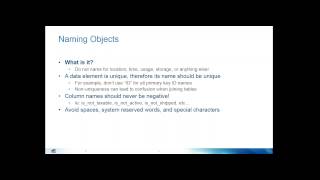
Database Design - Solving Problems Before They Start
Explore key database design principles to prevent future issues. Learn about data types, normalization, and naming conventions through live demos, enhancing your TSQL skills and decision-making abilities.
Efficient Time Series with PostgreSQL
Explore efficient time series data management in PostgreSQL, covering data models, access patterns, and scalability. Learn how this versatile SQL database can handle time series at scale, reducing system complexity.
Data Cleansing With SQL And R
Learn data cleansing techniques using SQL and R to prepare and correct data efficiently, focusing on tidy data concepts and practical tools for simplifying research and analysis.
Property Based Testing with Hypothesis
Explore property-based testing with Hypothesis to efficiently catch bugs and improve software quality. Learn techniques for specifying general properties and leveraging automated exploration of code boundaries.
Top 10 Transactional Database Mistakes and How to Avoid Them
Discover common transactional database pitfalls and learn effective strategies to enhance security, maintenance, and optimization in this insightful session.
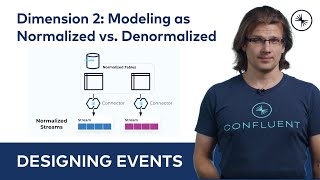
Normalization vs. Denormalization in Event Streaming - Module 4
Explore trade-offs between normalized and denormalized event data models in relational and document databases. Learn strategies for efficient data handling in event streaming systems.
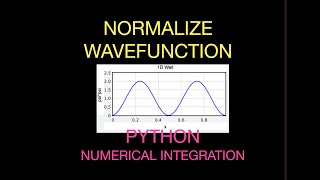
Quantum Python: Numerical Integration to Normalize a Wave Function
Explore numerical integration techniques to normalize wave functions in quantum mechanics using Python, enhancing understanding of computational approaches in physics.
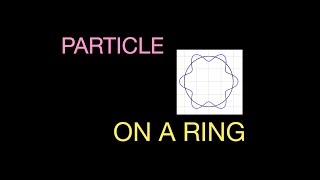
Quantum Mechanics: Wave Function for a Particle on a Ring
Explore wave functions for particles confined to rings, including normalized solutions and Python plotting code.
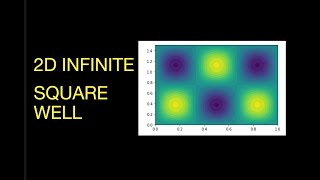
Quantum Mechanics: Particle in a 2D Box with 3D Plot
Explore quantum mechanics through a 2D particle in a box, from theory to Python visualization. Master concepts like time dependence, normalization, and degeneracy with step-by-step explanations.