Understanding Brain Fog: From COVID-19 to Cognitive Dysfunction
Delve into the neuroscience of COVID-related brain fog, exploring its similarities to chemo-fog, underlying mechanisms, and potential treatments through expert insights from Stanford neuro-oncologist Michelle Monje.
Networks, Cocaine, and Fruit Flies: Studying Addiction Through Social Behavior Analysis
Explore groundbreaking research on cocaine addiction through fruit fly behavior analysis, revealing crucial insights into neurological patterns and social interactions via network-based measurements.
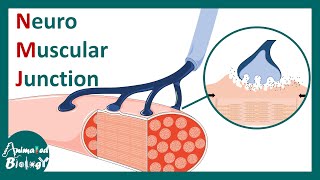
Neuromuscular Junction: Anatomy, Function, and Significance
Explore the intricate world of neuromuscular junctions through captivating animations. Uncover anatomy, function, and significance in neurobiology, enhancing understanding for USMLE preparation.
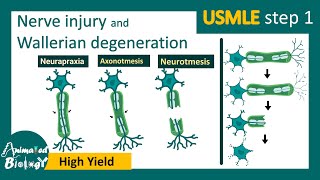
Nerve Injury and Wallerian Degeneration - Mechanisms and USMLE Preparation
Explore nerve injury and Wallerian degeneration mechanisms, focusing on key processes and implications for nervous system recovery after trauma.
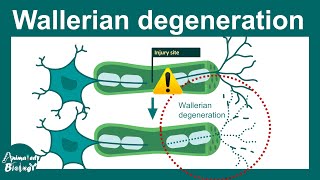
Wallerian Degeneration: Molecular Mechanisms and Processes
Explore the molecular mechanisms of Wallerian degeneration, a crucial process in nerve injury and regeneration. Gain insights into this complex biological phenomenon.
Making, Breaking and Linking Memories in Mice
Delve into groundbreaking research on memory formation and neural mechanisms as Dr. Josselyn explores how the brain encodes, stores, and processes information through studies with mice, with implications for various neurological disorders.
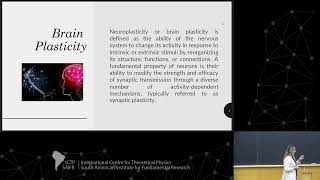
Plasticity: An Incredible Brain Capacity
Explore brain plasticity's incredible capacity for adaptation and learning, uncovering its role in neural networks and cognitive processes.
Modeling Bottom-Up and Top-Down Visual Attention in Humans and Monkeys - 2009
Explore computational models of visual attention combining bottom-up and top-down influences, comparing predictions to human and monkey behavior, with applications to real-world vision challenges.
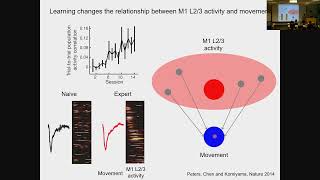
Motor Cortex Circuits for Motor Control and Learning
Explore motor cortex circuits' role in control and learning. Gain insights from UCSD expert Dr. Takaki Komiyama on neural mechanisms underlying movement.
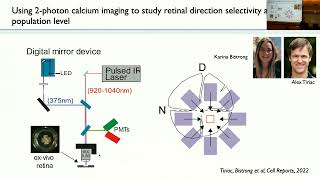
Developmental Mechanisms Shaping Direction Selective Circuits in the Retina
Explore developmental mechanisms shaping direction-selective circuits in the retina with UC Berkeley's Marla Feller. Gain insights into neural circuit formation and visual processing.

The brain's night shift | Kanishk Yankarla | TEDxMidland
Kanishk talks about how dreams are a mystery yet they are a vital part of our wellbeing and furthering ideas. Kanishk Yankarla is a current first year undergraduate Honors Neuroscience student at the University of Texas at Austin. He graduated as the Salutatorian of the Odessa High School class of 2

Understanding the Adolescent Brain | Aditi Panchagnula | TEDxValley Christian High School
Adolescents can make better decisions and avoid impulsive actions by understanding and strengthening response inhibition through habits like proper sleep, nutrition, and focus training. Aditi Panchagnula is a fifteen-year-old high school sophomore with a keen interest in genetic medicine, neuroscien

Über das Entstehen und Vergehen von Gedanken | Werner Gruber | TEDxGraz
In diesem Talk zeigt Werner Gruber wie unser Denken tatsächlich funktioniert: nicht logisch-linear, sondern über Synchronisation, Muster und Selbstorganisation. Anhand von Äpfeln, Katzen, Glühwürmchen und Neuronen macht er sichtbar, wie Bedeutung entsteht und warum Wahrnehmung immer Konstruktion ist

The Human Mind: Evolutionary Hardware and Cultural Software | Eric DeWitt | TEDxNoVA
How human thinking is shaped by both our biological evolution and our cultural environment Eric DeWitt is a cognitive neuroscientist passionate about uncovering the biological and computational foundations of decision making. He completed his PhD at New York University, combining theory and experi