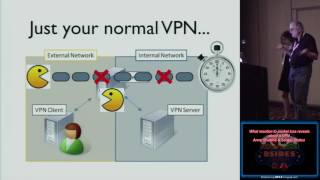
What Reaction to Packet Loss Reveals About VPN
Explore VPN behavior under packet loss, analyzing timing patterns and network algorithms to understand security implications and potential vulnerabilities.
Optical Networking in the Cloud and 5G Era - Chengliang Zhang - OFC Plenary
Explore optical networking advancements in cloud and 5G era, focusing on China Telecom's strategies, network architecture evolution, and future developments in smart homes and data centers.
The World of 100G Networking
Explore 100G networking technologies, their capabilities, and challenges in high-speed communication. Learn about competing solutions and potential improvements for efficient data transfer.
Open Collaboration and Proactive Promotion on Maturity of the Autonomous Networks Industry
Explore Huawei's vision for Autonomous Networks, focusing on collaborative evolution, open architecture, and industry maturity to accelerate digital transformation in telecom.

A Look at TR-06FAIL and Other CPE Configuration Disasters
Exploring TR-06FAIL and CPE vulnerabilities: impacts, related issues, and potential for mass router takeovers through TR-069 protocol implementations.
IMP4GT - IMPersonation Attacks in 4G Networks
Explore IMP4GT attacks in 4G networks, revealing vulnerabilities in LTE security. Learn about impersonation techniques, their impact, and consequences for users and law enforcement.

WiFi-Based IMSI Catcher
Explore new WiFi-based IMSI catcher techniques for tracking mobile devices, exploiting authentication protocols and discussing potential mitigations for operators and users.
Command Injection in F5 iRules
Explore command injection vulnerabilities in F5 iRules, focusing on syntax, exploitation techniques, and security implications for BigIP F5 products used in high-performance web traffic routing.
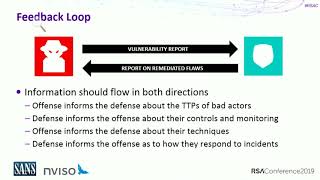
Live Adversary Simulation - Red and Blue Team Tactics
Explore live adversary simulation techniques, enhancing communication between red and blue teams for effective cybersecurity. Learn to perform threat simulations, map APT phases, and implement purple teaming strategies.
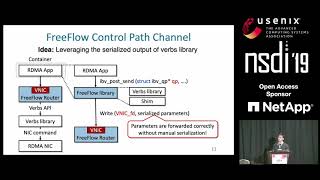
FreeFlow - Software-based Virtual RDMA Networking for Containerized Clouds
FreeFlow: software-based RDMA virtualization for containerized clouds, enabling high-performance networking with isolation, portability, and controllability. Achieves near bare-metal RDMA performance for applications like TensorFlow and Spark.
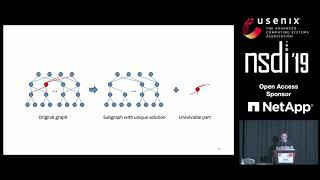
NetBouncer - Active Device and Link Failure Localization in Data Center Networks
Active probing system for accurate failure localization in data centers. Detects device and link failures, integrates domain knowledge with machine learning for high accuracy and resilience to data inconsistency.
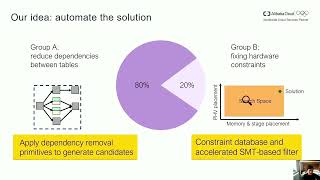
Cetus - Releasing P4 Programmers from the Chore of Trial and Error Compiling
Automated system for converting uncompilable P4 programs into compilable versions, addressing fitting issues in programmable switches and significantly reducing development time.
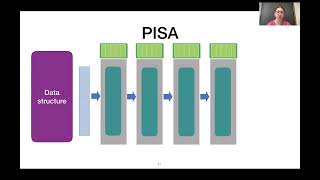
Modular Switch Programming Under Resource Constraints
Elastic data structures for optimal resource utilization in programmable networks. P4All extends P4, enabling modular switch programming and efficient resource allocation across various network applications.
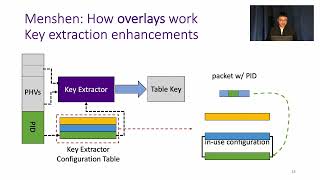
Isolation Mechanisms for High-Speed Packet-Processing Pipelines
Explore isolation mechanisms for high-speed packet processing pipelines, focusing on Menshen's approach to enforcing isolation between modules in programmable data planes.
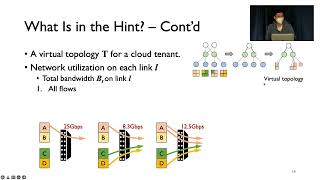
NetHint - White-Box Networking for Multi-Tenant Data Centers
Explore NetHint, a white-box networking approach for multi-tenant data centers. Learn how cloud providers and tenants can collaborate to enhance application performance through adaptive data transfer scheduling.
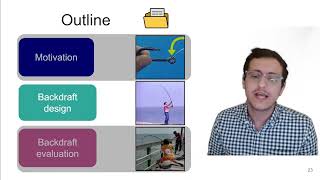
Backdraft - A Lossless Virtual Switch that Prevents the Slow Receiver Problem
Innovative virtual switch solution preventing packet loss and improving network performance through dynamic queuing, doorbell queues, and overlay network techniques for enhanced application responsiveness.
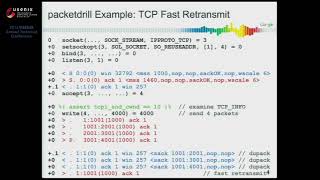
Packetdrill - Scriptable Network Stack Testing, from Sockets to Packets
Explore packetdrill, a scripting tool for testing TCP/UDP/IP network stack implementations. Learn its design, usage, and impact on developing Linux TCP features and bug fixing.
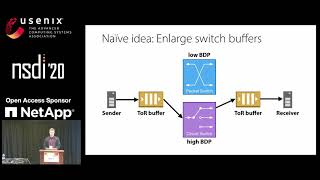
Adapting TCP for Reconfigurable Datacenter Networks
Explores TCP adaptation for modern reconfigurable datacenter networks, proposing dynamic queue resizing and explicit circuit state feedback to improve circuit utilization and performance.
TCP - Architecture, Enhancements, and Tuning
Comprehensive exploration of TCP architecture, enhancements, and tuning, covering core concepts, connection establishment, flow control, congestion avoidance, and performance optimization techniques for network engineers.
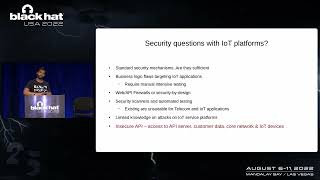
Attacks From a New Front Door in 4G & 5G Mobile Networks
Unveils critical API vulnerabilities in 4G/5G networks, exposing risks for AI, MEC, and IoT applications. Explores attack vectors, security misconfigurations, and potential exploits in commercial providers' systems.
IPvSeeYou - Exploiting Leaked Identifiers in IPv6 for Street-Level Geolocation
Explore a data fusion attack on IPv6 home routers for precise street-level geolocation, uncovering millions of devices worldwide and discussing privacy implications.