Improving MTTR by 80% Through GenAI-Powered Operational Data Platform - Intuit Case Study
Explore how Intuit leverages GenAI and open-source technologies to analyze operational data, reduce incident response times, and enhance development productivity for their Kubernetes-based services.
Observing a Large Language Model in Production
Explore techniques for monitoring and improving LLM-backed APIs in production, focusing on instrumentation, tracking, SLOs, and iterative enhancements for better product development.
Building a Full Stack AI Chatbot with Langchain, ChatGPT, and Singlestore - 2 Hour Tutorial
Build a full-stack AI chatbot using Langchain, ChatGPT, and Singlestore. Learn to train the chatbot on your own data and create a functional application in just two hours.

Advanced RAG Techniques - RAG Fusion Implementation - Lecture 6
Explore RAG fusion technique to enhance retrieval-augmented generation models, combining multiple search queries and ranking results using reciprocal rank fusion with LangChain implementation.
OpenAI Alternatives: Comparing Retrieval Models for RAG - Cohere Embed v3 and Open Source
Explore top retrieval models for RAG: OpenAI's text-embedding-ada-002, Cohere's Embed v3, and e5-base-v2. Compare performance, inference speeds, and results across various tests to enhance your AI applications.

Evaluating and Designing Responsible AI Systems for the Real World
Explore strategies for implementing Responsible AI systems, including insights from Microsoft's Bing development, prompt design, content safety, and emerging tools. Learn to prevent misuse and align with ethical AI practices.
Securing Generative AI - Back to the Future Edition
Explore a trust framework for generative AI, addressing concerns like data handling, PII leakage, and LLM manipulation through access control, authenticity, auditing, and data protection measures.
End-to-End AI App Development: Prompt Engineering to LLMOps
Comprehensive guide to Azure AI's features for streamlining AI app development, from prototyping to deployment. Learn to maximize LLM capabilities and harness Generative AI potential with Azure AI Studio.
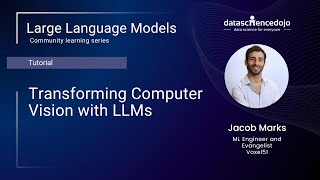
Computer Vision and Language Models: Bridging the Modality Gap
Explore how large language models are transforming computer vision through projects like VisProg and VoxelGPT, with insights on challenges, prompt engineering, and future prospects.

Zephyr 7B Beta - Comparing a 7B LLM with 70B Models
Explore Zephyr 7B Beta's performance against larger models through paper review and hands-on Google Colab tutorial. Learn setup, prompting, and practical applications in math, coding, and data tasks.

LangChain Tutorial: Building an End-to-End LLM Project with Hugging Face Deployment - 1 Hour
Comprehensive tutorial on LangChain, covering basics to advanced concepts with hands-on examples. Includes deployment of a Q&A chatbot using Hugging Face Spaces.
ChatGPT 3.5 Turbo Fine-Tuning Tutorial - Specific Tasks with Synthetic Data
Step-by-step guide to fine-tuning ChatGPT 3.5 Turbo for specific tasks using synthetic data, covering when and why to fine-tune, data creation, dataset cleaning, and model testing.
AI Mastery: Ultimate Crash Course in Prompt Engineering for Large Language Models
Master prompt engineering for AI models: craft effective prompts, explore techniques like n-shot and chain-of-thought, and learn practical tips to enhance communication with language models.
GPT-4 Turbo Documentation Converter to JSON Format
Convert documentation into easily chunkable JSON format using GPT-4 Turbo, enhancing retrieval accuracy. Explore basic to advanced implementations and iteratively improve generated documentation for better searchability.

ChatGPT: From Zero to Hero - Understanding the Technology and Training Process
Comprehensive exploration of ChatGPT's architecture, from fundamental concepts to advanced fine-tuning techniques, covering GPT models, reward systems, and reinforcement learning applications.
Emotion Detection in Text: Latest Developments and Challenges
Explore latest developments in emotion detection from text, covering techniques, datasets, and challenges in building production-level systems for enhanced NLP applications.
Streaming for LangChain Agents and FastAPI
Learn to implement streaming for LangChain Agents and serve it through FastAPI, covering basics to advanced techniques for efficient LLM integration and deployment.
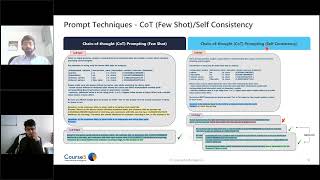
Evolving Trends in Prompt Engineering for Large Language Models with Built-in Responsible AI Practices
Explore evolving trends in prompt engineering for LLMs, covering techniques, challenges, evaluation, responsible AI practices, and optimization for enhanced AI capabilities and ethical implementation.

Automating Business Tasks with ChatGPT and OpenAI - Tutorial
Learn to automate business tasks using AI, integrating ChatGPT with applications like Gmail, Google Sheets, and Trello for efficient email management, data analysis, and project organization.
Deploying Your Own Language Models - A Use Case Demo with Open Source Tools
Explore domain-specific language model adaptation and deployment using open source tools. Learn cost-effective techniques, optimization strategies, and ethical considerations for building powerful AI applications.

LLaMA 2 and Meta AI Projects - Interview with Thomas Scialom
Insightful discussion with LLaMA 2 lead Thomas Scialom, covering his journey, Meta projects, and the future of AI. Explores key concepts like supervised fine-tuning and human preference in language models.