
The Weird and Wonderful World of AI Art
Explore the evolution of AI art, from early techniques to modern tools like CLIP and DALL-E. Discover the impact on artists, researchers, and amateurs, and ponder the future of this rapidly advancing field.

Improving Intrinsic Exploration with Language Abstractions - Machine Learning Paper Explained
Explores using natural language to improve reinforcement learning agents' exploration in sparse-reward environments, demonstrating significant performance gains across challenging tasks in MiniGrid and MiniHack.
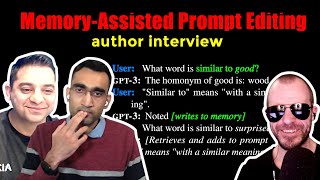
Author Interview - Memory-Assisted Prompt Editing to Improve GPT-3 After Deployment
Explore a method to improve GPT-3's performance post-deployment by maintaining interaction memory and dynamically adapting prompts, enhancing accuracy without retraining the model.
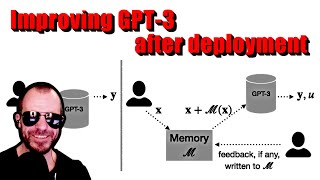
Memory-Assisted Prompt Editing to Improve GPT-3 After Deployment - Machine Learning Paper Explained
Explore adaptive methods to enhance GPT-3's performance post-deployment using memory-based prompts, improving accuracy without retraining the model. Learn about applications in fine-tuning and personalization.
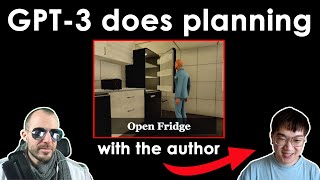
Language Models as Zero-Shot Planners - Extracting Actionable Knowledge for Embodied Agents
Exploring how large language models can translate high-level tasks into actionable steps for virtual environments, with techniques to improve executability and potential real-world applications.
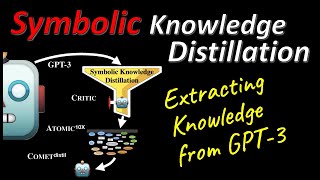
Symbolic Knowledge Distillation- From General Language Models to Commonsense Models Explained
Explore how to distill commonsense knowledge from large language models to create high-quality knowledge graphs and train smaller, specialized models for improved performance in commonsense reasoning tasks.
Deploy with FastAPI - Sentiment Analysis with BERT Using Huggingface, PyTorch, and Python Tutorial
Learn to deploy a pre-trained BERT model for sentiment analysis as a REST API using FastAPI, PyTorch, and Hugging Face. Covers project setup, API creation, model integration, and real-time predictions.

Sentiment Analysis with BERT Using Huggingface, PyTorch, and Python Tutorial
Learn to build a sentiment classification model using BERT, Hugging Face, and PyTorch. Covers BERT basics, fine-tuning for sentiment analysis, model training, evaluation, and prediction from raw text.
Sentiment Analysis with BERT Using Huggingface, PyTorch and Python Tutorial
Learn text preprocessing for sentiment analysis using BERT, Hugging Face, and PyTorch. Covers tokenization, padding, attention masks, dataset creation, and data splitting for NLP tasks.
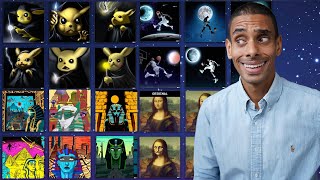
AI Drew All of These - DALLE-2 Walkthrough
Explore DALLE-2's capabilities in generating hyper-realistic images from text prompts. Learn about prompts, in-painting, and practical techniques for creating stunning AI-generated visuals.
Build a Comment Toxicity Model with Deep Learning and Python
Learn to detect toxic comments using deep learning and Python. Build a model, prepare data, make predictions, evaluate results, and create a Gradio app for practical application.

Build a Deep Q&A Web App with Transformers and Anvil - Python Deep Learning App
Learn to create a deep learning Q&A web app using Python, Transformers, and Anvil. Covers model loading, app development, integration, and deployment in a hands-on tutorial.

Automatic Summarization Using Deep Learning - Abstractive Summarization With Pegasus
Learn to use Pegasus for automatic text summarization with Python and Transformers. Covers installation, model configuration, and summarizing Wikipedia articles, news, and scientific papers.

Getting Started with AI Powered Q&A Using Hugging Face Transformers - HuggingFace Tutorial
Learn to implement AI-powered Q&A using Hugging Face Transformers. Explore BERT, transfer learning, and practical coding with pre-trained models for your own data and solutions.

Masked Language Modelling - Retraining BERT with Hugging Face Trainer - Coding Tutorial
Practical guide to retraining BERT for masked language modeling using Hugging Face Trainer on the Microsoft Research Sentence Completion Challenge, with step-by-step Python implementation and performance evaluation.

Masked Language Modelling with Hugging Face - Microsoft Sentence Completion - Coding Tutorial
Practical guide to applying Hugging Face language models for sentence completion, covering masked language modeling, data inspection, model application, and performance evaluation.

Hugging Face Transformers - The Basics - Practical Coding Guides - NLP Models (BERT/RoBERTa)
Learn the basics of Hugging Face Transformers library, including installation, pre-defined pipelines, and implementing models in PyTorch. Explore tokenization, attention masks, and model outputs in this practical coding guide.

Learn DALL-E 2 - DALL-E 2 Beginner Tutorial
Comprehensive guide to DALL-E 2: text-to-image generation, image variations, editing, and saving. Covers basics for beginners with practical demonstrations and tips.
YouTube Video Transcript Summarizer - Hugging Face Speech-to-Text ASR - Video Summarizer Project
Learn to build a YouTube video summarizer using Python, Hugging Face ASR, and text summarization techniques. Covers audio extraction, speech-to-text conversion, and transcript summarization with live demo.
What Is Hugging Face - Crash Course - ML Products for Beginners
Comprehensive overview of Hugging Face's ML ecosystem, covering its company background, key products, and tools for NLP and machine learning, suitable for beginners without coding.

Machine Learning Engineer Mock Interview for Meta with ChatGPT
Simulated machine learning engineer interview using ChatGPT, covering key ML concepts, coding tasks, and system design. Explores AI's ability to handle technical questions and practical scenarios.