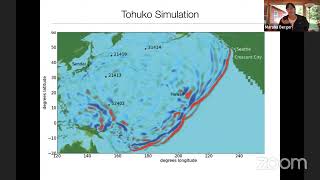
Marsha Berger - Towards Adaptive Simulations of Dispersive Tsunami Propagation
Explore adaptive simulations for tsunami propagation, focusing on shallow water equations, mesh refinement, and Boussinesq models. Learn about computational techniques for predicting tsunami impacts from various sources.
Open Source IoT Networks for Disaster Response - Project OWL
Explore Project OWL's innovative IoT networks for disaster response, focusing on open-source solutions, device selection, and real-world deployments in hurricane-affected areas.

After the Aftermath - The Long-Lasting Impact of Natural Disasters
Exploring the enduring impact of natural disasters on survivors, first responders, and journalists. Insights from a CBS News correspondent on reporting and the lasting effects of news stories beyond the headlines.
Solutions to Climate Change with Major Social Impact
Explore innovative solutions to climate change with significant social impact, focusing on economic viability, resource preservation, and cultural conservation.
Hurricanes Harvey, Irma and Maria - Part 1
Researchers share new discoveries from 2017 Atlantic hurricanes, discussing novel technologies, rainfall studies, and implications for future hurricane science and forecasting.
Storied Careers - Gaining a Footing in Landslide Science
Explore landslide science with USGS geologist Richard Iverson, from innovative research methods to real-world applications in detection, measurement, and prevention of these dynamic natural phenomena.
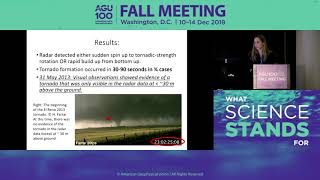
New Insights into the Formation of Tornadoes
New insights challenge traditional understanding of tornado formation in supercell thunderstorms, potentially revolutionizing forecasting methods and warning systems for these destructive phenomena.
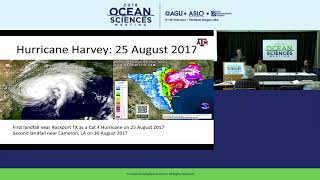
Unusual Ocean Conditions and Hurricane Harvey
Exploring unusual Gulf of Mexico conditions that contributed to Hurricane Harvey's intense rainfall, atypical storm surge, and rapid intensification through new research findings.
Inspire the Future for the Benefit of Humanity
Exploring Earth and space science challenges: climate change, natural disasters, ecosystems, energy transition. Experts discuss innovative solutions and opportunities to benefit humanity through interdisciplinary collaboration and public engagement.

How Could God Have Allowed the Tsunami?
A thought-provoking exploration of faith, tragedy, and the nature of God in light of the 2004 South Asian tsunami, challenging traditional beliefs and offering new perspectives.
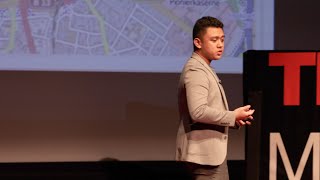
A Message That Spreads Like Wildfire
Innovative solution for offline communication during fire evacuations, enhancing safety for residents and first responders. Explores the importance of effective crisis communication when power is unavailable.
Climate Change and Public Health: Implications for New Jersey
Explore climate change's diverse health impacts in New Jersey, focusing on vulnerable populations and addressing asthma, heat stress, allergies, and infectious diseases.
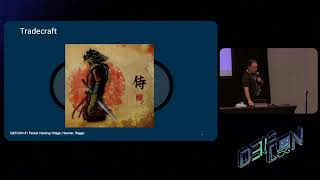
OSINT for Physical Security Intelligence - Rapid Data Collection and Analysis
Master efficient OSINT techniques for physical security, focusing on rapid intelligence gathering, predictive analysis, and actionable insights for critical situation assessment and risk management.
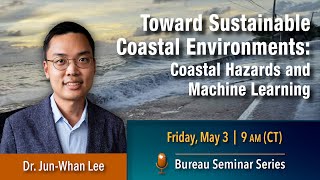
Toward Sustainable Coastal Environments: Coastal Hazards and Machine Learning
Explore innovative machine learning approaches for coastal hazard forecasting, assessment, and risk management, addressing challenges in tsunami and storm surge modeling for sustainable coastal environments.
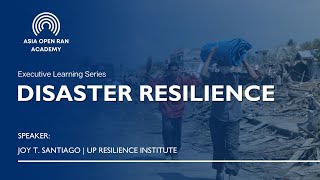
Building Disaster Resilience: Strategies for Community Preparedness and Response
Explore essential strategies for building resilient communities and infrastructure to effectively prepare for, respond to, and recover from natural disasters and emergencies.

How natural disasters are more connected than you think | Jadwiga (Yaga) Richter
Reimagining science to support resilience in the 21st century. Wildfires, floods, hurricanes, heatwaves, air quality disturbances, even space weather — extreme events are testing our resilience. What does a wildfire in Australia have to do with floods in South Asia or hurricanes on the U.S. Gulf Coa