Generic or Specific? Making Sensible Software Design Decisions
Explore the critical decision-making process in software design and architecture through this 51-minute conference talk by Bert Jan Schrijver at Devoxx. Delve into the challenging question of whether to build generic, reusable solutions or specific ones…

Coworking Session With Jason Lengstorf
Join Jason for a live coding session as he works on his todo list, tackles a monorepo setup, and explores various web development tools and frameworks. Bring your questions and code along!

Branching Strategies - Choosing Wisely to Minimize Costs
Explore effective branching strategies for software development, focusing on simplicity, flexibility, and adaptability to minimize costs and maximize team productivity across different project stages and repository structures.
Monorepo Madness - Dependencies, License Compliance, and Automation
Explore monorepo management strategies, focusing on dependencies, license compliance, and automation techniques for efficient development and maintenance of large-scale projects.
Mission Accomplished: Kubernetes Is Not a Monorepo - Now Our Work Begins
Explore the challenges and opportunities of Kubernetes' transition from monorepo to component-based architecture, focusing on distribution, quality assurance, and collaboration across projects.

Breaking Business Applications Deployment with Kustomize - Lessons Learned
Explore GitOps challenges and solutions in OpenShift cluster management, focusing on Kustomize configuration pitfalls, incident response, and implementing safeguards for robust deployment processes.
Using Docker to Handle a JavaScript Monorepo
Discover how Docker enhances JavaScript monorepo management, exploring its benefits and implementation strategies for improved development workflows and project organization.

Sinking Atlantis - How Breaking Up Infrastructure Monorepos Saved Us from Pull Request Purgatory
Discover how breaking up infrastructure monorepos improved GitOps practices, empowered self-service resource provisioning, and enhanced maintainability for Recursion's engineering team.

Time to Migrate to Application Set
Explore how Bank Hapoalim automated application management across multiple clusters using GitOps and ArgoCD, focusing on the migration to Application Set for simplified, unified control.

End the Pain: Rethinking CI for Large Monorepos
Explore the future of CI for large monorepos: smart parallelization, minimal configuration, and efficient task distribution. Learn how to optimize your CI pipeline for improved developer productivity.

Building with FluxCD and Kubernetes - GitOps Principles in Action
Learn to build a GitOps pipeline using FluxCD and Kubernetes. Covers core GitOps principles, repository structuring, deploying applications, and implementing image update automation.
A Monorepo Can't Save You From Your Own Corporate Dysfunction
Explores how organizational structure and policies impact codebase efficiency, using real-world examples to highlight common pitfalls in monorepo implementation and suggest improvements for better development practices.
Setting up Enterprise Frontend for Success
Strategies for successful enterprise frontend development: team communication, monorepos, feature flagging, trunk-based development, improved PRs, automated assistance, testing, planning, and frequent releases.
Improve All the Repos - Exploring Microsoft's DevExp
Explore Microsoft's approach to managing React Native in large-scale projects, including custom tooling and strategies for improving developer experience across multiple codebases.
Monorepos in the Wild
Explore Monorepos: their benefits, types, and tools like Lerna. Learn how popular projects use them for efficient modular code management, challenging traditional development approaches.

Generic or Specific - Making Sensible Software Design Decisions
Explore the decision-making process between generic and specific software design solutions, considering factors like flexibility, cost, and organizational impact.

pnpm – A Fast, Disk Space Efficient Package Manager for JavaScript
Explore pnpm, a fast and disk-efficient JavaScript package manager. Learn its history, unique node_modules structure, speed advantages, space efficiency, monorepo support, and Node.js version management capabilities.
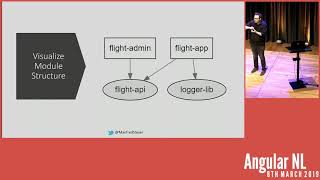
Architectures for Huge Angular Based Enterprise Applications
Strategies for scaling Angular applications: NPM packages, monorepos, and microservices for enterprise-level development and maintainability.
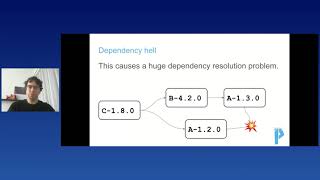
Python Monorepos - What, Why and How
Explore the advantages of monorepos for Python codebases, including scalable management, collaboration, and effective tooling. Learn to evaluate codebase architecture choices for optimal development workflows.
Using Monorepos for Scalable Apps
Explore architecture for large Angular apps with federated teams, covering Elements-based migration, shared component libraries, monorepo strategies, CI, and Schematics for improved developer experience.
Sustainable Angular Architecture
Explore strategic Domain-Driven Design for sustainable Angular monorepos. Learn to define criteria, establish communication rules, and implement concepts like bounded contexts and context mapping for large-scale enterprise applications.