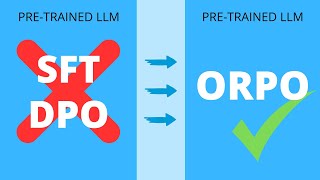
ORPO: A New Preference-Aligned Training Method for Large Language Models
Explore a groundbreaking reference model-free optimization algorithm for LLM training, comparing ORPO's performance with Llama 2 and Mistral 7B through theoretical physics perspectives.
FASTER Code for Supervised Fine-Tuning and DPO Training with UNSLOTH
Explore practical implementation of UNSLOTH for accelerated Supervised Fine-Tuning and DPO-Alignment of LLMs using Jupyter notebooks with HuggingFace compatibility.

Training High Quality Embedding Models for Production Vector Search
Master practical techniques for training and optimizing embedding models for production-ready vector search, covering data quality, loss functions, and efficient updating strategies.
Getting Started with HuggingFace Transformers - Pipeline, Tokenizer, and Model Development
Master HuggingFace Transformers library fundamentals, from pipelines and tokenizers to models and Hub integration, enabling you to effectively work with and fine-tune Large Language Models.
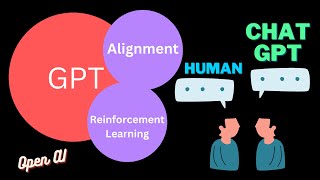
How ChatGPT is Trained - Model and Training Explained
Delve into the technical foundations and training methodology behind ChatGPT, exploring its model architecture, reinforcement learning principles, and step-by-step training process.

NEFTune - Improving LLM Performance Through Noisy Embeddings Fine-Tuning
Discover how NEFTune's innovative instruction fine-tuning method enhances LLM performance through noisy embeddings, with practical implementation in HuggingFace TRL.
Best Datasets for LLMs - How to Choose and Create Your Own
Discover how to select and create optimal datasets for fine-tuning Large Language Models, with practical guidance on using Hugging Face's resources and understanding data structures.

LLM2LLM: Synthetic Data Generation for Fine-Tuning AI Models
Explore how large language models can generate synthetic data to teach and fine-tune other LLMs, with insights into performance metrics and applications for edge devices.
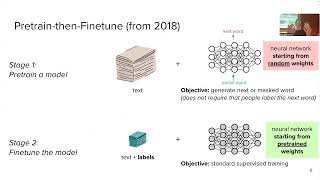
Pretraining and Finetuning in Machine Learning
Dive into the fundamental concepts of pretraining and finetuning in machine learning, exploring key techniques and applications for model optimization.
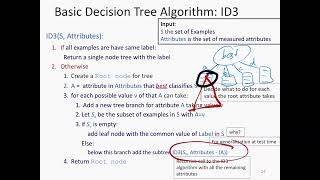
Decision Trees in Machine Learning: Practical Concerns and Overfitting - Lecture 5
Delve into practical aspects of decision tree learning, exploring implementation challenges and understanding how to address overfitting in machine learning models.
The Impact of Machine Learning on Material Innovation and Scientific Progress
Explore AI's impact on science, business, and technology with Meta's Joe Spisak. Discuss GPT, Llama2, and AI applications in biology and material science. Examine ethical considerations and the future of open-source AI development.
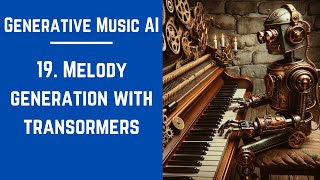
Melody Generation with Transformers - Generative Music AI
Implement a transformer architecture in TensorFlow for end-to-end melody generation. Learn melody encoding, dataset preprocessing, model building, training, and inference techniques for AI-driven music creation.
Should We Teach Machine Learning Systems?
Explore feature engineering and instruction in machine learning to improve AI system output quality and reliability. Contrast with current hands-off learning approaches.
GPT-SW3: The First Large Generative Language Model for Nordic Languages
Explore the development and applications of GPT-SW3, the pioneering large generative language model for Swedish, with insights on data challenges and future directions.

Adapting Continuous Integration and Continuous Delivery for Machine Learning
Explore MLOps practices for managing ML complexity, adapting CI/CD workflows using Git, GitHub Actions, and DVC to balance experimentation with stability in production.

Detecting Facial Keypoints with Deep Learning
Learn to implement a top-performing deep learning solution for facial keypoint detection, covering data analysis, model development, and submission strategies for Kaggle competitions.
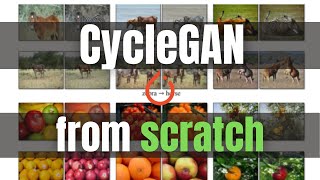
CycleGAN Implementation From Scratch
Learn to implement CycleGAN from scratch, covering discriminator, generator, dataset preparation, and training process for image-to-image translation tasks.

PyTorch Image Segmentation Tutorial with U-NET - Everything From Scratch
Learn to implement U-NET for image segmentation from scratch, covering model architecture, dataset preparation, training process, and evaluation techniques in PyTorch.
Classifying Skin Cancer - TensorFlow Tutorial
Build a TensorFlow model to classify skin lesions as benign or malignant. Learn preprocessing, model setup, training, and evaluation using metrics like ROC curves for this important medical application.
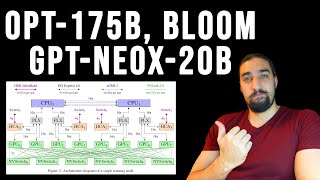
Training Large Language Models - GPT-NeoX-20B, BigScience BLOOM, OPT-175B Explained
Explore three groundbreaking large language models: BLOOM, OPT, and GPT-NeoX-20B. Gain insights into their development, challenges faced during training, and unique features of each project.

Stable Diffusion DreamBooth Tutorial Using Automatic1111 Web UI - Ultra Detailed
Comprehensive guide to Stable Diffusion DreamBooth: installation, training, fine-tuning, and advanced techniques for creating high-quality AI-generated images with custom subjects and styles.