The State of Production MLOps in the Cloud Native Ecosystem
Explore production MLOps challenges, best practices, and tools in the Cloud Native ecosystem. Learn key principles for deploying, monitoring, and scaling ML systems effectively.
Simplify GenAI App Development with Secure, Custom AI Agents
Explore best practices for managing AI model lifecycles, focusing on governance, monitoring, and performance tracking. Learn to optimize model delivery while ensuring compliance and accountability.
Efficient MLOps: Developing and Deploying ML Models with Databricks
Explore efficient MLOps framework design for ML model development and deployment, covering environment management, CI/CD pipelines, and tools like Unity Catalog and MLflow for model monitoring and progression.
Cascade Models in Computer Vision to Boost Accuracy and Performance
Explore cascade models in computer vision to enhance accuracy and performance, focusing on object detection tasks, metrics, datasets, and deployment strategies.
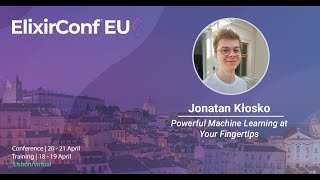
Powerful Machine Learning at Your Fingertips - ElixirConf EU 2023
Explore efficient numerical computation and Neural Networks in Elixir using Nx, Axon, and Bumblebee. Learn to implement powerful machine learning models with minimal code.
Productionize AI and ML Algorithms in Cloud Environments
Explore AI and ML algorithm productionization in cloud environments. Learn development phases, NLP tasks, Hugging Face, MLflow, and AWS deployment for effective model management and serving.
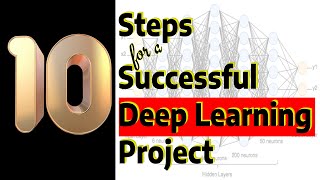
Develop Successful Deep Learning Projects with This 10 Steps Formula
Learn a 10-step formula for successful deep learning projects, covering problem definition, data preparation, model selection, training strategies, regularization, augmentation, interpretability, and deployment.
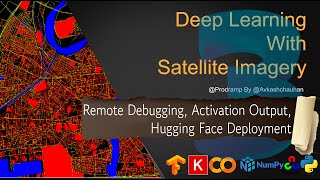
Advance Deep Learning Workshop for Satellite Imagery - Model Export & Production
Hands-on workshop on advanced deep learning techniques for satellite imagery, covering remote debugging, model deployment, activation heatmaps, and custom predictions using TensorFlow and Keras.
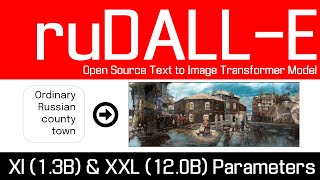
Text to Image Generation Using ruDALL-E Open Source Model
Explore ruDALL-E, an open-source text-to-image model based on DALL-E. Learn about its architecture, models, and try it out in Google Colab for generating images from text descriptions.
A Deep Dive into Machine Learning and MLOps Pipeline with Model Registry and Feature Store
Explore key components of modern ML pipelines: AutoML, observability, model registry, transformation, and feature store. Learn to build scalable, reliable MLOps systems for enterprise-level machine learning.
A Visual Introduction to Modern and Scalable Machine Learning Pipeline
Visual guide to modern, scalable machine learning pipelines: from data prep to deployment. Covers key stages like training, validation, inference, feature stores, and model registry. Ideal for understanding ML infrastructure evolution.
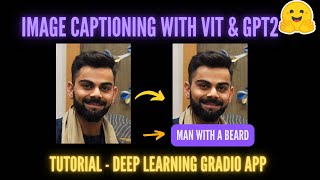
Image Captioning Python App with ViT and GPT2 Using Hugging Face Models - Applied Deep Learning
Learn to create an image captioning app using ViT and GPT2 models from Hugging Face. Build a Gradio interface and deploy it on the Model Hub for easy access and sharing.
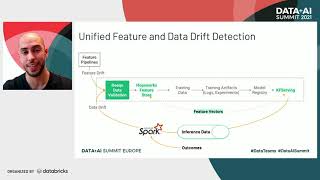
KFServing - Model Monitoring with Apache Spark and Feature Store
Explore an open-source platform for scalable model serving and monitoring using KFServing, Hopsworks Feature Store, and Spark Streaming. Learn continuous data drift detection and see a live demonstration.
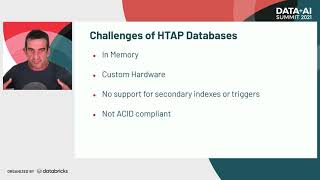
Unified MLOps: Feature Stores and Model Deployment
Explore a new MLOps approach merging databases, feature stores, and ML for scalable model production. Learn about Splice Machine's hybrid database and its applications in feature engineering and model deployment.
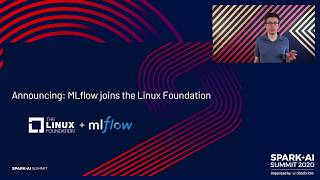
Simplifying Model Development and Management with MLflow - New Features and Innovations
Explore MLflow's latest features for simplified experiment tracking, improved model portability, schema management, and faster deployment in machine learning lifecycle management.
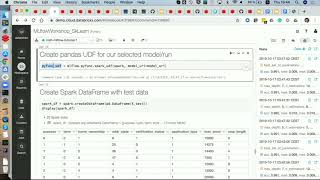
Managing the Complete Machine Learning Lifecycle with MLflow - Part 2
Explore MLflow's capabilities for managing machine learning lifecycles, from data preparation to model deployment, with practical insights on hyperparameter optimization and production workflows.
Machine Learning with TensorFlow Object Detection Running on Docker
Explore TensorFlow Object Detection API implementation using Docker, covering image creation, dependencies, and practical analysis of object detection in pictures.
Towards an Easy-to-use AI Platform - Data, Algorithms, and Systems - Wei Wang
Explore the development of user-friendly AI platforms, covering data preparation, model construction, debugging, and deployment, with a focus on enhancing efficiency and accessibility.
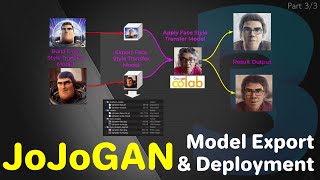
One-Shot Face Stylization with JoJoGAN - Model Save, Export and Deployment
Learn to save, export, and deploy JoJoGAN face stylization models. Covers checkpoint saving, model exporting, inference setup, and style application in Colab environment.
Intelligent Model Deployment and Consumer Pipeline With DataRobot AI Cloud Platform
Explore DataRobot AI Cloud's MLOps capabilities, including model deployment, registry, and inference. Learn to deploy models from leaderboards and consume them via API, stream, local mode, and job workflows.
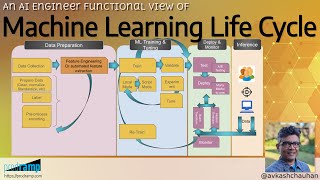
An Improved and Functional Design of End-to-End Machine Learning Life Cycle
Comprehensive overview of the machine learning lifecycle, covering data preparation, model training, deployment, and inference, with practical insights for effective implementation and monitoring.