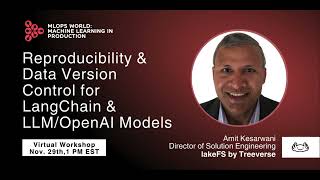
Reproducibility and Data Version Control for LangChain and LLM/OpenAI Models
Explore reproducibility and data version control for LangChain and LLM/OpenAI models using lakeFS. Learn to manage large datasets efficiently and achieve reproducibility in LLM applications.
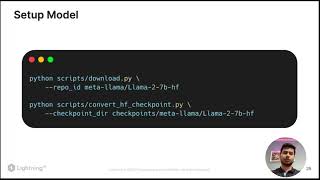
Finetuning a Large Language Model on a Custom Dataset
Discover parameter-efficient finetuning techniques and optimizations for large language models using custom datasets, enhancing model performance at scale.
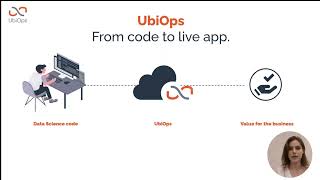
Deploying Generative AI Models - Best Practices and Interactive Example
Explore best practices for deploying generative AI models at scale, with an interactive example using UbiOps for serverless and cloud-agnostic implementation.

Learn Your Codebase: Fine-tuning CodeLlama with Flyte to Learn Flyte
Discover how to fine-tune LLMs on specific codebases using Flyte, an open-source orchestration platform. Explore multi-node, multi-gpu distributed training for efficient model adaptation with limited resources.

How to Design and Build Resilient Machine Learning Systems
Explore strategies for building resilient ML systems that gracefully handle real-world challenges. Learn to detect, mitigate, and overcome production-specific risks across various domains.
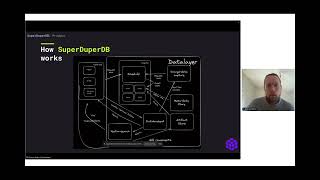
Bringing AI to Existing Databases Without Complex MLOps
Integrate AI seamlessly with existing databases, bypassing complex MLOps processes. Learn efficient techniques for enhancing data infrastructure with artificial intelligence.
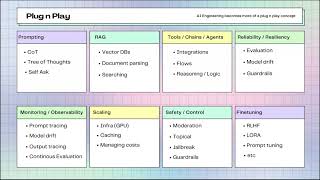
What Does it Mean to be an AI Engineer in the World of Generative AI
Explore the evolving role of AI Engineers in the era of Generative AI, covering technical aspects and business strategies for both engineers and decision-makers.

Building AI Security In - MLSecOps in Practice
Learn to secure AI and ML systems by integrating security into the Machine Learning lifecycle, leveraging DevSecOps principles to create a robust MLSecOps framework.

Parallelizing Your ETL with Dask on Kubeflow
Leverage Dask's parallelism capabilities on Kubeflow for advanced ETL processing. Learn to use the Dask Operator to optimize resource utilization in interactive Jupyter sessions and pipeline workflows.
Deploying Efficient Data-Centric AI 100x Faster
Accelerate AI application development and deployment 100x using dedicated platforms, data labeling, pre-built models, and AI-automation. Explore region classification and deep-trained object detection approaches.
The Critical Missing Component in the Production ML Stack - Data Logging for AI Applications
Discover how to enable data logging for AI applications, enhancing testing, monitoring, and debugging. Learn best practices to supercharge MLOps in your team.

End-to-End MLOps for Computer Vision
Explore end-to-end MLOps for Computer Vision, from data gathering to model monitoring. Learn to implement ML pipelines using tools like Amazon SageMaker, Kubernetes, Kubeflow, and MLFlow.
Build High Performance MLOps With ML Monitoring and AI Explainability
Discover techniques for enhancing MLOps through ML monitoring and AI explainability. Learn to identify model failures, address operational issues, and streamline model deployment using advanced analytics.
The Ops in MLOps: Creating Cost-Effective and Compliant ML Environments
Explore techniques for creating cost-effective, secure, and compliant ML environments with proper data governance in MLOps.
Deploy High Scale ML Models Without the Hustle
Learn to build and operate production-grade ML systems, from model training to deployment and monitoring, using the Qwak platform for efficient, high-scale solutions.
Deploying Model Artifacts in Hard Mode
Automate and streamline complex model deployment processes across multiple products. Learn strategies for overcoming documentation gaps, ambiguous terminology, and legacy systems in a collaborative remote environment.
Best Practices for Deploying MLOps Solutions in Enterprise
Explore best practices for deploying MLOps solutions in enterprise environments. Learn from industry experts about common pitfalls, avoidance strategies, and early adoption techniques for model lifecycle management.
Intro to MLOps: Build, Deploy, and Retrain a Model in Production
Build, deploy, and retrain a production ML model using open-source tools. Learn robust MLOps pipeline techniques for quick model deployment and continuous improvement.
Building an ML Platform from Scratch
Develop a customizable ML platform using open-source tools. Learn to integrate Cookiecutter, DVC, MLFlow, KFServing, and more for a flexible solution tailored to your organization's needs.
Automatic ML Model Containerization: Best Practices and Tools
Explore best practices for containerizing ML models for production inference. Learn about secure, multi-tenant image builds, avoiding lock-in, and tools like chassis.ml and Open Model Interface for seamless integration.
Using Reproducible Experiments to Create Better Machine Learning Models
Enhance ML model efficiency through reproducible experiments. Learn to track hyperparameter, code, and data changes using DVC for grid and random search tuning methods.