
Low-Cost Neural Network Inferencing on the Edge With Xcore.AI
Explore low-cost neural network inferencing on edge devices using xcore.ai's novel vector unit, with insights on hardware architecture, software tools, and deployment optimization techniques.
Learn MicroPython - Loops and Operators
Explore MicroPython loops and operators through hands-on demos. Master For and While loops, understand various operator types, and enhance your programming skills.
Learn MicroPython - If, Else & Data Types
Explore MicroPython's data types, flow control, and hands-on examples. Learn about strings, numbers, collections, binary storage, and conditional statements for effective programming.
How to Create a Pressure Pad Lap Counter Using ESP32 and Node-RED
Learn to build a pressure pad lap counter using ESP32 and Node-RED. Create an interactive system that tracks laps, updates a dashboard, and plays sound effects, ideal for escape room puzzles and IoT projects.
Creating a High-Tech Security Terminal Escape Room Puzzle - Unity and Arduino Tutorial
Learn to create a high-tech escape room puzzle using Unity, Arduino, and MQTT. Build a security terminal that controls door locks and LED lights, perfect for spy or space-themed adventures.
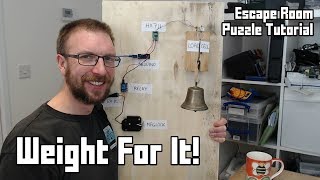
Creating an Electronic Weight Puzzle for Escape Rooms Using Arduino
Learn to create an electronic puzzle using a load cell and Arduino, featuring weight-based challenges to unlock an electromagnetic lock. Includes wiring, coding, and calibration instructions.
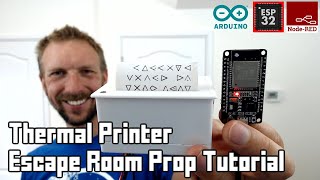
Thermal Printer Escape Room Puzzle Prop Using MQTT, Node-RED, and ESP32
Learn to create an escape room puzzle prop using a thermal printer, MQTT, Node-RED, and ESP32. Build interactive clues and custom messaging systems for immersive gaming experiences.

Creating an Outdoor Escape Room Puzzle with GPS Reverse Geocache
Learn to create an outdoor GPS-based puzzle using Arduino, combining hardware and coding to design an interactive location-specific challenge that unlocks when players reach the target coordinates.
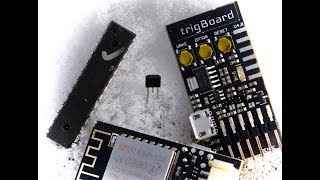
My Favorite Accurate Temperature Sensor - Full Tutorial Arduino and ESP8266
Comprehensive tutorial on using the LMT01 temperature sensor with Arduino and ESP8266, covering hardware setup, code implementation, and practical demonstrations.
How to Use Asyncio in MicroPython - Raspberry Pi Pico
Learn to implement cooperative multitasking in MicroPython using uasyncio on Raspberry Pi Pico. Explore coroutines, event loops, and task scheduling to optimize processor utilization for embedded projects.

Raspberry Pi Pico
Introduction to the Raspberry Pi Pico microcontroller, covering MicroPython installation, LED control, and comparisons with Raspberry Pi Zero. Explores specifications and potential applications.
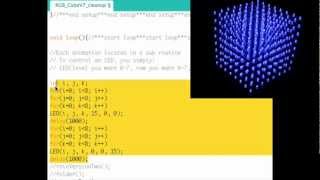
RGB 8x8x8 LED Cube Programming Tutorial
Detailed walkthrough of Arduino code for building and programming an 8x8x8 RGB LED cube, covering memory calculations and switch case implementation.

Plan to Throw One Away - Pitfalls of API Design for Low-level Libraries and Kernel Interfaces
Explore API design challenges for low-level libraries and kernel interfaces, focusing on compatibility, data structures, and architecture considerations. Learn best practices to avoid common pitfalls.

Optimizing C for Microcontrollers - Best Practices
Explore best practices for optimizing C code on microcontrollers, focusing on size and performance improvements using Zephyr RTOS and GCC compiler techniques.
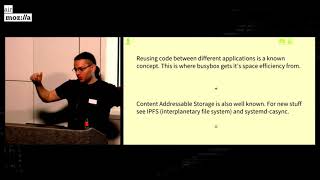
Application Containers for IoT and BDD in Rust - October 2017
Containerization for IoT devices using Rust, enabling system updates without cloud dependency. Exploring BDD testing in Rust with rspec, offering an alternative to traditional unit testing approaches.

Getting Something for Nothing - Using Rust's Type System for Safe Hardware Abstractions
Explore safe hardware abstractions in Rust using the Type System and Borrow Checker, focusing on high-performance microcontroller systems and the embedded-hal ecosystem.

Sensors, Servos, and Signals with Rust for IoT Development
Explore IoT with Rust: control servos, read sensors, and use protocols like SPI and I2C. Learn to create fault-tolerant embedded devices accessible from the cloud using Tessel microcontroller.
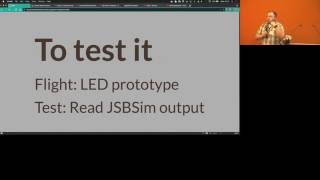
PSAS Flight Controller in Rust - PDXRust October 2016
Capstone team shares their experience building a flight controller in Rust, highlighting challenges, solutions, and interesting bugs encountered during the project.
Embedded Rust on ESP32
Explore Rust for ESP32 embedded systems: STD and Bare Metal development, simulator usage, and open hardware board design. Learn about Espressif's support and community-driven initiatives.
Secure Virtualization for MCUs Using WebAssembly
Explore Wedge, an open-source WebAssembly-based virtualization platform for IoT devices, enabling secure updates, customization, and efficient sensor data processing at the edge.
Writing an Embedded Operating System in Rust
Explore Rust's potential for embedded systems through Tock OS, focusing on memory safety, concurrent applications, and hardware isolation in ARM Cortex-M and RISC-V platforms.