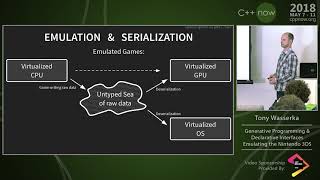
Generative Programming in Action - Emulating the 3DS
Explore generative programming in C++ for console emulation, focusing on the 3DS interprocess communication system. Learn to balance performance, maintainability, and correctness using modern C++ techniques.
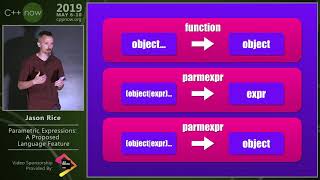
Parametric Expressions - A Proposed Language Feature
Proposed C++ feature: Parametric Expressions explained. Explores use cases, benefits for library authors, and potential impact on build times. Encourages audience participation in discussing this hygienic macro concept.
Binary Object Serialization
Explore minimally intrusive binary object serialization techniques for C++, including hierarchical data traversal, dynamic reconstruction, and optimizations using Template Argument Deduction and reflection.
From Templates to Concepts - Metaprogramming in C++
Explore C++ metaprogramming evolution from templates to concepts, enhancing code clarity and expressiveness. Learn modern techniques for powerful, readable metaprogramming in C++20.
Adapting C++20 Ranges Algorithms for Most Metaprogramming Needs in Fewer Than 1,000 Lines of Code
Explore C++20 ranges algorithms for metaprogramming, simplifying complex abstractions in under 1,000 lines. Learn to enhance software engineering with accessible, reusable solutions for common challenges.
Metaprogramming - From Decorators to Macros
Explore metaprogramming techniques in Python, from decorators and metaclasses to macros, with practical examples and insights into their applications and benefits.
Metaprogramación en Python
Explora técnicas avanzadas de metaprogramación en Python como decoradores, metaclases y descriptores para optimizar y reutilizar código, modificar clases y controlar la creación de instancias.
Writing Domain Specific Languages with Python
Learn to create custom Domain Specific Languages in Python, exploring metaprogramming, parsing techniques, and libraries like PLY and PyParsing to enhance code expressiveness and readability.
Exploring the Python AST Ecosystem
Dive into Python's abstract syntax tree ecosystem, exploring tools for visualization, creation, and transformation. Learn practical applications in static analysis and metaprogramming for enhanced code manipulation.
Metaprogramming 2.0
Explore Scala metaprogramming's evolution, current capabilities, and future prospects. Learn about Scala Meta, its applications, and improvements in macros for enhanced code analysis and manipulation.
Metaprogramming 2.0
Explore the evolution of Scala metaprogramming, from macros 1.0 to scala.meta and Dotty. Learn about improvements, challenges, and future prospects in this illustrated guide through Scala's metaprogramming journey.
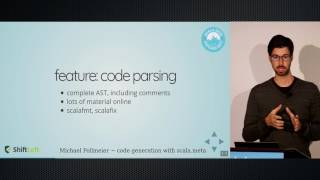
Introduction to Code Generation with Scalameta
Explore scalameta for code generation in Scala. Learn basics, composable DSL, and advanced use cases. Includes live demo and discussion on potential applications and comparison with traditional macros.
Effective Scala Development in IntelliJ IDEA
Discover advanced Scala development techniques in IntelliJ IDEA, including coding assistance features, productivity tools, and a preview of future metaprogramming support using scala.meta API.
Building Code Analysis Tools at Twitter
Explore advanced code analysis tools for large-scale Scala development, focusing on improving code browsing, review, and evolution using scala.meta semantic API and Kythe integration at Twitter.
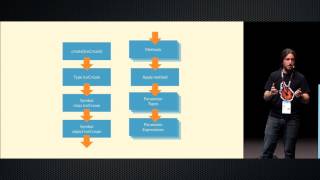
Adventures in Metaprogramming - Macros versus Shapeless
Explore metaprogramming techniques in Scala, comparing macros, shapeless, and code generation to eliminate boilerplate and improve code maintainability for intermediate developers.
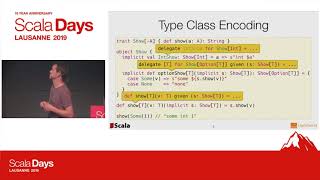
How Are We Going to Migrate to Scala 3.0, Aka Dotty
Explore Scala 3.0 migration strategies, new features, and design principles. Learn about breaking changes, metaprogramming, and the roadmap for transitioning from Scala 2 to 3.
Metaprogramming in Dotty
Explore advanced metaprogramming techniques in Dotty, the next-generation Scala compiler, to enhance code generation and manipulation capabilities for more powerful and flexible programming.
Testable Compiler Plugin Development in Scala 3
Explore Scala 3 compiler plugin development, from creation to testing, with insights on analyzing trees, modifying contexts, and using testing fixtures for robust plugin implementation.
Teaching Domain Specific Languages in Scala
Explore Scala's suitability for Domain Specific Language development, covering functional modeling, parser combinators, metaprogramming, and practical implementation in Visual Studio Code using Scala.js.
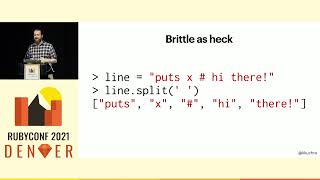
Vertical Assignment in Ruby
Explore Ruby metaprogramming to create a vertical assignment operator, learning tricks for everyday coding while pushing language boundaries in unexpected ways.
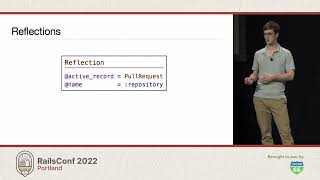
Reflecting on Active Record Associations
Explore the inner workings of Active Record associations by implementing custom belongs_to and has_many macros, gaining deeper insights into their functionality and design.