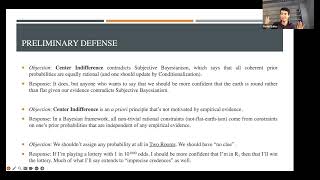
Center Indifference and Skepticism in Self-Locating Belief
Explore philosophical implications of self-locating belief indifference, examining its impact on Boltzmann brain theory, simulation arguments, and inductive skepticism in physics and metaphysics.
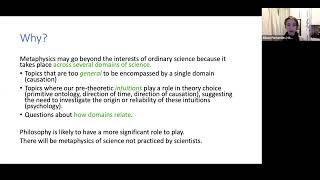
Naturalism, Functionalism and the Metaphysics of Science
Explore naturalism's impact on metaphysics of science, examining explanatory demands, temporal asymmetry, and modal relations through a functionalist lens.
The Power of Humility - Discovering Your True Self
Explore the transformative power of humility and self-reflection for personal growth and self-actualization. Gain insights from Dr. Fokoue's diverse background in philosophy, mathematics, and metaphysics.
Does Objective Reality Exist? - Great Mysteries of Physics - Episode 4
Delve into quantum paradoxes and philosophical questions about reality through expert discussions on Schrödinger's cat, quantum superposition, and various interpretations of quantum mechanics.

What the World Gets Wrong About Science
Explore common misconceptions about science, its dynamic nature, and the scientific method. Gain insights into the evolving understanding of scientific knowledge and its impact on our world.
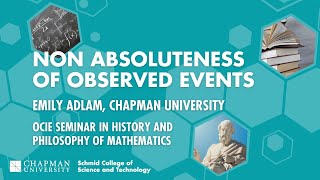
Non-Absoluteness of Observed Events in Quantum Mechanics - Implications and Alternatives
Explore the philosophical implications of quantum mechanics, focusing on the absoluteness of observed events and potential relational approaches to understanding quantum phenomena.
AI and Artificially Enhanced Brains - With Susan Schneider
Exploring the philosophical and ethical implications of merging human brains with AI, including consciousness in robots, mind-machine interfaces, and the future of human intelligence.
Minimal Phenomenal Experience and the Nature of Subjectivity and Time
Explore the philosophical dimensions of minimal phenomenal experience, examining how pure awareness relates to subjectivity and temporal perception in consciousness studies.
AI and the Future of Consciousness Science - Exploring Artificial Systems and Consciousness
Explore the complex relationship between AI advancement and consciousness, examining philosophical challenges and how human-machine interactions may ultimately shape our understanding of machine consciousness.
Idealism Versus Materialism - Lecture 4
Explore the philosophical debate between materialism and idealism, examining subjective and objective thinking approaches in this thought-provoking lecture.
Fragmented Time and Open Future
Explore philosophical concepts of fragmented time and open future, delving into indeterminacy and its implications for our understanding of reality.
The Argument from Understanding for Property Dualism About Experiential Properties
Explore philosophical arguments for property dualism, examining how phenomenal experiences and consciousness relate to physical properties through the lens of experiential understanding.
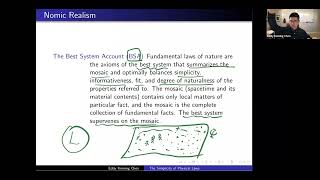
The Simplicity of Physical Laws - Foundations of Physics Seminar
Explore the simplicity of physical laws, their epistemic significance, and implications for Humean and non-Humean perspectives in this philosophical seminar on fundamental physics.
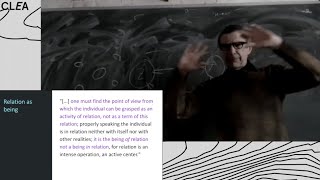
Open-Ended Intelligence in the Light of Simondon's Philosophy of Individuation
Explore Simondon's theory of individuation and its implications for understanding open-ended intelligence, generative AI, and the nature of consciousness through physical, biological, and psychic perspectives.
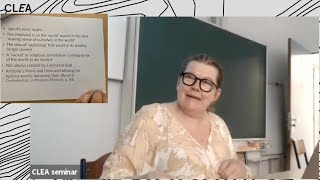
Building Real Worlds: From the Storytelling of Science to the Science of Storytelling
Explore the fascinating intersection of storytelling and scientific worldbuilding, examining how new technologies reshape our understanding of reality, representation, and ontological frameworks.
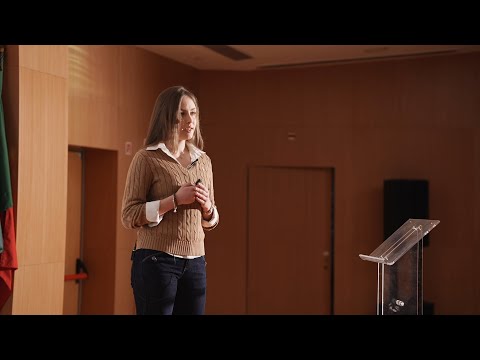
Bridge From Who I Am To The Home I Find | Anastasia Dmitrevskaya | TEDxSt Peters Intl School Youth
Bridging the gap between identity and culture, Anastasia Dmitrevskaya explores different philosophers’ perspectives on belonging and acceptance. In her talk, she reflects on her own experiences of moving between countries and cultures, examining how these shifts shape personal identity and influence

How to Interpret a Dream | Jason Tong | TEDxYouth@BWYA
In this talk, Jason introduces Sigmund Freud’s theory of dream interpretation, unpacking how dreams were once treated as puzzles to be decoded through symbols, hidden meanings, and the unconscious mind. Just as the audience begins to understand the system, he turns the idea on its head arguing that
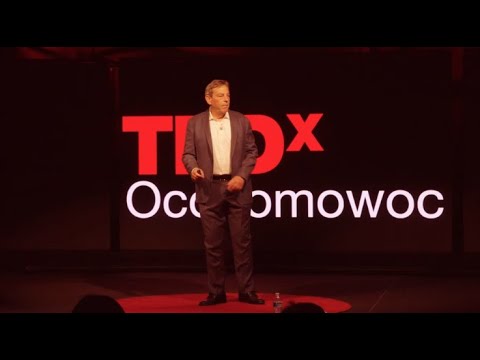
What is freedom? | Mark Small | TEDxOconomowoc
NOTE FROM TED: This talk only represents the speaker’s personal views and opinions. TEDx events are independently organized by volunteers. The guidelines we give TEDx organizers are described in more detail here: http://storage.ted.com/tedx/manuals/tedx_content_guidelines.pdf What makes freedom so

Reclaiming Faith: The Algorithm of Hope | Bushra Amiwala | TEDxUofIChicago
NOTE FROM TED: This talk only represents the speaker’s personal views and understanding of religion, spirituality, and the brain. We've flagged this talk because it falls outside the content guidelines TED gives TEDx organizers. TEDx events are independently organized by volunteers. The guidelines w