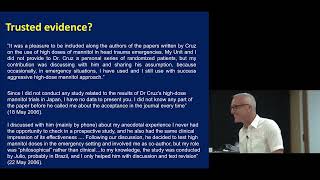
Research Integrity: Telling the Truth and Exposing Lies - Part 2
Explore the principles of research integrity and ethical conduct in academic work through expert insights on truth-telling and addressing scientific misconduct in research environments.
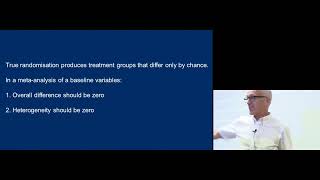
Research Integrity: Statistical Methods for Monitoring Data Integrity - Part 1
Discover statistical methods for monitoring data integrity in research, focusing on techniques to identify truthful results and detect potential research misconduct in clinical trials.
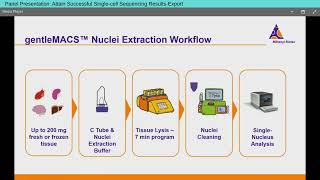
Attain Successful Single-Cell Sequencing Results with Latest Cell and Nuclei Isolation Workflows
Explore cutting-edge single-cell sequencing techniques and workflows for successful whole transcriptome profiling. Learn from experts about revolutionary technologies enabling parallel analysis of thousands of cells.
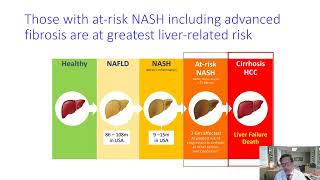
A Proteomics Signature of NASH - Non-Invasive Assessment of Nonalcoholic Fatty Liver Disease
Explore proteomics-based models for non-invasive assessment of nonalcoholic fatty liver disease, including diagnosis, prognosis, and monitoring of NASH progression and treatment efficacy.
Let's Talk About Grant Applications - Mastering the Art of Proposal Writing
Unlock the secrets of successful grant proposal writing with insights from early-career and senior researchers, and a funding body leader.
Grant Applications: How to Stand Out
Uncover strategies to craft compelling grant proposals, from presenting groundbreaking ideas to building an outstanding track record. Learn to excel in interviews and stand out in the competitive world of research funding.
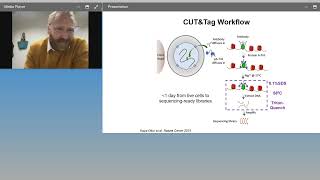
Unveiling Insights: Leveraging Single-Cell Transcriptomics and Epigenomics for Biomarker Discovery
Explore single-cell genomics techniques for identifying biomarkers in cancer research. Learn about transcriptomics, epigenomics, and their applications in understanding biological processes and tumor development.
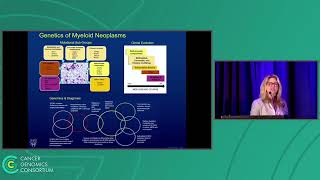
High-Resolution Target-Capture DNA Analysis for Suspect Clonal Hematopoiesis
Explore high-resolution DNA analysis for clonal hematopoiesis. Learn about mutational hierarchy, precision medicine, and clinical applications in cancer and bone marrow failure.
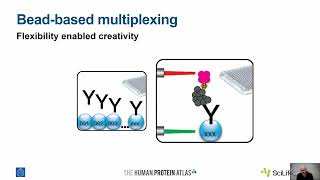
Multiplexed Mapping of the GPCR-RAMP Interactome
Explore G protein-coupled receptors and receptor activity-modifying proteins interactions through multiplexed mapping, uncovering potential therapeutic targets for various human diseases.
Informed Consent in Cancer Research: Fostering Patient-Centric Engagement
Explore the critical role of informed consent in cancer research, focusing on patient empowerment, ethical considerations, and strategies to enhance participant engagement and retention.
The Bioinformatics of Neoantigen Discovery and Vaccine Design
Explore neoantigen identification and vaccine design through bioinformatics. Learn about REAL-neo analytic framework and novel modules for tumor sequencing data analysis in immunotherapy research.
Why Networks Matter: Embracing Biological Complexity
Explore how genetic regulatory networks provide insights into health, disease, and potential therapies through examples from large-scale genomic datasets.

Survival Analysis
Learn key concepts and techniques in survival analysis, including censoring, truncation, life tables, and Kaplan-Meier curves, with practical examples and applications.
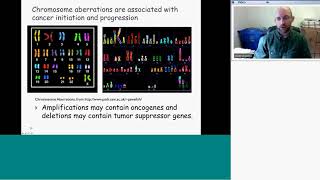
Javier Arsuaga - Applications of Computational Topology to the Analysis of Breast Cancer
Explore computational topology's role in breast cancer analysis, uncovering new insights through advanced mathematical techniques and data visualization methods.
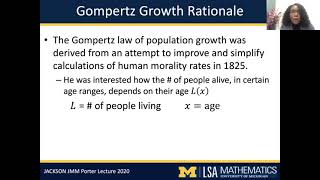
Turning Cancer Discoveries into Effective Treatments with Mathematical Modeling
Explore how mathematical modeling aids in transforming cancer research into effective treatments, bridging the gap between scientific discoveries and clinical applications.
Statistics in Medicine - Introduction to Clinical Research Analysis
Explore key statistical concepts in clinical research, including descriptive and inferential statistics, confidence intervals, p-values, and various statistical tests used in medical studies.
Understanding Tumour Responses to Radiotherapy Using Mathematical Models - Lecture 2
Explores mathematical modeling of tumor responses to radiotherapy, focusing on theoretical approaches to understand and predict treatment outcomes in cancer progression.
Mathematical and Computational Modelling to Explore Various Potential Cancer Treatments
Explore mathematical and computational modeling approaches for cancer research, covering topics from age-structured populations to machine learning techniques for understanding disease progression and treatment.
Using Mathematical Approaches to Describe and Understand Cancer
Explore mathematical modeling in cancer research, covering population dynamics, systems biology, and machine learning to enhance understanding and treatment of this complex disease.
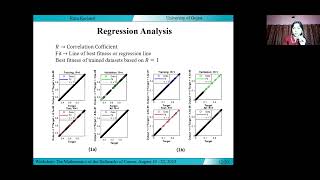
Numerical Analysis for Cervical Cancer Using Stochastic Levenberg-Marquardt Backpropagated Technique
Explore advanced neural network techniques for cervical cancer analysis, focusing on the Stochastic Levenberg-Marquardt Backpropagated method and its applications in oncology research.
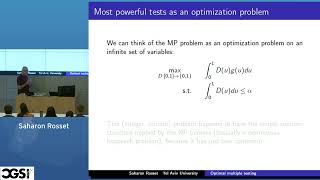
Multiple Testing Methods for Low and High-Dimensional Testing Problems in Biomedical Research
Explore multiple testing methods for biomedical problems, covering low and high-dimensional scenarios. Learn optimization techniques, hypothesis testing, and power analysis through practical examples.