
Mechanical Ventilation - Most Comprehensive Explanation
Comprehensive explanation of mechanical ventilation, covering modes, indications, and key concepts like lung compliance. Explores various respiratory support methods and ventilator settings.

Machine Learning for Personalized Healthcare - Opportunities, Challenges and Insights
Explore machine learning's impact on personalized healthcare, from disease subtyping to tailored interventions, with insights on mental health, respiratory diseases, and critical care settings.

Liberation from Mechanical Ventilation - Just Do It
Explore evidence-based strategies for liberating adult ICU patients from mechanical ventilation, including non-invasive respiratory support techniques and current clinical guidelines.
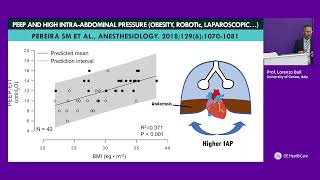
Intraoperative Ventilation: How to Be Protective?
Gain insights into protective intraoperative ventilation strategies and best practices with expert guidance from Prof. Lorenzo Ball in this educational session.
Nursing World Shared Practice Forum - RESTORE Protocol with Martha Curley, PhD, RN, FAAN
Dr. Curley discusses the RESTORE Protocol for managing sedation in pediatric patients on mechanical ventilation, its development, implementation, and impact on patient outcomes, emphasizing safe nurse-led sedation management.
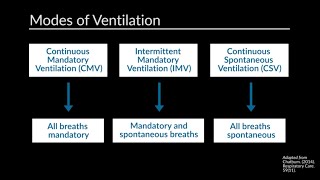
Conventional Mechanical Ventilation - Initial Settings
Learn initial settings for conventional mechanical ventilation in pediatrics, covering mode selection, tidal volume, and other key parameters for optimal patient care.
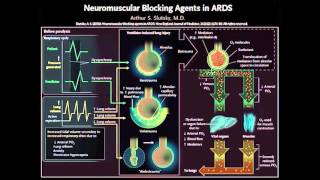
Why Spontaneous Breathing and Synchrony Matters
Explore the importance of spontaneous breathing and patient-ventilator synchrony in critical care, discussing benefits, potential risks, and clinical implications for respiratory muscle function and patient outcomes.

Ventilator Waveforms
Comprehensive guide to interpreting ventilator waveforms, covering pressure, volume, and flow. Learn troubleshooting techniques for mechanical ventilation issues across various modes and scenarios.
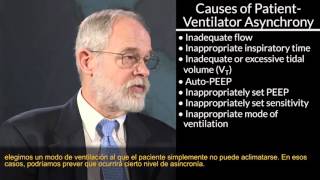
Challenges in Mechanical Ventilation with Bob Kacmarek
Comprehensive overview of patient-ventilator synchrony in mechanical ventilation, covering types, analysis, and correction of asynchrony, with focus on improving patient outcomes.

Asthma by Gerhard Wolf, MD for OPENPediatrics
Comprehensive overview of ICU management for asthma patients, covering pathophysiology, medications, intubation, ventilation, inhaled gases, and sedation techniques for healthcare professionals.

Challenges in Mechanical Ventilation - Patient-Ventilator Synchrony
Dr. Kacmarek explores patient-ventilator synchrony, covering types of asynchrony, effects of ventilation modes, and clinical significance. Gain insights into improving respiratory care outcomes.
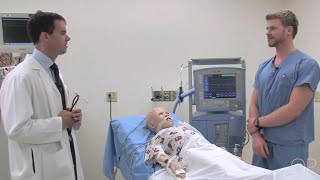
Management of the Intubated Asthmatic Patient
Comprehensive guide on managing intubated asthmatic patients, covering ventilator settings, hypercarbia, hemodynamics, medications, weaning, and extubation readiness. Essential for pediatric critical care providers.

Feeding the Critically Ill Child
Comprehensive overview of nutrition for critically ill pediatric patients, covering assessment methods, challenges, and strategies to optimize nutrient delivery in intensive care settings.
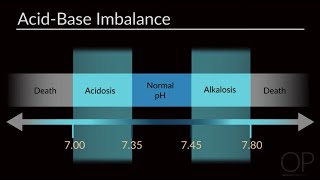
Interpreting Arterial Blood Gases - ABGs
Comprehensive guide to interpreting arterial blood gases, covering normal ranges, acid-base imbalances, and case studies. Ideal for healthcare professionals seeking to enhance diagnostic skills in critical care settings.

Update on Mechanical Ventilation of the Child - Part I
Comprehensive overview of mechanical ventilation in children, covering key concepts, interpretation, and practical applications. Led by expert Dr. Rimensberger, focusing on pressure-limited ventilation and recruitment maneuvers.
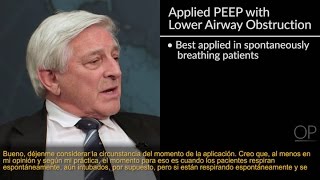
History of Pediatric Mechanical Ventilation by Christopher Newth for OPENPediatrics
Explore the evolution of pediatric mechanical ventilation, from negative pressure devices to modern techniques, with insights on key developments and challenges in treating critically ill children.

Mechanical Ventilation of the Child - Part 2 with Dr. Peter Rimensberger
Exploración avanzada de la ventilación mecánica pediátrica, enfocada en PEEP, reclutamiento pulmonar y mecánica respiratoria, con el experto Dr. Rimensberger.
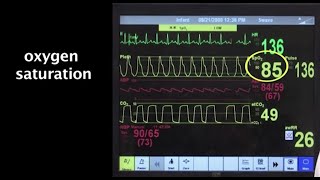
Hands-on Mechanical Ventilation
Practical guide on mechanical ventilation, covering setup, recruitment, weaning, and extubation readiness. Expert insights for healthcare professionals caring for critically ill children.

Past, Present, and Future of Cardiac Intensive Care - Dr. David Wessel for OPENPediatrics
Dr. Wessel explores cardiac intensive care's evolution, current practices, and future directions, highlighting key advancements, challenges, and paradigm shifts in specialized pediatric cardiac care.

ARDS Nursing - Pathophysiology, Treatment
Comprehensive overview of ARDS for nurses, covering pathophysiology, causes, phases, symptoms, and interventions. Prepares for NCLEX with in-depth explanations and practical nursing knowledge.

The Physics of Hot Air - With Shaun Fitzgerald
Discover the physics of hot air and innovative building ventilation techniques that dramatically reduce energy usage, revolutionizing sustainable architecture and environmental efficiency.