
C++ Compile-Time Sparse Matrices for Linear Algebra and Tracking Applications
Explore compile-time sparse matrices in C++ for efficient linear algebra and tracking applications, optimizing memory usage and performance through advanced type system techniques.
Empowering the Quantum Revolution with Q#
Explore quantum computing's revolutionary potential and learn to develop quantum solutions using Microsoft's Quantum Development Kit and Q# programming language.
Quantum Mass Production Theorems - Implementing Multiple Copies of Quantum Circuits
Delve into quantum circuit optimization through mass production theorems, exploring efficient implementations of multiple copies of quantum transformations and their theoretical implications.
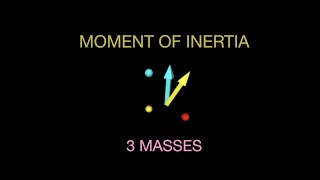
Angular Momentum and Moment of Inertia Tensor for 3 Masses - Python Tutorial
Calculate center of mass, moment of inertia tensor, and angular velocity vector for three masses using Python. Includes code implementation and mathematical concepts.

Deep Learning - What is it and What It Can Do For You
Explore deep learning fundamentals, architectures, and applications in AI, from basics to advanced concepts like CNNs and RNNs, with practical insights for implementation and future possibilities.

Orthotope - APL-Inspired Arrays for Haskell - Lambda Days 2022
Explore Orthotope, a Haskell library for multi-dimensional arrays inspired by APL. Learn efficient structural operations, clever array representation, and various implementations for different storage and typing needs.
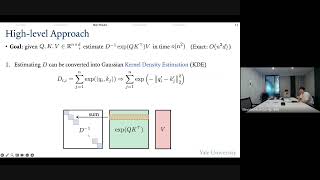
Accelerating Transformers via Kernel Density Estimation - Google TechTalk
Explore efficient Transformer acceleration using kernel density estimation. Learn innovative techniques for handling long sequences and improving performance in deep learning models.
DGEMM on Integer Tensor Cores - NHR Perflab Seminar
Explore double-precision matrix multiplication using Int8 Tensor Cores and the Ozaki scheme, focusing on high-precision computation with lower-precision hardware for machine learning applications.
Strassen's Matrix Multiplication Algorithm - Concept and Time Complexity
Explore Strassen's Matrix Multiplication algorithm, its concept, and time complexity in the context of Divide & Conquer strategies for efficient matrix operations.

Python Apple MLX Tutorial: Introduction to Machine Learning on Apple Silicon
Learn MLX framework for Apple Silicon: GPU operations, transformers, language models, and generative AI concepts. Applicable to PyTorch and NumPy users.
Generalizations of Matrix Multiplication for Solving the Light Bulb Problem
Explore a novel approach to solving the Light Bulb Problem using tensor-based algorithms, potentially outperforming traditional matrix multiplication methods for faster data analysis and pattern recognition.
Tensors of Minimal Border Rank and Their Role in Matrix Multiplication Complexity
Delve into advanced algebraic geometry concepts exploring minimal border rank tensors and their crucial role in matrix multiplication complexity theory and computational mathematics.