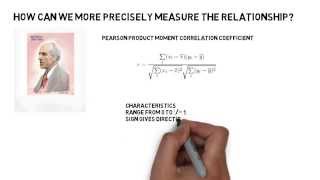
Biostatistics Mini-Lectures
Explore essential biostatistical analysis techniques through concise presentations, covering correlation, t-tests, ANCOVA, MANOVA, non-parametric analysis, and more.
Biostatistics and More
Comprehensive biostatistics overview covering central tendency, dispersion, distributions, data visualization, research variables, statistical testing, and hypothesis analysis.
Classic Biostatistics Videos
Comprehensive video series covering key biostatistics concepts for medical exams, including study designs, risk assessments, and diagnostic test evaluations.
UseR! 2020: Biostatistics
Explore biostatistics applications in R, covering clinical trials, mortality analysis, metaproteomics, descriptive tables, ETL, anthropometry, leukemia treatment, meningioma genomics, and survival curve comparisons.
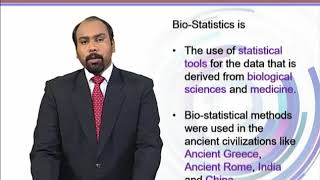
Applied Biostatistics
Comprehensive exploration of biostatistical methods and applications, equipping learners with practical skills for data analysis in biological and medical research contexts.

Biostatistics USMLE
Comprehensive biostatistics review for USMLE Step 1, covering key concepts, practice questions, and exam strategies to enhance understanding and test performance.
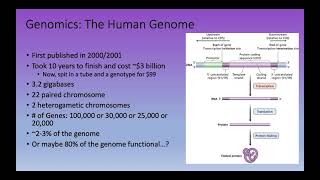
Bioinformatics Course Lectures
Comprehensive bioinformatics lectures covering genomics, sequencing, evolution, statistics, alignment, phylogenetics, assembly, annotation, and genetic variation for aspiring bioinformaticians.

Python Data Science Project
Learn Python for data science through hands-on projects covering machine learning, web scraping, exploratory data analysis, and computational drug discovery. Gain practical skills using popular libraries and tools.

Fundamentals of Biostatistics
Learn key biostatistics concepts, research methods, data types, and the scientific process for effective study design and analysis in health sciences.
Fundamentals of Biostatistics
Learn to design studies, analyze data, and interpret results for biology research, healthcare, and public health applications using statistical tools and methods.
Research Methods - Psychology A-Level - AQA Paper 2
Comprehensive revision of research methods for AQA A-level Psychology Paper 2, covering experimental designs, data collection techniques, statistical analysis, and scientific principles.
Julia for Biologists - A Perspective on Speed, Abstraction, and Metaprogramming
Explore Julia's potential in biology: speed, abstraction, and metaprogramming for data analysis, modeling, and research. Learn practical examples and discover the Julia ecosystem for biologists.
Unleashing Algebraic Metaprogramming in Julia with Metatheory.jl
Explore Metatheory.jl for algebraic metaprogramming in Julia, covering e-graphs, equality saturation, and applications in symbolic computing, category theory, and compiler optimizations.
JuliaSim: Machine Learning Accelerated Modeling and Simulation
Explore JuliaSim: Accelerate modeling and simulation with machine learning. Learn about fast differential equation solvers, neural network integration, and surrogate models for enhanced computational efficiency.

The State of Julia in 2021 - JuliaCon Keynote
Comprehensive overview of Julia's progress in 2021, covering threading, compiler improvements, linear algebra advancements, package updates, and future development plans.

Interplay of Linear Algebra, Machine Learning, and HPC - JuliaCon 2021 Keynote
Explore the interplay of linear algebra, machine learning, and HPC with Dr. Li. Learn about fast solvers, low-rank compression, and how ML can optimize linear algebra computations for big data problems.
Changing Physics Education with Julia
Revolutionizing physics education by integrating Julia programming, focusing on nonlinear dynamics. Demonstrates how coding enhances understanding, introduces interactive applications, and discusses benefits of real-world exercises.
A Mathematical Look at Electronic Structure Theory - JuliaCon 2021 Workshop
Explore density-functional theory and numerical techniques for solving it using Julia. Learn about discretization, solution algorithms, and practical implementation with hands-on coding exercises.
Statistics with Julia from the Ground Up - JuliaCon 2021 Workshop
Learn statistical applications in Julia through hands-on examples, covering probability, data manipulation, plotting, and modeling. Ideal for R users transitioning to Julia for data science and machine learning.
Discrete and Continuous Mathematics - MIT Computational Thinking Spring 2021 - Lecture 14
Explore discrete and continuous mathematics, bridging concepts through indexing, function evaluation, area calculation, and random walks in computational thinking.
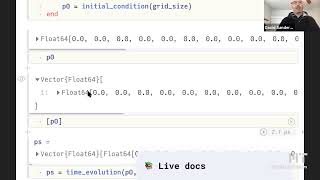
Random Walks II - Lecture 13
Explore random walks, Pascal's triangle, and probability distributions using Julia programming. Learn to implement time evolution of probabilities and understand cumulative sums in computational thinking.