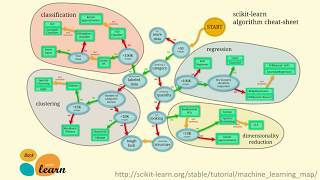
Data Science Tools and Techniques for the Blue Team
Explore data science tools and techniques for cybersecurity, including statistical analysis and machine learning, to enhance threat detection and defense capabilities in large-scale corporate environments.
Cleaning Your Applications' Dirty Laundry with Scumblr
Learn about Scumblr, an open-source tool for application security at scale. Discover how Netflix uses it for vulnerability management, risk tracking, and automating security tasks in a dynamic cloud environment.
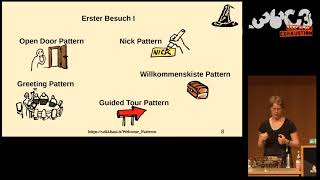
Welcome Pattern - Theorie und Praxis
Vorstellung der "Welcome Pattern" zur Integration von Neulingen in Hackspaces. Praxisbeispiele aus Siegen zeigen, wie offene Strukturen und ethische Grundsätze vereint werden können.
Grow Your Own Planet
Explore how simulations advance our understanding of the Universe, from basic orbits to complex gas flows. Learn about state-of-the-art hydrodynamics programs and their applications in astronomy.

Mathematical Diseases in Climate Models and How to Cure Them
Explore innovative approaches to climate modeling using Julia and GPUs, aiming to improve accuracy and usability while overcoming computational limitations in simulating small-scale physics.
Under Pressure: Real World Damage With TPMS Spoofing - DefCamp - 2019
Explore TPMS spoofing techniques, real-world implications, and mitigation strategies in this DefCamp 2019 talk on vehicle security vulnerabilities and their potential impact on autonomous driving.
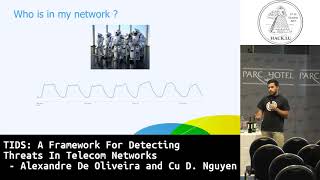
TIDS - A Framework for Detecting Threats in Telecom Networks
Explore a framework for detecting threats in telecom networks, covering monitoring, data collection, and analytics to protect infrastructure and subscribers from various attacks and privacy issues.
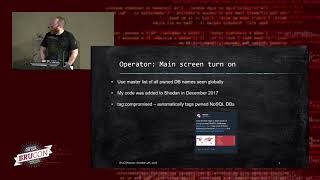
All Your Cloud Are Belong To Us – Hunting Compromise in Azure
Explore cloud security vulnerabilities, attack tactics, and proactive measures for Azure and AWS. Learn about hunting compromised systems and securing cloud marketplaces.
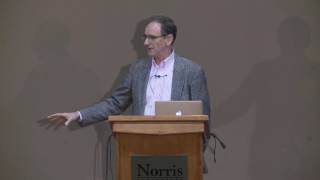
Keynote - Historical Lessons for Improving Cyber Security
Historical lessons for improving cybersecurity: outsiders' role in cryptography advances, attention to seemingly foolish ideas, and applying risk analysis from nuclear deterrence to cryptography.
Prove It! - Confronting Security With Data
Explore data-driven methods to measure and improve security capabilities in rapidly scaling businesses, focusing on quantitative strategies and decision analysis techniques.
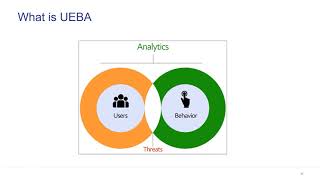
Insider Threat Detection & Automation by Behaviour Analytics
Learn to detect and automate insider threat prevention using behavior analytics, exploring UEBA, anomalies, and data-driven techniques for enhanced cybersecurity.
Opportunities for Infusing Physics into AI - ML Algorithms
Explore the fusion of physics and AI algorithms, covering neural programming, hierarchies, equations, and applications in autonomous systems and technology.
Tensor Networks and Neural Network States - From Chiral Topological Order to Image Classification
Explore neural networks in quantum physics and image recognition, bridging manybody physics with machine learning for innovative applications in various fields.
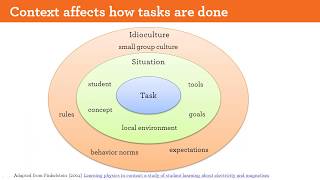
Teaching the Whole Physics Student
Practical strategies for integrating career-relevant skills into physics education, supporting students holistically as they pursue diverse 21st-century careers in industry and academia.
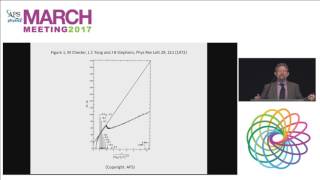
Topological Defects and Phase Transitions
Explore topological defects in 2D systems, their role in phase transitions, and experimental verifications in superfluids, superconductors, and crystals.
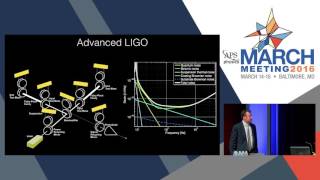
The Observation of Gravitational Waves from a Binary Black Hole Merger
Explore the groundbreaking detection of gravitational waves from binary black hole merger, its implications for general relativity, and the future of gravitational-wave astronomy.
Challenges of Using V4L2 to Capture and Process Video Sensor Images
Explore challenges in capturing and processing video sensor images using V4L2, covering BAYER arrays, white balance, and color adjustment techniques.
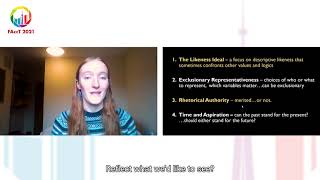
Representativeness in Statistics, Politics, and Machine Learning
Explore the concept of representativeness across statistics, politics, and machine learning, examining its roots, applications, and ethical implications in various fields.
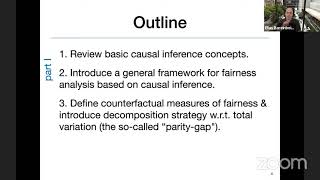
Translation Tutorial - Causal Fairness Analysis
Explore causal fairness analysis in AI, covering structural causal models, causal diagrams, and demographic disparities. Learn why causality matters and how to address fairness challenges in artificial intelligence.
Fairness, Rankings, and Behavioral Biases
Exploring fairness in ranking systems, behavioral biases, and interventions to improve diversity and equity in selection processes through mathematical modeling and analysis.
Interventions over Predictions - Reframing the Ethical Debate for Actuarial Risk Assessment
Reframing ethical debates on actuarial risk assessment, focusing on interventions over predictions. Explores historical context, machine learning implications, and causal inference in risk evaluation.