
Connections Between Physics and Deep Learning
Explore the fascinating intersections of physics and deep learning, from neural networks to scale-invariant behavior, with insights from MIT's Max Tegmark.
William Marshall – A Measure for Intrinsic Information
Explores a unique information measure reflecting intrinsic perspectives in communication, with implications for integrated information theory and consciousness.
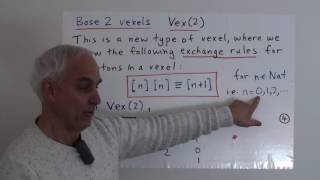
Arithmetic With Base 2 Vexels - Data Structures in Mathematics Math Foundations
Explore binary arithmetic using base-2 vexels, a flexible vertical notation system. Learn advantages, conversion methods, and vertical multiplication techniques for a fresh perspective on number systems.
The Operation of Caret - Exponentiation via Multisets - Math Foundations
Explore a new arithmetic operation called "caret" (exponentiation) for multisets, extending the ladder of operations beyond addition and multiplication with concrete examples and recursive counting functions.
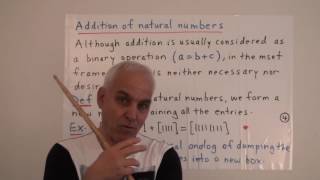
Multisets and a New Framework for Arithmetic - Data Structures Math Foundations
Explores multisets to redefine natural numbers, offering fresh insights into fundamental arithmetic operations and laws. Presents a simplified, logical approach to basic mathematics suitable for all levels.
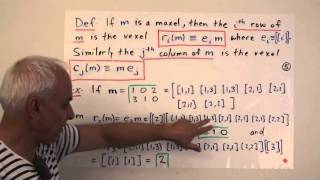
Singletons, Vexels, and the Rank of a Maxel II - Data Structures Math Foundations
Explore vexels, maxels, and their multiplication. Learn about row and column ranks of maxels, and discover the Rank theorem. Gain insights into linear algebra concepts through a generalized framework.
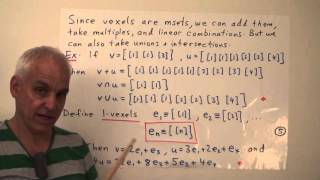
Singletons, Vexels, and the Rank of a Maxel - Data Structures in Mathematics
Explores vexels as multisets of singletons, analogous to maxels, to structure vector space theory. Introduces concepts like singleton multiplication, friezes, and maxel rank, offering a broader perspective on linear spaces.
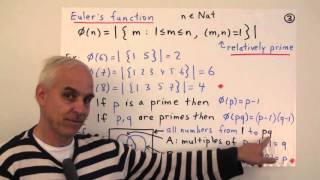
Inclusion-Exclusion via Multisets - Data Structures in Mathematics Math Foundations
Explore inclusion/exclusion via multisets, expanding to integral multisets with negative multiplicities. Learn a conceptual approach to this fundamental Set Theory theorem and its applications.
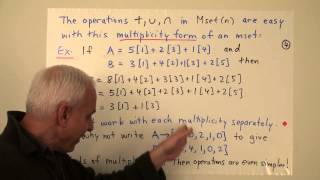
The Algebra of Natural Number Multisets - Data Structures in Mathematics
Explore multiset algebra in natural numbers, introducing notation and operations. Discover potential extensions to negative and rational multiplicities, with implications for modern algebra.
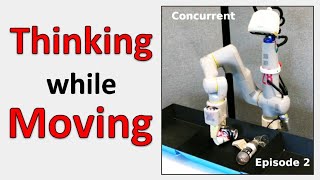
Thinking While Moving - Deep Reinforcement Learning with Concurrent Control
Explore concurrent control in reinforcement learning, where agents make decisions while executing actions, revolutionizing robotic movement and decision-making processes.
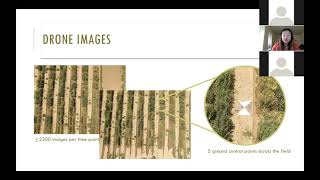
Drone Phenotyping and Machine Learning Enable Discovery
Explore drone phenotyping and machine learning techniques for studying daily floral opening in lettuce, including image processing, statistical analysis, and genetic mapping.
The Mother of All Representer Theorems for Inverse Problems and Machine Learning - Michael Unser
Explore the mathematical foundations of inverse problems and machine learning, focusing on representer theorems, Banach spaces, and kernel methods for advanced data science applications.
Approximation with Deep Networks - Remi Gribonval, Inria
Explore deep network approximation, focusing on expressivity, universal properties, sparse networks, and the impact of network architecture and activation functions on performance.
Artificial Intelligence and Society - In Conversation With Jeff Sachs
Exploring AI's societal impact, Jeff Sachs discusses potential utopian and dystopian outcomes, emphasizing the importance of governance in shaping the future of technology and its effects on work, wealth, and privacy.
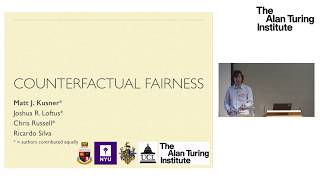
Counterfactual Fairness
Explore causal inference tools for modeling fairness in machine learning, addressing bias and ensuring equitable decisions across demographic groups.
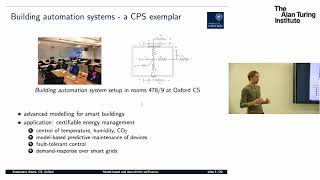
Formal Verification and Learning of Complex Systems - Professor Alessandro Abate
Exploring formal verification techniques for complex systems, combining model-based and data-driven methods to address scalability issues and provide system-level assertions in Cyber-Physical Systems.
Alan Turing and the Other Theory of Computing and Can a Machine Be Conscious?
Explore Turing's lesser-known 1948 paper on numerical computation and its impact on complexity theory. Discover how it unifies two major traditions in computational theory.
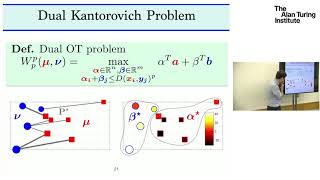
Regularization for Optimal Transport and Dynamic Time Warping Distances - Marco Cuturi
Explore regularization techniques for optimal transport and dynamic time warping distances, focusing on smoothing strategies to enhance machine learning applications and Fréchet mean computation.
The Automatic Statistician - Professor Zoubin Ghahramani
Explore Bayesian model selection strategies for automated data analysis and report generation, with insights on regression models, Gaussian processes, and computational resource allocation.
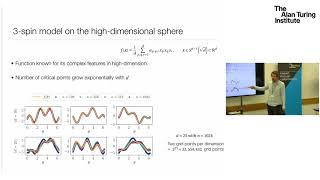
Neural Networks as Interacting Particle Systems
Explore neural networks as interacting particle systems, examining their mathematical foundations and applications in complex systems modeling across various scientific disciplines.
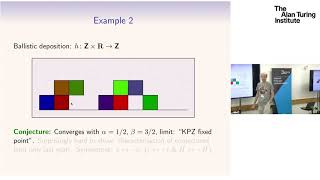
Universality Classes for 1+1 Dimensional Systems
Explore universality classes in 1+1 dimensional systems, focusing on weak universality conjecture, graphical construction, and links to Brownian web. Gain insights into complex systems modeling.