Introduction to Patterns in Humanities Analytics
Explore patterns in humanities analytics: theory, practice, and meaning extraction from digital sources. Gain skills for innovative scholarship in cultural and textual analysis.

Unbiased and Consistent Algorithm Classes in Photorealistic Rendering - Lecture 31
Explore photorealistic rendering algorithms, their classifications, and expected behaviors. Learn about biased/unbiased and consistent/inconsistent methods in global illumination.

Path Tracing and Next Event Estimation - TU Wien Rendering Lecture 25
Explore path tracing and next event estimation techniques for solving the rendering equation, enhancing light source handling in computer graphics and 3D visualization.
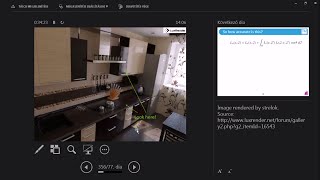
Rendering Equation Properties - TU Wien Rendering Lecture 15
Exploring the Holy Rendering Equation's properties, including its infinite dimensions and singularities, and discussing approaches to solve this complex problem in computer graphics.
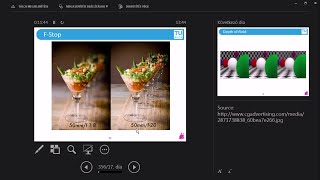
TU Wien Rendering - BRDF Models and Depth of Field - Lecture 13
Explore depth of field effects in rendering, f-stop mechanics, and advanced BRDF models for global illumination. Learn key techniques to enhance realism in computer graphics.
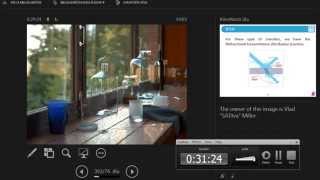
BRDF Models and The Rendering Equation - Lecture 3
Explore BRDF models and the rendering equation, fundamental concepts in computer graphics for characterizing material properties and simulating light transport in virtual environments.
Kaggle 30 Days of ML - Day 12 - Missing Values and Categorical Variables
Explore missing values and categorical variables in machine learning, learning practical approaches to handle data imperfections and enhance model performance.
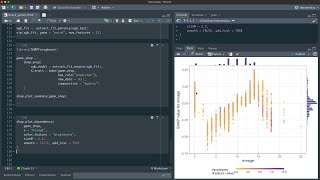
Feature Engineering & Interpretability for XGBoost with Board Game Ratings
Explore advanced modeling with board game ratings data: feature engineering, XGBoost tuning, and explainability methods for data-driven insights and predictive analysis.
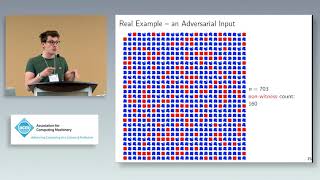
Prime and Prejudice- Primality Testing Under Adversarial Conditions
Systematic analysis of primality testing in adversarial scenarios, exploring vulnerabilities and providing recommendations for secure implementations.
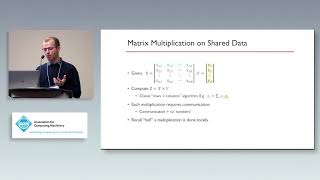
ABY3 - A Mixed Protocol Framework for Machine Learning
Explore privacy-preserving machine learning with ABY3, a framework addressing data collection concerns through encrypted computations and secure multi-party protocols.
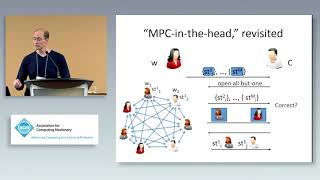
Improved Non-Interactive Zero Knowledge with Applications to Post-Quantum Signatures
Explores advanced non-interactive zero-knowledge proofs, enhancing efficiency and security for post-quantum signatures using MPC protocols in the preprocessing model.
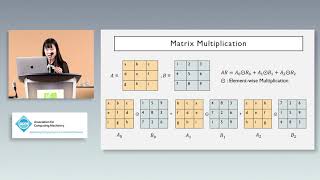
Secure Outsourced Matrix Computation and Application to Neural Networks
Explore practical solutions for encrypted matrix operations in homomorphic encryption, including novel encoding methods and efficient evaluation strategies for basic matrix arithmetic and neural networks.
NIST Lightweight Standardisation II
Explore NIST's lightweight cryptography standardization, focusing on WAGE, Estate, Spook, and Jambu algorithms, with insights on quantum attacks and mixed-fit permutations.
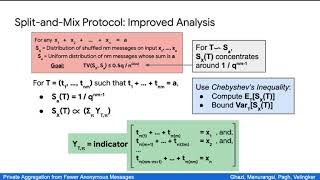
Private Aggregation from Fewer Anonymous Messages
Explore innovative techniques for private data aggregation, focusing on reducing anonymous messages while maintaining accuracy and privacy in distributed systems.
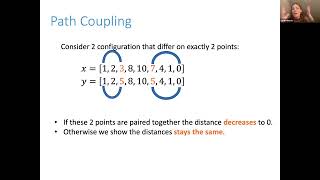
Asiacrypt 2022 Practical Cryptography 1
Explore practical cryptography concepts including encryption, ciphers, and boomerang attacks in this comprehensive tutorial on advanced cryptographic techniques.
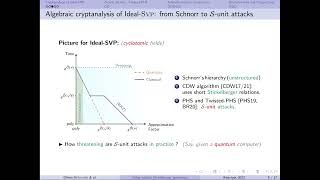
Asiacrypt 2022 - Lattice Algorithms and Cryptanalysis
Explore lattice algorithms and cryptanalysis, covering topics like psychotomic fields, quantum decomposition, and optimization frameworks in this comprehensive talk from Asiacrypt 2022.

The Future of Crime Detection and Prevention
Expert panel explores AI's role in predicting and preventing crime, discussing technological advancements, ethical concerns, and the future of law enforcement and security.
Entity Embeddings for Categorical Variables
Learn to implement entity embeddings for categorical variables using TensorFlow/Keras, with a focus on converting the model to PyTorch. Practical application using Kaggle competition data.

Destroy All Crypto - Nick Gonella
Explore quantum cryptography's mathematical foundations, from asymmetric encryption to quantum concepts, and learn how it challenges traditional cryptographic methods like RSA.
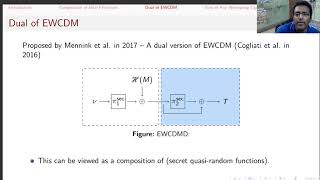
Mind the Composition - Birthday Bound Attacks on EWCDMD and SoKAC21
Explore birthday bound attacks on cryptographic constructions, focusing on EWCDMD and SoKAC21. Learn about composition techniques, permutations, and distribution attacks in this advanced cryptography talk.
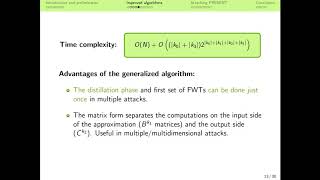
Improving Key-Recovery in Linear Attacks - Application to 28-Round PRESENT
Explore advanced techniques for improving key recovery in linear cryptanalysis, focusing on the PRESENT block cipher and introducing novel approaches to enhance attack efficiency.